The Popcorn Isn't Real · Ep. 2 (Suicide Club)
Suicide Club is the Pied Piper of Hamelin, retold
Sion Sono took an 800-year-old folk tale and buried it inside a mass-suicide nightmare.
The Pied Piper gave them their Just Desserts
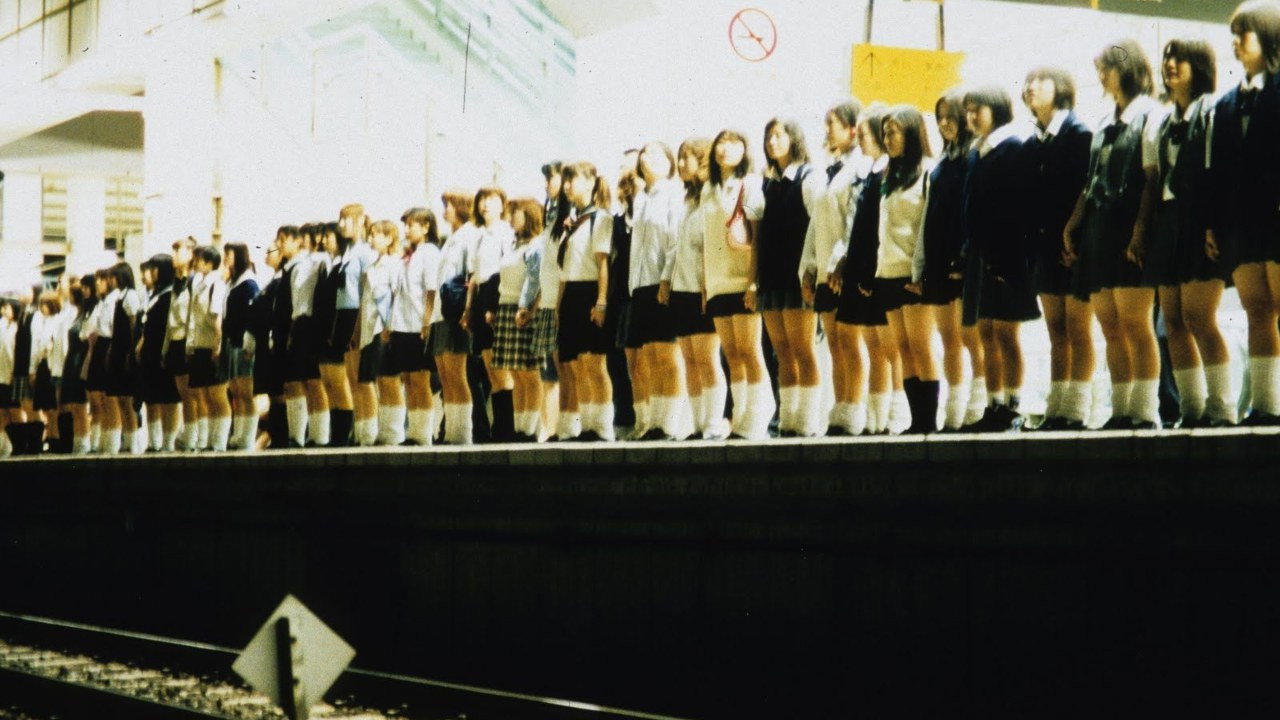
Sion Sono's Suicide Club (2001) opens with 54 schoolgirls holding hands and jumping in front of a train, and it never stops confusing people after that. The Bat goes nowhere, Genesis kills things for no reason, a detective's whole family dies offscreen, and the film ends on a dirty look. It is famously called nonsensical.
It is not nonsensical. It is a loose, surreal adaptation of the Pied Piper of Hamelin, moved to modern Tokyo. A pop group and a pack of children pipe a huge following to a happy, willing death, exactly as the Piper leads the rats into the river and the children into the cave. Once you read it that way, the pieces that seemed random start pointing the same direction: the band's name, their striped costumes, the descent, the survivors, even the date.
The theory did not start with us. It was first laid out by a poster named Manuel Howerth on the old IMDb Suicide Club message board, years before those boards were taken down. What follows is that case, rebuilt and argued out. Verdict from the episode: Sono was absolutely pulling from the Piper. Whether the film keeps the Piper's moral is where the fight is.
The evidence
He hid it on purpose
Sono makes films infuriating by design.
The obfuscation is the method
Sono is a director who builds art to frustrate you first and reward you later, the way Rule of Rose weaponizes its own broken mechanics until the cruelty reads as intent. That is the key to this whole board: he did not fail to make the Pied Piper legible. He took an old story and twisted it into something unrecognizable and incomprehensible on purpose. So the evidence is meant to be faint. The point is that once you know it is there, you cannot unsee it.
A cop says it out loud
"I'd say it's too much TV. The Pied Piper."
Sono put the source in a character's mouth
Midway through, a detective waves off the case with a throwaway line: it's too much TV, the Pied Piper. In a film this deliberate, that is not filler. It is the writer-director naming his own source text inside the movie, disguised as a cop scapegoating pop culture. Every other parallel on this board stops being coincidence the moment the film itself says the words Pied Piper.
The band is your just desserts
A girl group literally named Dessert.
Pay the piper, or be served
The Piper is hired, cheated of his pay, and comes back to collect. The revenge is the adults getting what they have coming. In this film the parents fail their kids, refuse to pay the piper, and are served their just desserts, and the pipers are a girl band named, out loud, Dessert. The pun is the thesis: an older generation that would not pay is being made to eat it.
"Pied" means striped
And Dessert is dressed in stripes.
The costume is a citation
Pied means parti-colored, patched, striped. The Pied Piper's whole look is the loud stripes he wears. When we get our clearest view of Dessert, the iconic poster where they hold up their fingers, they are dressed in over-the-top stripes running down to their ankles. Striped musicians leading crowds to their deaths is not a vibe the film stumbled into. It is the Piper's uniform, worn by the band that does his job.
Dessert, Desert, Desert
The name is misspelled on purpose.
Three spellings, three meanings
The band's name is misspelled all over the film, and Sono confirmed in the companion film Noriko's Dinner Table that this is intentional, not Engrish. Desert, one S, is a desolate place: you must stand alone in the desert and rely on yourself, not the dancing crowd, to survive. To desert is a verb: to abandon, just as the Piper's children desert their parents and their town. The name carries the whole moral before the band sings a note.
Haikyo.com: "the abandoned"
The club's website is named for ruins.
Even the URL is a clue
The message board tied to the Suicide Club is Haikyo.com. Haikyo translates as ruins, but also as something abandoned, left behind. It reads both ways at once, and both ways fit the tale: children abandoning their parents, and children abandoned by them. The film keeps hiding the same idea inside words you would otherwise skim past.
A musician pipes a crowd to its death
The exact engine of the fairy tale.
Same machine, new city
Strip both stories to their engine and they are identical. A musician uses a song to gather a huge crowd and then leads that crowd, happily, to its death. The Piper does it with rats and then children. Dessert does it with a hit single, a web of codes, and websites. This is not a shared theme, it is a shared mechanism, and everything below is that mechanism showing its seams.
They go down, then they jump
Rats into the river. Girls into the subway.
The shape of the death is the same
In the tale the rats leap down into a river and the children are led down into a cave. Both deaths are a descent. The first mass suicide of the film sends the girls down into a subway, a cave of a place, to jump in front of a train. Jumping is what the rats did, and jumping is how the majority of the suicides in this film happen. The crowd is always led downward, then over the edge.
Backstage, the rats are baby chicks
And children run the room.
Where the willing ones are led
Solve the puzzle and you are led backstage at a Dessert concert, into a red room full of little children who run the initiation and cut a strip of skin from your back. Squeaking, swarming across the floor of that room are not rats. They are baby chicks. Same behavior, same swarm, the Piper's vermin recast as something you would coo at. The children guiding the crowd are the film's answer to the Piper leading his procession.
The sequel walks him into the cave
A desert, then a cavern full of kids.
Sono draws it out in the companion film
Noriko's Dinner Table shares this universe and runs from before the suicides to after them. In it, a father hunting his two runaway daughters walks through a desert and into a cave, and finds a crowd of children waiting there, his daughters among them. A cave full of led-away children is precisely where the Piper takes them. Sono staged the tale's final image almost literally, one film over.
Old-timey pipe music at the jump
The soundtrack tips its hand.
Listen to the opening again
The film's soundtrack is mostly modern Japanese pop, until the girls step up to the platform. At the exact moment of the first jump the music turns into a bright, old-fashioned, festive pipe tune, the kind of thing a piper would play. In a movie where the cops say Pied Piper aloud, a burst of piper music under the first death is the score confirming what the dialogue admits.
Every corpse heard the song
One roll of skin, one soundtrack.
The song is the thread through the dead
The Piper's tune is the only thing his followers have in common. Here it is the same. The nurses play Dessert's song Mail Me before they die. Kuroda's whole family listens to Dessert, and dies. Even Genesis, the copycat, was a fan. And the strips of skin taken from the victims are stitched into a single roll, many different people literally bound into one object. The band's song runs through every body in the film like the thread through that roll.
June 26 vs May 26
The children left. One month later, so did these.
The dates rhyme
In the legend, the Piper leads the children of Hamelin away on June 26. The first mass suicide in Suicide Club is dated May 26. Same day of the month, one month apart. On its own it would be a stretch, but stacked on a band named Dessert, striped costumes, and a cop saying Pied Piper, a matching 26 stops looking accidental.
The disabled child always survives
Every version keeps one or two back.
The tale's one rule, kept
The Pied Piper has a constant across every retelling: one or two children are left behind, and they survive because a disability keeps them from following. In Grimm it is a blind child and a deaf-mute child. In other versions it is a child with a limp. They are the ones who live to tell what happened. Suicide Club keeps that rule, and it keeps it three times over.
The Bat is the blind one
Bats are blind. She still tells the tale.
The blind survivor
The internet sleuth calls herself the Bat, and the old adage is that bats are blind. She is literally blinded in the film: bagged inside a pillowcase where she cannot see. And like the blind child of the fairy tale, she lives, and she is the one who reports what she found, typing to the police from inside the bag while her sister, who was not bagged, dies. The one who cannot see is the one who survives to tell it.
Genesis: the decoy in sequins
A glam-rock fanboy taking false credit.
Two survivors, split by a fake
Genesis is a Rocky Horror obsessive, and Sono is a Rocky Horror fan, which is most of why he exists. He is a murderer, not a member of the Suicide Club, who gleefully claims credit for suicides he had nothing to do with. His job in the structure is to split the survivors: he is the one who bags the Bat and lets her reveal his hideout, so her tale points at him, the decoy, while Mitsuko becomes the real second survivor. The fairy tale's two survivors, pulled apart by a red herring.
Mitsuko is the deaf one
Her ear, and only her ear, gets hurt.
The deaf survivor
When Mitsuko's boyfriend falls on her, an oddly shot, oddly specific injury leaves only her ear bleeding, and for long stretches after she wears a bandage wrapped around her head, covering both ears. The scene is even preceded by a severed ear found on a school wall, the film pointing at the ear right before it hurts hers. She is not literally deaf, but she is marked as the deaf child, and like the deaf child she is one of the only ones who walks away.
And then: Cripple Number Five
The third survivor, hiding in the sequel.
The crippled survivor, named
Some tellings make the lone survivor a child with a limp instead. Sono covers that version too. In Noriko's Dinner Table we learn that one of the Suicide Club members posting on Haikyo.com goes by the name Cripple Number Five. Blind, deaf, and crippled: the film and its companion field a survivor for every version of the tale.
The piper wants you to connect to yourself
Survive the desert alone, or follow the crowd down.
The moral under the mask
Under the tale is Sono's real subject: a generation of parents disconnected from their kids, who parked them in front of TVs and girl bands and then blamed the internet, gangs, anyone but themselves. Kuroda understands this right before he dies, saying the club is not at fault, then killing himself, an admission that the failure was his.
Dessert and the children are a force correcting that. The cult keeps insisting there is no Suicide Club because joining is exactly the trap: follow the crowd and you go down with it. Mitsuko is the exception. Asked if she is connected to herself, she says yes and means it, so she gets on the train and rides away alive. And once one person truly connects to herself, the suicides stop. That is the whole point, dressed as a horror film: stand alone in the desert, or be piped over the edge.
The guard who saw the ghosts
The dead nurses come back to visit him.
Connection outlasts death
The panicky security guard is played as comic relief, and then the film does something it does nowhere else: he later hallucinates, or sees, the ghosts of the two nurses who jumped, still together after death. It leans on the Eastern belief that some life goes on and that we stay connected once we are gone. In a movie whose whole ache is disconnection, the one supernatural moment is a quiet promise the other way: the bond outlives the body.
Episode transcript
Hello, and welcome to The Popcorn Isn't Real. Or is it? It is. Well, you know, dude, you just spoiled our whole episode. You gave it away. You spoiled the whole series. Now they know the popcorn is real. Oh, man. I'm Leif Eric, and this is my brother Torvald. Hi there. And today we're going to be talking about a little film called Suicide Club, which i apologize for forcing you to watch is actually i was just gonna ask how how old is this movie because it seemed like it was maybe kind of old 2001 oh i thought it might be like early 90s yeah i mean it's no i guess they had cell phones right like it stupid it feels late 90s because it's 2001 um in japan it's actually called suicide circle which i don't think makes as much sense because they actually they say suicide club many times throughout this film so i think it's a better title but um probably is it's called suicide circle because uh the
circle is supposed to represent like a support group type thing anyway suicide club 2001 written and directed by shion sono it's about a series of mass suicides that occur in tokyo and people are trying to figure out why it is happening so i didn't like this film the first time i saw it I got to the end and I kind of was like what the heck like why did it end there that was a terrible ending like the film is often criticized for its gratuitous death and gore it's a nonsensical plot and the less than satisfying ending that I already mentioned but I did find it intriguing like because it doesn't really solve anything by the end that's why I was intrigued enough that I kind of wanted to watch it again and then I felt like every time I re-watched it I liked it a little bit more did you feel like you liked it more because you were uncovering a little more of the mystery or was it just like you were resigned to it like you just accepted it no i think the first
one i felt like i was uncovering a little more of the mystery each time i watched it it's kind of like the whole uh like rule of rose game how that got like a huge cult following because it had so many mysteries and things to uncover even though the first time you play through it it kind of leaves a bad taste in your mouth all right that's pretty kind of see where you're coming from pretty good reference that most people will get so would you then try to argue that rule of rose's flawed game mechanics were intentional um i guess i can see that i mean no i actually read that argument i was like well from that perspective like i think maybe yeah there could be a little bit intentional like the way she like just oh my the first weapon you get is the fork and she just she doesn't even stab with it she just kind of pushes with it like she's gonna push someone away with the fork and i can't see how that could be anything but intentionally infuriating right
Well, it is. And that's the whole thing. They're intentionally infuriating. I'm glad you said that, because that's what this theory is about, right? Like, so Shion Sono, he made a purposefully infuriating and obfuscated movie. Yes. And do you think there is any true interpretation of this movie? Like, do you think there is like, I've solved it. Like, this is what happened. Because I felt like it's the kind of movie that is supposed to not have a true interpretation. It's supposed to be a little, I don't know, amorphous in your mind. Okay, so having watched other Shion Sono movies, I feel like he does have a true purpose. But I also do think that a trademark of his is making things purposefully infuriating and obfuscated and confusing. Did he work on Rule of Rose? I don't think so, but he sure should have. Okay. I'll simplify the question. Is there a true interpretation of this movie for you?
For me? Yes. I don't know if it's quite what Shion Sono meant, but I have, I think a good interpretation. It doesn't necessarily solve everything, right? So, so we're going to go through the synopsis first and I am going to incorporate my interpretation of what the film means. From the bloody beginning to its cryptic ending, it has certainly disgusted and confused many viewers my theory is that some of the confusion can be alleviated when you realize that this film is actually a very loose and surreal adaptation of the Pied Piper of Hamelin in the modern day so that's my theory this is a loose very loose adaptation of the Pied Piper now the origin of this theory came from a post on an old IMDB message board before those were all taken down now and in some ways there are actually a lot of good theories on those well the nice thing about imdb message boards was that every film big or small had a board right so you could
go to that board and discuss that film and now we kind of don't have that anymore but i can see why they were taken down because they were like just a terrible place they were just poisonous boards yeah but i mean where else are you gonna go to discuss return to oz for example right yeah you could make a subreddit but like who's gonna you know yeah but just for a return to right like Everyone goes to IMDb to search for whatever movie they're looking for. And then they see, you know, so it was great. But luckily those message boards were archived somewhere. And so I was able to go back and find the person who originally posted this theory. And I read it and it like blew my mind was named Manuel Hoorth. Like I said, it kind of blew my mind at the time. The idea that you could take an old story and then adapt it into something that is completely unrecognizable and incomprehensible just seemed really cool to me.
so the film starts off with a bang 54 school girls throw themselves in front of a train it's a bloody mess and afterwards it seems like they were all from different schools and they had no way of knowing each other so there's like this mystery of well you know why did this happen how did they coordinate this why did they do it uh so detectives kuroda and shibu are on the case um and they're contacted by an internet sleuth who calls herself the bat uh she reveals a website where dots appear to correspond to the number of people who have killed themselves, but these dots appear before the suicides occur. So something's going on. I just got to say, so, you know, spoilers, we're going to talk about everything in this movie, so, you know, get ready if you haven't seen it. But I was really disappointed that the bat, like, just straight up doesn't matter. You could remove her from the movie, it'd be the same movie.
It would be. Nothing she does matters. Well, she does point out the dots. Yeah, well, I mean, the police could have found that through any way, right? Yeah, no, it's true. It could have even just been another of those anonymous phone calls by the kids or whatever, right? Right, and Kuroda's own son points out the other website, Haikyo.com, and that one. Oh, and then there's, like, aspects of the bat that I just don't even get why they include. Like, who was her friend? That girl who was always looking over her shoulder. They never even talk about her. Who was the guy in the other room? I think it was her dad. Like, why was he so angry? things are connected actually thematically so the first the girl next to her is her sister and the guy in the other room is her father um who she clearly has no relationship with who is also very depressed and who is clearly sort of neglectful of her and she has no connection with
him which is a theme of the movie that parents are disconnected from their children yeah and like like an older generation the older generation seems to be very disconnected from the younger generation but we'll get more into that later so at the same time there's these two nurses who commit suicide and the police find a bag with a roll of human skin uh like strips of human skin stitched together from lots of different people now are you telling me those two nurses had bad relationships with their fathers like i mean i just i don't see this theme really being pulled through the movie i see instances of it but like so the nurses i think sort of represent a younger generation like they're not older they're kind of um in their 20s probably yeah and this seems to be the people who it affects most are people who are younger in their teens and 20s okay what about the overreacting security guard who seemed to be their age and like totally overreacted i mean yeah of
course they died so i'm not going to hold it against him but like he reacted more than anyone else in the entire movie to these two girls like first to the lights going out and then to not be able to find the one girl like that really freaked him out and then when the one girl showed up and offered him some food he's like what and then she jumped out the window and he's like started screaming um not once again not holding it against him he did just see her commit suicide but no one else in the movie even reacted like at all to the deaths right no i mean and then and then just to carry it on later they cut back to him and he's like hallucinating about these two nurses the movie's not even about him why'd they even show him again okay right well okay so two things about there's this security guard who i believe is introduced as a sort of i think his character is supposed to be like a sort of comic relief like his over-the-top reactions but also he did
have a side story a b story that was cut out for time constraints and you can see a little bit more of it in the trailer for the movie like but the the trailer for the movie is literally just a scene with the guard where he just sees someone has like tried to fax themselves through a faxing machine and there's like hair coming out of it why didn't they include that that would have been great and i think there was supposed to be more with him i think the reason he hallucinates the two girls even though this is not a supernatural movie he does see the ghosts he does see the ghosts of these two nurses it is important uh to this movie and the theme of this movie to know that in a lot of eastern culture like japan they have a belief that after we die that some sort of life goes on and we're all connected so showing that these two nurses are still together sort of as ghosts after they die i think is related to the theme of showing that they were they're still
connected after this life well and showing their connection to the guard continues right and i get that but once again like why like that guard was such an inconsequential character yes why not have that with a more important character this like maybe i don't know the dad whose whole family committed suicide why not have him hallucinate his family i don't know well this film has like three main characters right it has shibu it has kuroda who is the dad and it has mitsuko um who will meet later girl who hurt her ear yeah i mean what about the bat she was a main character yeah i mean look there are a lot of inconsequential characters don't get me wrong there are a lot of red herrings so these two nurses commit suicide the police find the bag of human skin it's stitched together from a lot of different people detective kuroda goes home to talk to his family but his two kids and wife would rather listen to this girl band on tv called
dessert um then listen to him there's also another mass suicide where a bunch of students jump off the roof i feel like this is another red herring um because because this suicide is not even related to suicide club like these are actually just peer pressure like but i mean anyway but it is also still related to this theme of like uh being connected to other people and the peer pressure you feel sort of forcing what you do so now we meet our third protagonist a moody young lady uh named mitsuko her boyfriend commits suicide and the police find out that he's missing a strip of skin from his back which just so happens to be part of the role of skin they found yeah i just want to say real quick about that the that last scene with the students committing suicide that was like my favorite scene in the whole movie i just loved the absurdity of that scene like the complete surreal like weirdness of those students right let's do it yeah those
people committing suicide hey guys i'm gonna commit suicide come on come on let's all commit suicide yeah right like we'd actually commit suicide like i just love all right just like a stupid joking thing that just spirals out of control the joke wasn't even good like they were Joking about mass deaths happening all over Tokyo, right? Like, it was a horrible thing. No, it was great. I like that scene a lot. Sorry. So, getting back, they found a body. It was missing some skin. I think that's where he left off, right? Right. And, yeah, Mitsuko's boyfriend was missing skin from his back. Yeah, and don't even get me started on Mitsuko and her boyfriend. Like, them just being introduced randomly halfway through the movie. so that that whole scene they are is very confusing yeah that really threw me for a loop i was like did i miss something yeah the way they're introduced is very odd and there are
more confusing things about that scene that we'll get into later detective kuroda's son finds a website called haikyo.com um it's a message board that seems to be somehow connected to the suicide club and kuroda leaves a message there and the next day uh he's contacted by a young boy who keeps clearing his throat um this young boy uh tells them that there is no suicide club and he also tells them the time and place that another mass suicide will occur but the police go to this place to prevent another train jumping only to find that uh nothing happens at this point this is the part of the movie i don't like uh i feel like all the blood and gore has sort of been justified up to this point because at least there are policemen trying to solve the mystery now we get into this like gratuitous like mom chopping off her arm sequence where i just feel like a lot of the deaths of this part feel a little more gratuitous but what
it's trying to show is that this this suicide thing is just sweeping all of tokyo that it's happening all over the place people are killing themselves um and also the bat is kidnapped by the film's biggest red herring uh yeah genesis is his name and he even he seems to just be a rocky horror picture show fanboy um which i think shion sono is so that's probably why this is here um genesis and his gang torture and kill people and animals and he lets the bat reveal the location of his hideout he's happily arrested and he takes credit for suicide club and all the suicides to get is that he didn't seem to have anything to do with suicide in at all like no he was a murderer not he had nothing to do with suicide he's just like killing things and people he was a murderer but it is revealed uh that he was affected like he talks about dessert right so he was affected by the song of this girl band who we'll find out is much more important later um and what it did while
it did not uh motivate him to suicide it seems to have motivated him to murder but shortly after genesis is arrested more suicides occur and it becomes obvious that he was just a weirdo taking credit for for this stuff that he didn't even do um also around this time kuroda's family all commit suicide um kuroda gets a call from the same asthmatic little boy who asks him if he's connected to himself and shortly after kuroda kills you something right here his family all killed themselves did we get to see his family kill themselves no and i thought that was really weird because like of all the people in this show who you should show us killing themselves it's these main characters yes right and then his daughter walks in i don't even know what what was up with her like she was covered she's just covered in blood she didn't seem hurt and then she was just gone she disappeared yeah like we never saw her again we didn't even see her body right so i
was like was that a ghost like was that another of these hallucinations i don't know like what do you think what was going on there was she i'm trying to say to us because i that kind of threw me for a loop i was like this is just weird why would you do it this way i'm actually not that is one part that i'm not sure about and that's another reason why i feel like the montage where people are killing themselves is gratuitous because we could have spent that time you know maybe seeing Kuroda's family and what's going on there now the only explanation I can see is that Shion Sono going along with his theme of people being disconnected did not want us to connect to any character in this film and so he deliberately keeps us uh at a distance from connecting kept things aloof and also I did not like we know that his son commits suicide we know his daughter was covered in blood i don't know what happened to his wife i only know that his family like i just
according to the wiki his whole family committed suicide right i mean he sure he sure acted like they did right like there were cuts in between him discovering his house and then the rest of the police getting there and it seemed like he found out that everyone was dead but they just didn't make it clear to us right yeah and it's like one other thing that uh i meant to ask you earlier um so when they go to the train station to stop the mass suicide and it doesn't happen um what was the younger police officer's name it was like shibu shibu um shibu's all like sick right like he collapses and he's like almost throwing up what was going on there well why did he just have the flu or something what was going on with shibu like i was just confused shibu is the one character who seems to be the most uh emotionally affected by all these suicides like everyone else kind of shrugs it off yeah but i think one part of the movie where no one
died i think he's just really stressed out that people like a mass suicide might occur so mitsuko getting back to her she goes to her dead boyfriend's house and finds that he was a huge fan of the girl band dessert and she decodes a secret message hidden in one of dessert's posters i was a little confused by this because i'm like girl you were dating this guy you've probably been here before right like she was acting like she like she looked at everything like whoa like there's posters on the wall the ringtones i'm like you never heard his cell phone go off yeah well like they honestly for dating didn't seem to be very close yeah i mean i guess that's that disconnect you were talking about right anyway uh so she finds a secret message hidden in one of dessert's posters uh which i that i think there's the coolest part of the movie when she decodes that yeah that was cool so the secret message leads mitsuko to uh backstage at a dessert
concert she finds herself in front of an audience of little kids they ask her if she's here to repair her connection with herself she declares that she is connected to herself and they applaud now backstage there's a room filled with little chicks um she and many others have a strip of skin cut from their back by some weird dude with a with a cutting device and uh the police uh later on receive another bag full of skin detective shibu finds mitsuko's skin strip with a tattoo that he recognizes from earlier he goes to a train station and tries to stop mitsuko from committing suicide but it turns out he wasn't gonna commit suicide anyway he was never gonna commit suicide she gets on the train and we listen to this concert and that's the end look like the only oh yeah i can't chip with that look it's like what the heck are you doing like why would you even touch me kind of look like geez you are so out of line and i'm just
yes and when i person who likes to get my skin cut off and do what suicide people do and when i first watched this movie that was one of the parts i hated the most because i was like that's the end is this dirty look like like because we've been dying for any kind of emotional connection between two people this whole film finally shibu who's been really stressed out about this is finally getting to save someone and then it turns out it was pointless and also she's freaking pissed to him for even trying like don't touch me and that's the end we end on that feeling exactly okay so i have a few questions just about the various plot points you hit just now in the past you know minute why was the backstage of the dessert concert filled with children like what how do the children fit in why are the children behind the suicide club like right and as i said when we first started there's a lot of things that don't
make sense about this movie that do make sense if this is an adaptation of the pied piper of but it seemed to be the children who were like orchestrating the whole thing like yeah it gave me the impression the children were in charge like maybe even they're telling dessert what to sing i don't know like yeah so what did the children have to do with it i can't tell you the plot reason that the children are there okay i believe you're right i think the only interpretation is that they are somehow in charge of the suicide club that they say does not exist Yep. It clearly exists. Yeah, no, there is clearly some sort of strange cult going on and they seem to be in charge of it. Now, just from watching his other film that takes place in this universe called Noriko's Dinner Table, Suicide Club is not run by little kids. So I don't know what to tell you. It definitely does not seem to be run by little kids.
But they do have those little kids there. carrying out certain duties maybe they're not the ones ultimately in charge of everything but they are somehow involved in the uh the backstage initiation okay are they like perpetual kids or do they grow up and stop being in the club like what what's with them i feel like they are thematic characters that they represent uh this sort of children uh that are being lost between uh, because of a generational disconnect. So you're telling me the entire movie was an analogy, like not a single thing in it was to be taken literally. Okay. Yes. And having watched more than one Shion Sono movie, I think that is the case. I think that's many of his movies are entirely an analogy. Disregarding Noriko's Dinner Table, because I actually think it kind of ruins it. I like to think that it is both an analogy and also like within universe, of course, this is a real cult that exists and it is run by little kids and these little kids are i don't know if
they're human they're like some sort of force that is trying to guide humanity in a different direction so that they're less disconnected and so they can survive all right so you think they were trying to guide people in this direction that brings me to another question so the girl Well, that's also why the original Japanese title, Suicide Circle, was supposed to be it's more like a support group. This group, they're not trying to necessarily kill people. They're actually trying to support humanity in a way. Right. Okay. So this girl, she managed to get backstage and meet these kids and get a patch of skin taken off of her because she solved their complicated ARG. Yes. were they implying that every person who committed suicide as a part of this phenomenon like every person who had a patch of skin taken off every person who held hands and jumped in front of the train like they all individually completed this arg solved the puzzles went backstage got their
skin taken off and then plotted their own suicide or were they told to do their own suicide like say we'll do one question at a time does that mean every single person individually solved all these puzzles and went back there of their own volition yes i think so i mean like like masa where her boyfriend mitsuko's boyfriend uh when she goes to his house she sees that he had been writing down these numbers so he had solved the the little puzzle yeah so what i'm confused about is these people would have to be at least to some extent having suicidal feelings they would have to be depressed or suicidal or at least you know considering it i mean i don't know how suicidal they were to begin with um one thing that's clear is that dessert song has powers like it makes people do things they probably wouldn't normally do. That this suicide club is influencing people to do things they wouldn't normally do. And that the people who go there, whether they were
originally suicidal or not, they are at the very least people who are disconnected, that they're very isolated. So they might be the type of people who are sitting around just staring at a dessert concert poster and then deciphering the code, you know, and then going there. Because they're people who are lacking something in their life and they're seeking to, uh, repair their connection with themselves or whatever. Right. Okay. Well, the next question, do you think that these people got there, had a conversation with the kids, had their skin removed, were they then like given a plan of suicide? Where did suicide factor in? Like, cause we didn't really get to see what they talked about or anything like it's just how does meeting these kids and losing some of your skin then lead to suicide i just didn't that part of the puzzle was missing for me so mitsuko is unique i think that most people sort of went there they joined this club this cult and then they feel
a connection with the other people in the cult so then they do whatever the cult says which might be jumping in front of a train right okay so you think these people were being told to commit suicide after they lost their skin yes whereas mitsuko went there and unlike most people she had a connection with herself so her survival is not dependent on anyone else right she is making her own decisions and that is basically the the whole theme the crux of this movie is that we may be disconnected from each other but so long as we are connected to ourself we will survive um and we won't be influenced by like peer pressure or random girl bands or anything like that like the point is to connect with yourself and become an individual and i kind of think that shion sono who is a very very unique person uh is speaking out against the lack of individuality in his own culture because he of course he's from a culture that that prize is basically going with the flow
and doing what everyone else is doing. Okay. Mitsuko did not strike me as a particularly individualistic person. She did a few strange things, like throwing away her umbrella in the middle of a rainstorm. But it wasn't like she was striking out and doing her own thing often. I do feel like she is, though, portrayed as being different. Like, she tells Shibu to stay in the room when she takes off her shirt. Like, he's going to leave for modesty's sake. She tells him to stay, you know? Like, she doesn't seem to care what other people think, you know? Yeah. And she throws away her umbrella, like you said. She doesn't really seem to have any friends. She's extremely unfriendly toward everyone. All right. Getting to my theory, which is less thematically related and more just like part of how a way to understand this this very bizarre story is that it is an adaptation of the Pied Piper of Hamelin because this movie is about a girl band that through a
complex system of songs codes and websites seem to be creating a huge following of people and then compelling those people to kill themselves and the Pied Piper of Hamelin a piper uses a magical song to entice all the rats in town to follow him and then happily jump into a river killing themselves and then when the town refuses to pay him the piper does the same to all the kids uh though whether he kills them or not is left to the imagination in most versions of the story we i think he leads them away to a cave and then they're just never seen or heard from again so there's a similarity here musicians drawing large groups of people to their deaths in the pied piper the rats jump down into a river and the kids go into a cave now both of these images uh are like a descent right now in suicide club the first mass suicide we get in this film starts with girls descending into a subway or a cave-like structure and jumping down in front of
a train which of course the jumping is what the rats did and indeed the majority of the suicides in this film happen from jumping yeah this one is stretching i don't know if this is great evidence but the children in the pied piper are led away on june 26th the first suicide and suicide club happens on may 26th wow almost june 26 coincidence i don't know also in the subway uh so okay in a film that has a soundtrack that is fairly japanese full of weird japanese pop songs and stuff like that when the girls step up to the platform to jump it suddenly turns into this very happy old timey piper music. Like it's pipe music. It's the music that the Pied Piper would have played when they first jump in front of that train at the very beginning. I mean, even that I don't fully agree with. I remember it playing festive music at that point. It wasn't like from a flute. It wasn't doodly doodly doodly doodly. No, it was just festive. No, it is. Listen to it again. It's like
pipe music. The Pied Piper in this version, was it the little kids or was it dessert? Well, I think it was a group of people not just one piper i'd say that it was all of them working together like these little kids and dessert it's the little kids and dessert the pied piper in the myth or in the in the folktale was hired to exterminate a problem yes what were these kids and dessert hired to exterminate they weren't hired to exterminate anything like i don't think that the motivation for why they're doing this is necessarily the same like so it has nothing to do with the Pied Piper then because the Pied Piper is all about a guy getting hired to do a job and then not getting paid and then getting like a malicious revenge for that I think the Pied Piper what it's about is about adults the generation of adults do not fulfill their responsibility to pay the Piper and in turn are served they're just desserts which oh wait have we heard that word recently
dessert hey wait a minute they're the pied piper i mean i think it would have been much a much stronger theme if they were called like the pipers right well i don't think he wanted it to be obvious like i think he intentionally took inspiration from the pied piper but then twisted it into something unrecognizable i can't i just i don't know if i can go along with it if it doesn't in any way espouse the actual theme of the Pied Piper, which is a guy was hired to do a job. He did the job. He wasn't paid. He got revenge. So at one point, the cops actually mentioned the Pied Piper, right? They say, which was totally out of place. I don't know why they mentioned it other than to say this movie is the Pied Piper. Right. They say, I'd say it's too much tv the pied piper so we know that these similarities were intentional and not just coincidence but this is like like i feel like he he deliberately said the pied piper to tell us that this was an
inspiration for this movie so i think that either that or he was saying the pied piper is you know in that story people were led away right exactly like people are being led away right a musician leads people away to their death right right um but that's not the entire pied piper story that's not the entire Pied Piper story. No, but that's a part of it, right? It is a part of it, definitely. The cop saying, I'd say it's too much TV, the Pied Piper, this is like a throwaway explanation. Like he's just scapegoating. So people are disconnected in this film. Crota and his family, they can't even talk without some white noise in the background. And the thing most often blamed for this lack of connection is technology, the internet, or there are even forms of warped connection like cults clubs gangs i think genesis is in this film to represent sort of like the gang thinking um or the idea also that you can connect through fame or infamy taking credit for suicides
they're scapegoating technology internet uh the girl band right everything like these are what's causing the problem with our youth right well where did this stuff come from well it came from the generation of the parents who needed, who parked their kids in front of TV, in front of girl bands, who wanted those kids to be entertained or whatever, to get them out of their hair, which created this disconnect. And so in a way, this is their Piper, right? They paid the Piper. Okay. So you're saying the kids are the rats. That's what you're saying is that the kids are the rats no then what are the kids like you're saying the kids are the problem the rats hired the pied piper in this case which is tv the internet whatever to get rid of the rats which was their kids right well no the rats are just a problem i'm saying the parents brought something in to fix a small problem and then it became a large problem and they're not taking responsibility
for it and so the piper comes to teach them a lesson to give them their just desserts Well, what you just described is not the story of the Pied Piper. It's about someone hiring a guy to fix the problem. The guy doesn't get paid and then he gets payback. Everything in the Pied Piper story, I think, relates to this movie, except perhaps the fact of payment. Look, do you know what pied means? What does the word pied mean? I assume something to do with pies, but I have no idea, to be honest. It means striped. Okay. I think it means like alternating colors, which is what stripes are. Like, the Pied Piper wears brightly colored stripes. All right. And when we first see Dessert in their poster and their music video, they are wearing over-the-top stripes. Like, they are Pied Pipers. Striped musicians who are leading people to their deaths, just like the Pied Piper does. I think that could be a coincidence, but sure.
Well, that's not a coincidence. In a movie where the police say the Pied Piper, right? Did they wear stripes every time we saw them? Yes. Well, in nearly every one of their music videos, at least one of them is wearing stripes. What about the iconic poster where they're holding their fingers up, like the time where we get the best view of them? Yes, that's the poster I'm talking about. They are wearing over-the-top stripes. They are just wearing shirts that go down to their ankles that are literally just stripes in that poster. All right, all right. But the Piper song draws people to their deaths, right? And we see every single person in this movie who dies or who commits suicide has some connection to dessert. Like the nurses, before they commit suicide, we hear them listening to Mail Me Dessert's iconic song. Kuroda's family, they all listen to dessert, then they all die. Genesis was a fan of dessert, and he ends up turning into a murderer.
Yeah, I'm not denying people who listen to that band end up committing suicide in this movie so like ultimately blaming gangs and technology is just a technique employed by parents and the older generation to not take blame for the fact that they themselves are at fault for not connecting with their children and kuroda realizes before he kills himself saying that the suicide club even though they've made this website and have dessert messaging people he says they're not at fault and presumably he has realized that he himself is at fault because then he kills himself right he says it's not their fault and then he kills himself so he's saying that it is ultimately his failure the parents failure to connect with his children yeah when mitsuko finally meets the kids who seem to control suicide club they refer to themselves as victims right and mitsuko as the assailant which i think that this is trying to get
across the idea that the younger generation are the victims and the older generation are the assailants but wouldn't the Pied Piper be the assailant you don't watch the Pied Piper and think oh a terrible Pied Piper murdering those kids you're like oh I kind of do though but that's not the point of the story is like the Pied Piper is just a device right like he's nothing he's nothing he just exists to bring about the point that the parents did the bad thing yeah yes and that's what I'm saying when I say dessert is like not even necessarily human I feel like they are just a force that is like the Pied Piper. I'm with you on that as well. I agree. The girl band, so the girl band is called Dessert, but this name is intentionally misspelled several times throughout the film. He has dessert. Well, it's confirmed by Sion Sono in his other film, Noriko's Dinner Table, that one of the interpretations of the name is actually
desert as in a sandy, desolate place. And this is meant to symbolize that people must be alone in the desert they must connect to themselves rather than be part of the masses and in order to survive in the desert you have to rely on you you can't follow along with the other dancing children to the piper's doom that's just part of the theme that's not really even directly related to the pipe piper thing but um another interpretation when mitsuko goes to her boyfriend's room all the posters are spelled dessert or desert with one s this could be the verb to dessert meaning to leave behind just like the children in the pied piper deserted their parents and their town i mean no that's that's interesting i like that that's a small detail and like it like i think it's shion sono has confirmed that like like these were intentional misspellings even though you might think it's just like english but um the website they go to haikyo.com can be translated
as ruins but haikyo also means something that is abandoned like the kids are abandoning their parents or they've been abandoned by their parents yeah or being abandoned yeah so while there are many versions of the fairy tale there is one consistency in the pied piper one or two children always survive in the grim version a blind child survives and a deaf mute child survives in other version it's a crippled child but because of their disabilities they can't go with the pipers so they're the only ones who survive to tell the tale now suicide club does have a blind character i'm talking about the bat the old adage being that bats are blind while she's not literally blind i believe that she is an adaptation of this element this character from the fairy tale because she is literally blinded by genesis thrown into a bag so she can't see and like the fairy tale even though the others died her sister died who wasn't in a bag she is able to tell her tale by
contacting the police through the computer so similar to the pied piper tale where the blind kid gets to tell what he heard and say, oh, this is what we heard. He was going to take us here. You know, uh, she is the blind character who manages to tell her tale. Okay. I want to give my two cents on this. I think this could be the most compelling evidence you have, except that the bat in this version never came into like a direct confrontation with the Pied Piper, right? Like she, she never actually interacted with the suicide club. She thought she did, but it was actually just Genesis it's true and I feel like this is just an aspect of there being a red herring in this tale that yeah like there are two survivors in the original Pied Piper he split them up and he used one survivor to tell the tale of his red herring uh Genesis and then Mitsuko is the next one but no I like that I think it's cool I like the bat is blind that one I can
get behind completely okay what about the deaf mute survivor from the burrito one of the more confusing parts of suicide club is when Mitsuko's boyfriend commits suicide and falls on her we don't really see it happen but somehow only her ear is hurt she walks away with her ear bleeding now this whole scene is a little odd and awkwardly shot but I believe the only reason it's here is to show that Mitsuko represents the deaf child like her ear was injured while she's not literally deaf her ear is injured and like the deaf child she's one of the only people who gets to survive also I don't know if this was in the version you saw but this scene follows directly after the scene where they find a severed ear on the side of the school building and they have to push it off what is finding a severed ear have to do like was that her ear are you saying no I'm not saying that's her ear but I think it's interesting that those two uh you think they're just they're they're emphasizing like right
well it's like here here like yeah it's a like a a visual similarity in two very closely clustered scenes i think are trying to get us to maybe focus on the ear as it pertains to mitsuko okay i could i could get behind this if there was any sort of impact to her hearing at all in the movie we have to agree that like the bat is not blind and mitsuko is not deaf but the bat is inside of a pillowcase right and mitsuko does have for several of the scenes she's in a big bandage wrapped around her entire head right covering both ears so i mean that's that's deaf ish i mean she can still hear but you know both it's like the monkeys that see no evil hear no evil like they're just covering their ears and their eyes and their mouth you know yeah so she has an ear covered literally couldn't see when she was in a pillowcase right one can definitely hear she could still see enough that she found the keyboard and was somehow typing through a
pillowcase pretty cool scene now as i said in some versions of the fairy tale the survivor is actually like a kid with a limp or you know he's crippled or something in noriko's dinner table the other film in this universe which we won't really talk about much but we do learn about it a bit already that one of the members of suicide club who posts on haikyo.com is named cripple number five so that's interesting and that happens in um mizuko's dinner table or whatever yeah noriko's dinner table that's fun speaking of noriko's dinner table we'll just go into it just a little more in that film a father is searching for his two daughters who have left to join suicide club he finds them in a fantasy sequence i mean i'm sorry i just have to say it sounds like that movie is very related to this one like if it's all about suicide club yeah well it sounds like a direct sequel almost i'm picking out the elements that are very related uh it is both
prequel like it happens before during and after suicide club it starts like a year before and it ends like two years after but anyway so the dad is searching for his two daughters uh who have left to join Suicide Club and then in a fantasy sequence he's walking through a desert and he goes into a cave and he finds a bunch of kids in there including his daughters which of course in the Pied Piper is where he led the kids was to a cave. Now one other little thing when Mitsuko goes to dessert's concert and goes backstage when she's getting her skin cut from her back there are a lot of little squeaking critters swarming on the floor. Now they are not rats. they're not rats they're baby chickens they are chicks but you know they're kind of swarming like rats and squeaking so well okay can i ask you another question now that you're done with your pied piper theory you said early on in this discussion that you have your own idea of what
this movie is about like your your own interpretation of this is this movie is it the pied piper interpretation or is there more to it like what what do you personally think yeah like the pied piper i feel like was something that shion sono took inspiration from to sort of structure his movie and come up with a lot of the images and ideas in it um uh my interpretation is like i said that dessert and this group of kids are a force that is trying to correct a problem with society something about society that they don't like yeah like what they want is for people to connect to themselves yes um and some of the people who join their group don't who are they're like just joining a group to be part of this cult and i think those are the ones they send to go commit suicide but the ones like mitsuko the ones like me and also oddly enough like once mitsuko figures it out there are no more suicides after that like suicide club ends
like all it takes is one person figuring out that she needs to connect to herself yeah i mean like i have my interpretation of the plot and like the theme is that like i said shion sono thinks people should be more individualistic having kind of grown up in a less than individualistic society right um so and he's basically saying that like if you rely on others for your survival you'll die basically you're saying there is a cult that wants people to be individualistic and in order to encourage people to be individualistic this cult tries to get people to join this cult and not be individualistic right but that's why they are individualistic or will kill them well that's why they themselves say there is no suicide club right because that's not the point of the club, they don't even want people to join, right? Like people are joining and then those people are killing themselves. Right. I mean, I think, I think we're about ready to wrap this up
anyway. Dude, how many thumbs up would you give it? I mean, okay. So to be completely honest, like just, uh, looking at this at face value, I have to admit definitely Shion Sono pulled some ideas from the pied piper of hamlin i also have to admit that i'm not convinced that this movie espouses the theme like the actual like purpose of the pied piper of hamilton like it has a very different message it's trying to get across but definitely he was pulling from the pied piper of hamilton so i'll give you one thumb up i mean i think you're you're totally on to something here right like he clearly was i'll take it yeah i mean no no there's i have no doubt like you've completely convinced me that shion sono was thinking about the pied piper as he wrote this movie and pulling elements from it yeah well i mean uh that was uh that was an interesting movie i don't i don't know if i loved it but it was interesting
oh well this has been the popcorn isn't real i'm leif eric and my brother torvald and we are signing off until next time see you later later bye bye thank you so much for listening opening music for this episode was provided by christine if you want to see how our theory holds up we provide links in the episode description where you can enjoy the media we discuss and if you like our podcast, don't forget to rate, review, subscribe on whatever platform you get your podcasts. And remember, the popcorn isn't real.