The Popcorn Isn't Real (Phantasm)
None of Phantasm is real. It's a dead boy's dream.
The Tall Man isn't an undertaker. He's Death, and Mike is 13 and grieving.
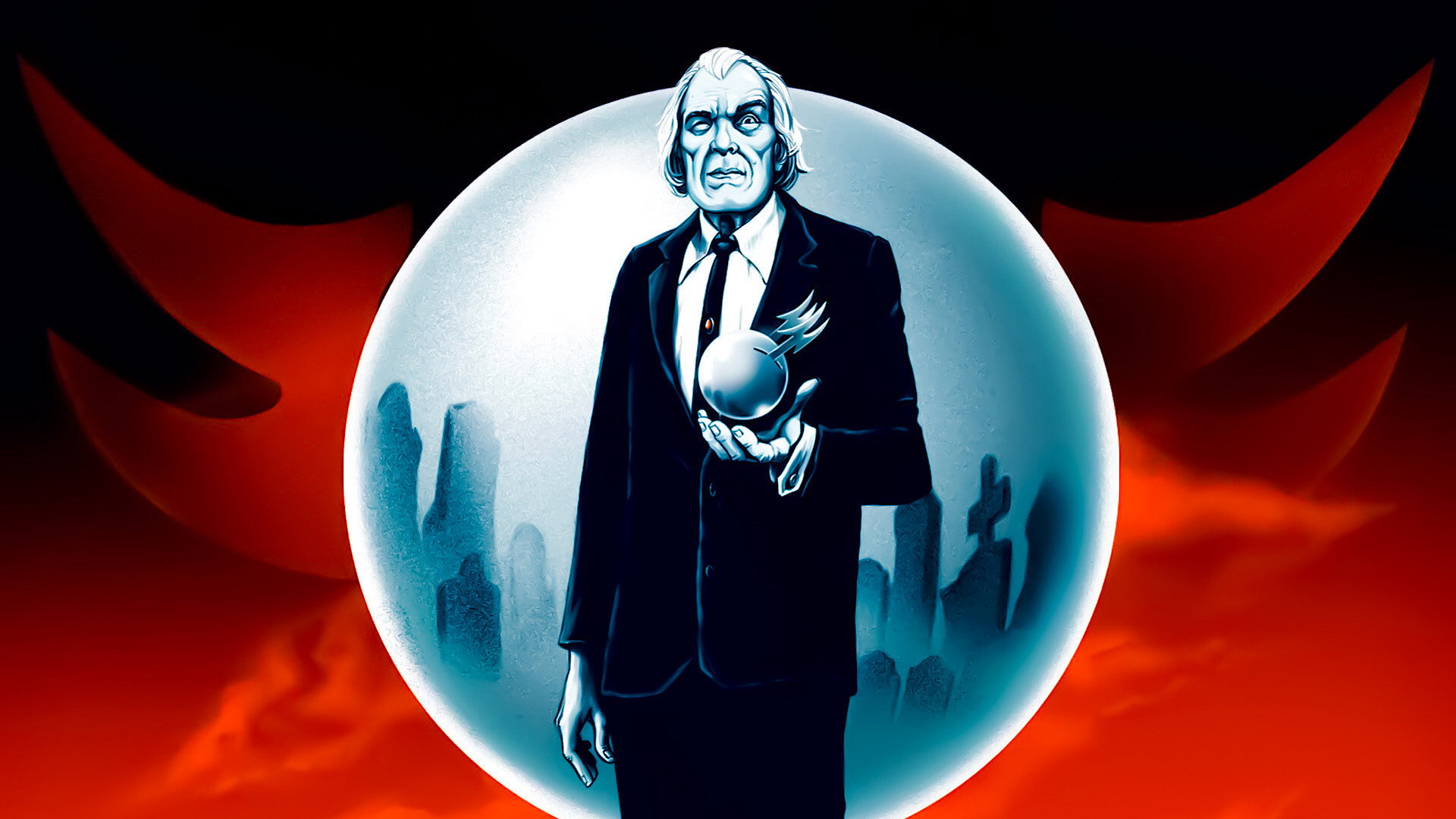
The case, in one place
Phantasm never happened. Not the silver spheres, not the hooded dwarves, not the interdimensional undertaker. The entire saga is a fever dream inside the head of a 13-year-old boy named Mike, who has just lost both parents and his older brother Jody. The Tall Man is nothing but Death itself, wearing the face of the funeral director who keeps taking everyone Mike loves.
The movie all but signs the confession. Mike wakes at the end to learn Jody died in a car crash and it was all a dream, then gets yanked back through a mirror like Alice going under again. Three films later the Tall Man turns and says it in plain dialogue: 'it's all in his head.' Everything in between is grief wearing a horror mask: the fear of being left behind, the guilt of the survivor, the rage at a brother who left, and a mind that simply refuses to let anyone stay dead.
Read the board top to bottom. Every strange 'plot hole' in the first film stops being a plot hole the moment you accept it was never a plot. It was a dream.
The evidence
It ends by telling you it was a dream
Mike wakes up. Jody's dead. 'It was all a dream.'
The confession scene
The film closes on Mike waking beside Reggie, who breaks the news that Jody died in a car crash and everything we watched was a dream. The whole runtime is retroactively labeled: none of it happened. The only wrinkle is the final jolt that yanks him back under, which is exactly how the board reads it. He isn't ready to wake up yet.
Pulled through the looking glass
The last shot is pure Alice.
Still under
After he 'wakes,' the Tall Man drags Mike through a mirror in the final shot. Ever since Alice, a looking glass means one thing on screen: you are still dreaming. The movie's parting image insists the fantasy is not over, and the sequels are the same dream continuing.
The Tall Man says it out loud
'Ice cream man, it's all in his head.'
The villain states the thesis
By the fourth film the text stops hinting. The Tall Man turns to Reggie and, about Mike, says: 'ice cream man, it's all in his head.' The antagonist of the entire saga says the theory as fact. When the movie hands you its thesis in dialogue, take it.
'The delusion of a disordered mind'
That's the dictionary card it opens with.
It named itself
The Phantasm III trailer opens on a dictionary definition: phantasm, the delusion of a disordered mind. The series named itself after the diagnosis. That is what all of it is, one grieving, disordered mind's delusion.
It was born as a nightmare
Coscarelli dreamed the whole thing.
A dream before a single frame
Don Coscarelli has said the idea came from an actual dream of being chased through a funeral home by a floating sphere. The story was literally a dream before it was ever shot. It never stopped being one.
'It's just the wind'
The same line closes the first film and the fourth.
One dream, echoing
In Phantasm, after Mike is spooked and a dwarf shrieks off-screen, Jody soothes him with 'it's just the wind.' In Oblivion's ending, a flashback of kid Mike in Reggie's truck hears grown Mike dying an entire dream away and answers 'it's just the wind.' One dream, echoing across four films, refusing to hear its own death.
The Tall Man is Death
Not an undertaker. Death, in a black suit.
Death took a day job at the funeral home
Every important person in Mike's life is dead, and his subconscious hands the job of taking them to one figure: the funeral director. You cannot kill him because you cannot kill death. When he 'dies' he is simply replaced, memories intact. He is not a man. He is the thing Mike fears most, given a face and a mortuary to run.
'You played a good game'
You only play games with one opponent.
Keeping score
When the Tall Man catches Mike he tells him, 'you played a good game.' You play games with Death, that is the oldest image there is. The line only lands if the man in the suit is the reaper keeping score.
Robed like the Reaper
His little servants wear the hood.
Death's errand-runners
The Tall Man's dwarf slaves shuffle around in hooded robes, the uniform of the Grim Reaper himself. They are the small, crippled dead, dressed as death's errand-runners.
The hands that drag you down
The mud reaches up for him.
The earth pulling him under
Fleeing the Tall Man, Mike freezes at a puddle and whispers 'don't fear,' steps in anyway, and hands erupt from the mud to haul him into the ground. There is no plot reason to fear a puddle. There is every reason for a boy who has buried his family to be terrified of the earth pulling him under.
The red world is Hell
A hot dimension you drop the dead into.
Heat, a pit, and the damned put to work
The Tall Man hates the cold because the world he ships his slaves to is scorching, the 'red world.' When they trap him, Jody vows to thrust him all the way down to hell through the mine shaft. Heat, a pit, the damned laboring below: this is not another planet. It is the underworld a grieving kid was raised to picture.
The spheres that empty your head
They drill for the one thing that hurts.
Straight for the head
The silver spheres are what everyone remembers, and they do exactly one thing: bore into a skull and drain it. In a dream about a mind that cannot stop replaying loss, Death's signature weapon goes straight for the head. Later films make it literal, with a sphere found living inside Mike's own skull.
It's really about a dead brother
Jody died first. The dream keeps bringing him back.
The grave everything grows from
The one scene the board trusts as real is the brief flashback of Mike standing at Jody's grave. Jody is already gone. Every reunion with him in the film is a boy's mind refusing the fact, and the ways the dream keeps fumbling that fact, denial, anger, guilt, bargaining, are the exact shape of grief.
Tommy is Jody
'A hell of a way to end a trio.'
The dream can't keep them apart
The film opens mourning Tommy, and Reggie sighs 'a hell of a way to end a trio.' But the trio of the whole saga is Mike, Jody and Reggie, never Tommy. Tommy is a stand-in Mike's mind built so it could grieve Jody without admitting who died. And in the cemetery scene, for the single shot where you see both bodies, Tommy is literally played by Jody's actor, Bill Thornbury. Those are Jody's bare legs. The dream can't even keep them separate.
Killed the same way Jody was
The crash victim? They call him Tommy.
Watching the wreck from a safe distance
Jody died in a car crash. The one on-screen car-crash death is a dwarf the characters recognize, calling out 'Tommy?' Mike's mind restages the very wreck that killed his brother, but casts a fabricated person in it so he can finally watch the thing he could never face. That he causes the crash is the guilt talking: if only I'd been there.
Jody keeps leaving to die
Five times. Every time, toward death.
The day he didn't come back, on repeat
Across the film Jody abandons Mike again and again, always heading off to confront the Tall Man, and each time he hands Mike to Reggie. That is exactly the arrangement grief leaves behind: the brother gone, the ice cream man now the caretaker. Mike trails him everywhere because the dream is one long replay of the day Jody left and did not come back.
Always fixing Jody's car
The car that killed him.
Bargaining with the wreck
Mike is forever tinkering with Jody's car while Jody ignores him. Jody died in a car crash. A boy who keeps trying to fix that car is a boy bargaining with the wreck: maybe if I had kept it running right, it never would have crashed.
'You're never coming back, you bastard!'
The anger stage, in one scream.
Rage at the dead for dying
Trapped in his room as Jody leaves yet again, Mike screams 'you're never coming back, you goddamn bastard!' Nobody talks to a brother stepping out for the night that way. That is rage at the dead for dying, the anger stage of grief, and proof that under the fantasy Mike already knows Jody is gone.
'Why couldn't it have been me?'
The camera keeps cutting to Jody, doing nothing.
Survivor's guilt, cut into the edit
Thrown from the wrecked truck, Mike lies motionless on the ground while the film cuts, five times, to Jody sitting safe at home doing nothing at all. Nothing happens in either shot. The cross-cut is the whole point: survivor's guilt rendered in editing, Mike wishing the wreck had taken him instead so Jody could have been the one left safe.
Bargaining: let it be Reggie
Reggie dies at the end. Then, suddenly, Jody did.
Anyone but Jody
In the final stretch Reggie is killed while Jody survives, right up until Mike wakes and learns the truth is reversed: Jody dead, Reggie alive. That flip is the bargaining stage out loud, a mind pleading couldn't it have been anyone, Reggie, me, anyone but Jody, an instant before reality corrects it.
The headstone says 1978
Filmed in '78. He just died.
A wound still open
The lone flashback the theory takes at face value is Mike alone at Jody's grave. The stone reads 1978, the year of the shoot. The death is fresh, days old, a wound still open while the dream works overtime to deny it.
His mind won't let anyone stay dead
Denial, with a body count of zero.
Nobody actually dies
For a horror film, Phantasm has a strange habit: its victims keep turning out fine. That is not sloppy writing, it is denial, the first stage, a boy's mind slamming the door on death every time it shows up.
The empty coffin
He screams louder at nothing than at murder.
The corpse edited out
Mike watches a man's brain drilled out by a sphere without falling apart, then opens his father's coffin, finds it empty, and comes unglued. The empty box terrifies him because it is the memory of his father's corpse with the corpse edited out. Reunited with Jody moments later he starts to mention it, then shrugs it off, the mind protecting him from what he almost remembered.
Everyone comes back
Reggie 'dies,' then strolls in fine.
A death count of zero
Reggie is lost in a crash and simply reappears, unharmed, explaining it away. The antique-shop women and the fortune teller's granddaughter all seem taken, yet none of them truly die. In Mike's fantasy the death count is zero, because a mind this afraid of losing people will not let the dream take a single one.
He's too afraid to grow up
If living leads to dying, don't live.
Paralyzed, like a hand in a box
Everyone Mike loved grew up, or grew older, and then died. So his mind draws the terrified child's conclusion: living is just the road to dying, and the safest thing is to never move forward at all. The dream is the trap he builds to keep himself, and Jody, from taking the next step.
'Fear is the killer'
Hand in the box. 'Don't fear, Michael.'
The theory, told as a fortune
The fortune teller makes Mike push his hand into a box that grips it tight, then tells him it only holds on because he is afraid: 'fear is the real killer, it's all in your mind.' It is the whole theory stated as a fortune. Mike is trapped exactly the way his hand is, paralyzed by a fear that is, literally, all in his mind.
Sex equals death
Every time someone grows up, they die.
Stop him growing up, stop him dying
In this town, coming of age is lethal. Tommy dies mid-hookup in the graveyard, and Jody nearly does the same. To Mike, sex reads as growing up, the thing his big brother did right before he grew away and died. So the dream stops Jody's tryst cold. If Mike can keep Jody from growing up, maybe he can keep him from dying.
The dream is furnished from his bedroom
The moon poster became Hell.
A dream builds its sets from the room
Why does the underworld look like an alien moonscape? Because a full-wall poster of the lunar surface hangs right over Mike's bed, exactly where the Tall Man keeps appearing. The Roger Zelazny sci-fi novel My Name Is Legion sits in his room too, which is where the spheres, the red world and the shape-shifting come from. Dreams build their sets from whatever is lying around, and this one raided a 13-year-old's bedroom.
Reggie's bottomless wad of cash
An unemployed ice cream man, absolutely loaded.
The biggest mystery in the film
Watch Reggie across the series and he is forever peeling bills off an endless roll: tipping, paying, even leaving cash on the register of a store he's robbing for supplies. He drives an ice cream truck and barely works, yet the man is loaded. The first film quietly explains it and deepens the mystery at the same time: behind him in one shot is a storefront reading Reggie's Ice Cream Parlor. Somewhere in this nightmare, Reggie is a thriving small-business owner. He's got the skills to pay the bills.
The Tall Man is Mike
A time loop with no way out.
Death is wearing your own face
Here is the plot-level rival read. In the fourth film, inventor Jebediah Morningside steps through his portal and, seconds later, the Tall Man steps back out cradling a sphere. At the very end, the Tall Man lifts the sphere from Mike's own skull and carries it through a portal the exact same way. Read it as a loop: Jebediah opens the door, Mike is born down the line, and the Tall Man carries Mike's mind back through to become the very figure that has haunted him his whole life. In this house, Death is always wearing your own face.
Episode transcript
Hello, and welcome to The Popcorn Isn't Real. I'm Leif Eric, and I'm here with my brother Torvald, and today we've got a real treat for you. We are going to be talking about the Phantasm film series by Don Coscarelli. So the first one, Phantasm 1979, was like really successful, like unexpectedly, right? Like it was just a random, like super indie movie made by Don Coscarelli on the weekends with his friends but i mean it came out at just like the perfect time for like campy horror movies right like just 1979 and so universal was the one they were the ones in charge of the second movie the sequel okay um and that's why there were so many stupid choices made right because they were like hey people like this but we don't want to bother understanding why people like this so we're gonna have ourselves into every single you know part of the process we're going to have him recast the lead for no reason which he didn't want to do no but he just like they wanted him to
recast mike and reggie but he's so stupid i know like why buy that people are watching this well but like in their defense in the 80s like they didn't know how franchises worked and how fans worked exactly at that point right like we didn't have the big you know long spanning um series that we do now so you know i can kind of give them the benefit of they just like well they we know that you know bigger stars mean bigger numbers so all we need is the title phantasm and we throw it but i'm just like so they wanted to like a named star but like who the heck is james legrose the guy they got to replace mike like right like like there's no reason like i don't know maybe he was on some tv show back then i don't know i haven't looked into james legrose's history but like it's just like it's if uh if uh you know marvel they released the first iron man movie and that's like a huge unexpected success and they're like whoa iron man's a huge success quick let's recast tony
stark like no one would think that let's recast war machine let's let's recast roadie which they did well that wasn't really their fault that was just negotiations either way i'm just saying like they wouldn't recast the titular character they wouldn't recast iron man just because they saw it was successful right like i don't understand how success correlates with let's recast the main character i just i mean i don't get it it's a completely weird decision right like the person who discovers it and makes the decision to like purchase it or convinces the execs to purchase it like maybe is a real fan but then the execs are just like well we have this property you know and so we're just going to apply our normal logic to all of the properties we have yeah is there normal logic for a sequel recast the main character i mean i don't see how that's logic apparently right well they're like nobody knows who who michael michael baldwin his name is
actually mike so yeah reggie's name is actually reggie but anyway it's a michael baldwin though he has a first name yeah he's he's not the michael baldwin but anyway so like for don coscarelli he he argued them that like okay well at least let me keep one of them and then of course he chose reggie because it's like eight years later so you might as well recast the kid right because that makes sense he will look different yeah back to the the budget so like i think phantasm 2 i don't know if it was as successful as the first one but i think it was fairly successful because it's just like a fun little action horror comedy thing um and then i think that's why they had a huge budget for three but then i don't think three did very well and also i think it's the worst in the series personally really i like three a lot i hated three not as much as i hated ravager but we won't talk about everything it had like a plethora of those uh floating death orbs what are they called they
have like a technical name well they have lots of names sometimes they call them drones other times sentinels um other times floating death orbs so one one time i think it was like mike called them like orbiculars or something like he came with this weird technical word that i was like what yeah i don't know maybe i made that up while watching it but i think their technical name is sentinels but i'm not sure well i had a ton of sentinels which i like oh yeah so i was hoping for more sentinels so i got that was the first time they'd ever use cg oh i mean it worked in in spades it was great um it had like a home alone ripoff kid it had like so that's the they put the home alone kid in it that's the reason i was just like wait a minute like it's well don't get me wrong like i love reggie as a character but i feel like he works better as a supporting character and i think that because they had to recast mike in the second
movie they had to make reggie more of a main character um because he was the familiar face and then what they did was they just kind of kept going with that with like well now reggie's sort of the main character so they and then i'm just like why is reggie in this house with this home alone kid like this is stupid why are we doing this this doesn't make any sense yeah and like so like that kid was introduced he was supposed to be kind of like an homage to the original mike in the first one he was like they were like the original yeah no that was my thing like he's nothing like him first of all i thought that like mike before he gets old was just like the prettiest pretty boy right like he's i mean i thought he was kind of scrawny well i think he's just like such a cute kid and then this kid they pick in the new one first of all he's way younger and he's a little chubby he's like not he's like not cute at all and then like so mike he spent the
first half of the original phantasm like being really bad at things so you kind of find him endearing he's just like a kid who's just trying to stick with his brother right and you're really real hard but wasn't really good at stuff whereas like this new kid is just like a total poochie who's just like i'll kill all the bad guys and it's like like his whole uh being able to make improvised weapons and traps and stuff like like mike did that once in the original movie with like the cool little trick where he gets out of his room like that's a cool trick right and but this new kid is just like doing that constantly from the very beginning and it's just so annoying he did it a bunch at his house i don't remember him doing it ever again after they left his right after the stupid home alone thing i mean like home alone as a horror movie is a good idea if that's the movie but that's not the movie i came in to watch right i want to see what happens to mike and reggie
it was out of place and weird but i took it as ah here's a fun little home alone homage right like that's okay that was fun and then we moved on with the movie right I yeah I thought it was okay the three did start out really good like I loved like when they brought in Jody when they brought Jody back that was really cool yeah um and Reggie's you know and Reggie's great line Jody what are you doing here you're dead so that was like interesting and that's like such a great way to start you're like oh what's gonna happen like like Mike finally reunited with his brother jody like what are they going to do what's well you know what is jody now you know yeah and then they're just like okay now let's let's separate reggie from mike let's follow reggie let's do home alone let's have him find this this rocky lady with her nunchucks yeah she had nunchucks she was so cool i actually i didn't mind rocky i thought she was pretty cool you gotta admit
yeah i liked rocky you know she was great and she like i thought that she defied the trope of you know 70s 80s horror girls and she fought off his sexual advances every time that was good in many ways she played directly into the trope of like 70s 80s black ladies no she was fun she was a good character i can't i i can understand disliking the kid i can't understand disliking rocky she was great but i thought it was interesting that like george lucas and don coscarelli kind of got their start around the same time yeah and people even compared phantasm to star wars because the dwarves were kind of like the jawas which yeah i mean they looked a lot like but like he wasn't copying the jawas but like they both did the same thing right like put the jawas in that one desert with my with my other thing with the kid well they did they would do that but with like uh george lucas cast this like young cute luke skywalker kid
and then when he does his prequels he's like i'm gonna do an homage to that when i cast a young anakin but he's like this chubby annoying like not endearing at all you know and then don coscarelli did the exact same thing yeah i agree he's he is the kid from phantasm 100 so so that concludes It's my theory. Yep. There we go. So we came to the conclusion that Phantasm 3, the little kid, is Anakin from The Phantom. The Phantasm Menace. Yeah. Wow. Dude. Five thumbs up and we'll see you next time. I mean, okay. So you didn't like Phantasm 3 and I understand a lot of the reasons you didn't like it. But overall, I loved that they brought Sentinels back. I love that Jody was a sentinel. I loved the fan, the tall man just getting like melted and head exploded and frozen. And like, they murdered him in so many ways. That movie, I thought it was great. I had a lot of fun with it. I thought it was,
it was really, really, really fun. Right. Like I, yeah, like for all its flaws, like you can't skip Phantasm three. Oh no. And it has tons of story. Like you can skip Phantasm two completely. Like you don't even need to watch it. As far as the story, it did nothing. phantasm 3 the story was like thick and heavy like we learned everything about mike and judy and honestly it's it's totally a fine movie if you just cut that kid out right like like once they get to the funeral home like it's all pretty interesting and finding like you know the that there is a sentinel inside of mike's head you know like all that stuff is interesting well i mean that's something i wanted to ask you about but i'm not sure if i should wait till we're like going through your theory in phantasm three did the tall man put the sentinel in mike's head using that device or was he trying to get it out of mike's head using that device and i mean
you finished watching phantasm four right yeah he takes it out of mike's head right and i'm wondering did he put it there because he seemed to have finished what he was doing in phantasm three like no i in phantasm three i'm pretty sure he was trying to get it out and he just didn't get it out i don't know okay so in that case had it always been there why was there a sentinel in his head i don't understand well so there is a long sequence when reggie is at the home alone house where we don't see mike for a while so it's possible so like i mean this this does factor into my theory a tiny bit is just that I'm not going to focus a lot on the plot because I feel like the plot stuff doesn't really make sense it's all just an excuse for the metaphor you know of the you know the actual meat of the of what's going on in Mike's head okay so in your opinion the movies aren't real like it's all metaphorical this the plot the stuff that's going on is only a
foil for what we're trying to show yeah and that is a good place to get into my theory so my theory is that none of the phantasm series happens it is all a dream in mike's head and i'm going to focus mostly on phantasm one but we can get to the other ones after and just kind of try to see how they might factor into this theory but so my theory as as implied by the end of the first film the entire movie is a fever dream of a young boy who is dealing with the loss of both parents and his brother trauma from going to these funerals has caused his subconscious to demonize the funeral home director his fear of death and being left behind is what prompts kind of all the events and crazy stuff in this dream like i know the end of the first phantasm film pretty much kind of like confirms this theory right sort of but then we've got we got like sort of that extra twist at the end where it's like oh but maybe it's real so i think that's the reason
why it's good to, to go over this theory and just see how everything fits into this idea that nothing happened and it's all a dream. Yeah. So what I'm going to do is I'm just going to give a quick synopsis of the first movie, and then I'm just going to start bringing up, uh, evidences, uh, just going through it, uh, line by line for how all the different events, uh, support this dream theory. So a 13 year old boy named Mike suffers because his parents died recently and he's afraid of losing his older brother jody he thinks uh he thinks something strange is going on at the local funeral home he and jody and their best friend ice cream man reggie end up on the wrong side of an evil undertaker known as the tall man turns out the tall man is from another dimension and he reanimates corpses to act as his slaves on another planet was he from another dimension uh well okay well yeah well maybe not
the other movies might bring that into question it's all in mike's head but well at least on a flat level from the first just looking at the first movie it seems like he's from another dimension or planet yeah okay he also has spheres of death that drill out your brain that's him i mean that's kind of important that's the thing people remember most from the movie well but why does he have them like what did they accomplish maybe we'll get into that later but so they they work together to defeat the tall man these three uh but then mike wakes up reggie tells him that his brother jody died in a car crash and everything was just a dream or was it well and importantly up until that scene reggie had died and jody had survived and we'll talk about that right up until that scene when all of a sudden Mike wakes up and Reggie was alive and Jodie was dead. Yeah. And when I got to that very last scene, I had loved Phantasm up until that point.
But like when I got to that last scene, my first thought was like, come on. I just invested, you know, an hour and a half into this movie. And also like, but then you're like, okay, so it was a dream. But like, what did the dream start? Yeah, exactly. What did happen? Like, because Reggie's here and Jodie's not. Dirty Dying was never part of the dream, like any part of the movie, right? But then it was a double fake-out because he went to his room and the tall man was there and he attacked him. And the tall man says his catchphrase, boy. Which I think is actually a really good catchphrase. Dude, everything about the tall man is really good. He's a great villain. He's so good. I really, really enjoyed him as a horror villain. Dude, so I have a question. Okay. It has nothing to do with your theory because your theory says none of this exists. But like whenever they killed the tall man and he came back, what was going on there?
Like, was he healing? Was he regenerating? Or was another tall man just coming out of the alternate dimension and replacing him? Another tall man was coming out of the alternate dimension and replacing him. Okay. Did the new tall man have all of his memories? I think so. How?
Well, I mean, in a way this factors into my theory because, but not like, I don't know exactly the plot reason, but the non-plot reason is that he represents death. He is death. So of course you can't kill death, right? He's just a force. You're saying he wasn't being replaced by an alternate universe version. He just kept coming back. Like he regenerated basically. No, but I mean, like the plot reason, he was being replaced by other versions of him. All right. I don't know. They have his memories and stuff. Okay, so it's really hard to sort of say what exactly the plot is. But certainly what it feels like is someone's dream, where everything kind of makes a little bit of sense if you don't think about it too hard. But really nothing makes any sense, you know? Yeah, definitely. Definitely. Nothing makes sense. I mean, so the first support of my theory is that Don Coscarelli said he thought of this idea when he had a dream that he was being chased by like a weird floating sphere in a funeral home.
It was inspired by a dream. That was the first movie. All right. The tall man is death and Mike is afraid of death. All the important people in his life have died. Yeah. And you're saying that at the start of this movie, his brother has already died or his brother is in the process of like dying and Mike is coping with it, with this horrible nightmare. His brother is already dead because at the end of the movie, we do get a brief flashback, which I think is one of the only scenes that really happens where Mike is staring at his brother's grave. and it says he died in 1978 which would have been when this was filmed all right so it's just very recently that he died in a car crash well then can i ask you what was the significance of like the very first funeral of the movie like their mutton chop friend was he jody yes and that is a big part of my theory reggie and jody meet to mourn the loss of their friend tommy who we will
talk more about later because he's important uh reggie implies that it's good that jody did not bring mike to the funeral as mike was apparently traumatized by the death of his parents two years previously and he doesn't do well at funerals right yeah um so that's just like right off the bat they're telling us mike does not do like he's traumatized by anything having to do with funerals right but then that entire scene and like the scene following it all happen without mike being present yes and i think this is a dream thing right like you can be someone else in a dream right you can switch perspectives right like i don't think it matters that we're not always in mike's perspective like it's all in mike's mind but he's jumping perspectives from time to time to other people no i can i can dig it so yeah everything having to do with funerals in the funeral home represents death to mike and it scares him um just a few little things these
are small things but like the dwarves they're even robed like death right like they're robed like the grim reaper yeah they have brown robes though grim reaper has a black robe that's true but i mean it doesn't matter now now in a later point in the movie when mike is escaping from his room because jody trapped him there the tall man is already at his door when he gets out and he says i've been waiting for you now there's literally no plot reason why the tall man would be waiting for mike at this point right except that he's obsessed with mike like mike has weird telepathic powers or whatever right oh yeah but we don't lend that to later movies i'm talking about like right now in this movie like there's really not much reason that the tall man No, you got to take it in context as a series because there are so many threads. Like this series was so cohesive, dude. Like that's why I liked it so much is there's so much in the first movie that doesn't really make sense or have any meaning.
It's true. But somehow carries over to the second and third and fourth movie. Like the tuning forks, for example. Like there's no reason for there to be tuning forks in the first movie. And yet they were so important in the fourth movie. Well, but, and one of those things that actually has to do with, with, uh, what I'm talking about right now is, uh, when the tall man walks past Reggie's ice cream truck, right? Like when that happens in the first movie, you're like, what is he, is he, I thought he was staring at Mike across the street. But then he wasn't cause he kind of looked past him and looked away. He didn't even know Mike was there. And then in the third movie they established, Oh, he doesn't like the cold. And I'm like, wait, did they just retcon that? But no, that's what they intended from the very beginning yeah like the tall man didn't even see mike in that scene that that shot was always
just supposed to show he hates the cold and it didn't matter at all in the movie that they showed it in but that's uh but that's another thing that sort of equates him with death because the reason he hates the cold is the dimension he's from is very hot which is what we tend to associate with hell right like it's the red world is what they call it the cold clammy hands of death like being cold and lifeless I don't know I think cold is associated with death as well I don't know I feel like there are several things that kind of uh equate the tall man like images that sort of uh show that he is supposed to be like death or from hell right like I was if you're saying he's from hell yeah I think his his dimension or where I don't even think it's his dimension but whatever dimension they put the dwarves into for whatever reason definitely seems very hellish you know yeah i don't know why the dwarves are there i always assumed they were mining but that's just because
mine shafts have a lot to do with the first movie which again i think is a hell image because when jody says they're going to throw him down the mine shaft he says we'll throw thrust him all the way down to hell or something like that drop him all the way to hell another thing that kind of equates the tall man with death is when he one of the times when he catches mike he says you played a good game which of course is what you do with death right you play a game with death bill and ted do it now one of the things we're talking about is uh how mike has this don't fear sort of uh thing that he repeats to himself that he gets from the uh the fortune teller at the very beginning and how this whole movie is kind of him learning to not fear death and learn to live his life but when he is going to find jody after jody has left to go to the mine shaft and the tall man is chasing him he's like about to step into a puddle of mud and he stops and he says don't fear
there's literally no reason for him to be afraid of that mud no but then he steps into it and it's pretty scary there was so much reason for him to be afraid of that but that again is just another death imagery that like these hands come out and try to drag him into the ground right like he's a he's been to three funerals in the past like two years and he is just utterly terrified and paralyzed by death and you know those hands trying to drag him down too yeah i i can i can get behind all the death imagery and all the scared of funerals uh references that you're laying down i agree with everything so far so we know that mike is 100 afraid of jody leaving right jody leaves mike constantly throughout this and mike is leaving him is always following him around and every time at least from the halfway point of the movie onward every time jody leaves he is he's going to die right he's always going into danger and he always leaves mike in an also terrible bad
situation yes right which of course incredibly irresponsible but of course that's how mike would see it because that's what jody did jody died he left and died and mike a totally like completely an orphan well he was already an orphan but like now he's like he got no one right except the ice cream man you know so like i think the fact that this happens like five times throughout the movie you know and of course that mike is just always trying to get jody you know he just wants his brother back is is another um supporting evidence for the fact that like but his brother just keeps leaving him to go fight death and a lot of times when he leaves him that's another thing is he leaves him with reggie which is presumably what happened when he died yeah now reggie is his caretaker so i just i just have to say i don't remember him leaving him with reggie i i think reggie was like barely in that movie he showed up to play his guitar and then he showed up at the
end i don't remember him at all in so middle part one time uh when he leaves uh toward the end he leaves him with Reggie and tells Reggie to drop Mike off at the antique shop. And this is where Mike sees that photo of the, that comes to life of death, you know, this unaging tall man who has apparently been around since like the 18th century, right? That's one of the times he leaves him with Reggie. During that scene, when Mike realizes he has to go back, he convinces the antique shop ladies to take him back in the Volkswagen Beetle. And then there's this scene where the dwarves attack the ladies and they find Reggie's ice cream truck tipped over I mean if you want to talk about that part I was wondering what your interpretation of that is in regard to your theory like what what was going on with these antique shop ladies what did they represent why did they need to I guess die well I mean I think they just represent someone who it's like the failure of
his family and friends to take care of him right I think it was someone that Mike was just taking care of for a while and no one kind of wants him reggie's dropping him off with the antique ladies the antique ladies are taking him somewhere else right right like he's an orphan and lots of different people are kind of taking care of him but he really doesn't have any one person like jody anymore okay but oh so during that scene when they get attacked by dwarves um mike gets pushed out the back window he lies on the ground like next to like an overturned truck the ice cream truck and he's just laying there on the ground like not moving and it keeps cutting to Jody who is just sitting at home doing nothing and then it cuts back and forth between Mike and Jody like five times yeah and I kind of think nothing was happening this is trying to tell us that he wishes that he had been the one who died in a car wreck instead of Jody like Jody could
have been the one who was safe at home you know yeah um I I think that that's part of his conflicted feelings about Jodi's death is I mean that's the thing that people feel often during grief is like you know why couldn't it have been me kind of thing simply owing to the fact that there is no other reason for that scene to have been in the movie I gotta agree with you I mean what else could they have been saying that like I was wondering myself I was like why do they keep cutting between Jodi and Mike right here nothing's happening so after Michael does get home and finds jody who was just sitting there doing nothing presumably waiting for reggie but this is another time when jody leaves him in a bad situation to go off to die right to go off to meet death and he's carrying michael upstairs and at this point i think this is very important michael screams you're never coming back you goddamn bastard i think this shows that michael obviously kind of
subconsciously even though he's sort of hiding the fact that jody's dead bringing him back to life in his dream subconsciously he knows jody's dead or going to die and i also think he's mad like that's another feeling you feel when you're going through grief is you're angry at the person for dying and so that's why he's swearing at his brother and also worth noting like this is you know in screenwriting terms this is the act break this is the low point this is the moment where all is lost the one time when jody leaves him and he's actually prevented from following right yeah all the other times for long you're right not for long but all the other times he's basically been able to just follow jody this time he actually has to find a way to escape all right so in the very beginning of the film at tommy's funeral reggie says a hell of a way to end a trio now presumably tommy was a member of their band i don't think tommy is a real person they never
talk about him after that they don't seem to be particularly sad that he's dead no now possibly this could be because it's mike's dream and mike didn't really know him but right like like i think this is mike's dream and i think tommy is actually jody and mike's mind is still blocking out jody's death so in his dream slash memory he's created another person now right he says a hell of a way to end a trio but the real trio through all these movies is mike jody and reggie not tommy jody and reggie that's true so then uh like after the funeral him sneaking around is that like he tried to not go to the funeral but got yeah went to it anyway like what i don't know but i mean yeah of course every event might not directly correlate to something in real life but i was just wondering if that was anything like and this i don't know may seem unlikely but it is possible that maybe he was prevented from going to jody's funeral like yeah because they act like he had a really
bad experience at his parents funeral i don't know maybe he flipped out maybe they didn't want that to happen again like the only time we see him is just standing at jody's grave right but that's not at a funeral like like jody's already buried it's covered in grass right yeah maybe that's kind of like part of his dream slash memory maybe he did try to sneak into the funeral i don't know but it also kind of seems unlikely like you wouldn't prevent a brother from going no that's pretty sure he could have gone if he wanted if it was his brother's funeral but then uh i guess the tall man coming and picking up the casket and carrying it away is like death taking his brother is that what you're saying there yeah yeah definitely all right all right but it is interesting to note so tommy dies while having sex with a blonde woman in the cemetery yeah something that this is gonna be my next question to do later right like the exact same scene
right but what does having sex have to do with death like why does sex lead to death in this movie we'll get to that right after we we finish tommy as jody because that's that's another big part okay so tommy does what jody does yeah that's what you're saying well like exactly like how common a thing is this right very common in this small town to have sex it doesn't make any sense people not have houses or cars i mean you remember the girl when she picked up jody she's like so what do you guys do here for fun that's what they do they go to the graveyard and have sex but okay so but another thing that i think supports my theory is that in the first scene where tommy's having sex in the graveyard tommy is literally jody in one shot so the actor who played the woman in violet that's the woman's name she wasn't super familiar with the actor who played tommy and didn't want to shoot a sex scene with him so for the one shot where you can
see both of them together the actor playing tommy is actually jody's actor bill thornbury and you can see his naked legs in the shot i was gonna say you can only see like their legs and feet but i mean like i kind of think this supports the theory because like ideas come to directors on the fly and after shooting this i think maybe he embraced the idea oh yeah tommy is jody whether consciously or subconsciously well i mean i can't deny tommy is jody for that scene right literally jody okay and then the other thing is jody dies in a car crash well what other character dies in a car crash in this film um i mean presumably the two girls from the antique store might have no they actually survive and we'll talk about they survived that's really you don't you don't see them again later but we'll talk about why they survived and why that's important to mike but no the other person we see die is a dwarf who's killed in a
car crash and who was that dwarf like they look at him they're like oh dude it was tommy you're right right like he's killed the same way that jody was killed and mike's mind is trying to face reality but it can't so it creates the situation where he gets to witness the car crash that killed his brother but with a fabricated person right so he's not traumatized the car crash well again i think he might even feel a little guilty like i don't think he was responsible but i think everyone dealing with grief kind of feels a little bit of guilt like oh what could i have done kind of thing yeah like if only i'd been there if only he'd let me come with him mike i think is afraid of living his life he's afraid of dying and i think he thinks now subconsciously that like living is dying right everyone he knows is dying and if he like his life he's just going to die at some point so when mike goes to the fortune teller he tells them he saw something scary the tall man and they
don't care about this at all they're just like whatever they don't even respond to it they're like stick your hand in this box yeah stick your hand in this box michael that's what the girl says in her weird monotone voice a really great response to this kid being scared hey shove your hand in this box that will grab you and not let go and it gets stuck but they insist that it's all because he's afraid and she keeps telling him don't fear michael and then let's go of him even though he's still clearly afraid and he's just like fear is the real killer it's all in your mind etc so like these are hints that like it's all in his mind but also like he's afraid to move on with his life right like he's literally dying of fear like he right and i think he can't face he's kind of yeah like he is paralyzed he's not moving anywhere he's trapped just like his hand is trapped in the box now this doesn't support my theory at all uh but when he leaves they snicker
those those two ladies uh like they just played a trick on him like his hand was like even in like even within the context of the movie even if jody's not dead his parents did die like two years ago and he's like like why would they play so he's afraid of living his life and what does sex represent it represents coming of age growing up and what he kind of it seems like maybe he even gets mad a little bit uh jody for doing is when jody's you know uh trying to hook up with that lady um the lady in violet dude i mean he was super excited like he chased him out to the graveyard and he's like oh yeah i'm about to see my brother bang like he was pumped which also made no sense because like from where mike was he couldn't see he would only see his brother like it was so dark and he was far away like you wouldn't be able to see like anything at all yeah no i mean he was just real excited for his brother he was happy for him like yeah but i
think the reason that sex equals death for Mike or why he equates them is just because that represents like a coming of age. Like that's what Jody did. Jody got older, his older brother grew up and started dating women and then his older brother died. Right. And so that's why sex equals death for him because it represents growing up, which is what he can't do. He can't grow up and move on with his life. Right. I'm not completely behind this just because sex caused death. right exactly this sex killed tommy and was gonna kill jody but he stopped the sex so you're saying he stopped tommy he's like if only i could stop tommy from growing up it's like if i could stop sorry jody from growing up yeah i think so like i i mean i don't think that it's necessarily logical right like this is all in his head i think that he does feel like as his older brother was growing up maybe growing further away from him and then eventually died in this car crash like
was there something he could have done, right? Like, could I have stopped him? And then in his dream, he does stop him from growing up from having sex and from consequently dying. So. Okay. Well then here's another question about that. And this is a question that I just had organically as I watched that scene. So they're about to have sex and the girl is presumably the tall man and going to kill Jody. And then one of the tall man's henchmen comes out and scares Mike into the sex like out into the field so he'll run past and disrupt it and because of that little dwarf they don't have sex and jody doesn't die so death saved jody from death yeah how do you explain that i mean here's how i'll explain it so good luck don don coscarelli has said many of the plot points and things that happen in phantasm all came about just because the crew was sitting around chatting and then just decided to like make some cool props or
costumes were like hey we can shoot a scene about this yeah it just seemed like it i'm not saying that everything necessarily consciously to don coscarelli was always without plot holes so i think maybe this is a slight plot hole from both my thematic standpoint and from the plot standpoint it makes no sense no matter what there is no there's no reason why the dwarves would be thwarting their master even if if you go for the that that it's all real right like it seemed pretty purposeful that they scared mike out there like they could have attacked him without growling at him and lunging at him like that like i actually don't know if the dwarves can do anything without growling that's you might be right they do growl a lot but i mean if we look at it from the plot maybe the tall man just likes to have the dwarves around the tall man likes to have the dwarves watch while he has sex and mike was just in the way right that was clearly a great
they were just as pumped as mike about this like hey let me get in on this i mean they didn't chase mike down right like clearly they were like all right position but then the tall man left we could watch our master get naked dude whoa so maybe the dwarves represent mike because they wanted the same thing that he did out of that situation i mean they are people who are literally crippled by death which mike is true they are crippled by death right so but they're also the people who have already died yeah all right so we we got through the whole the whole sex scene yeah so what's next on the list but well this relates to the whole tommy is jody thing but mike's mind blocks out death in almost all its forms so he can't face the death the death of his brother and he kind of blocks out all other deaths right yeah so like i don't know if you remember the coffin scene where jody goes to all the trouble to pull out his father's coffin but doesn't look inside
and then leaves it there then mike shows up and does open it he sees that it's empty and he just like freaks yeah he's really really scared about that empty coffin there's so much scary stuff going on this is literally just an empty coffin like sure maybe he's scared because his father was turned into a dwarf but like he's like i'm not mistaken i think he just saw a guy get his brain sucked out by a floating orb with spikes yeah i mean that that was earlier but yeah like he's seen other things and not screamed that much yeah i think what he was remembering was when he did see his father's corpse at the funeral and how much that traumatized him but his dream blocked it out yeah and like the the the coffin's empty no one died right yeah okay that's a cool interpretation. I like it. And when he's reunited with Jody, he almost tells him the coffin was empty, but then he's like, ah, forget it. After literally just screaming his head off, he gets
over it immediately. Cause like his mind kind of protected him from that, right? Like he was screaming, but he's not sure about what. Well, okay. As long as we're on the subject of empty coffins, here's another part of the movie that stuck out to me as something that I just felt like I didn't understand. Mike sneaks into the funeral home and is hiding from someone who isn't the tall man and he sneaks into the coffin and hides there and the guy who isn't the tall man seems to know mike's there and is like coming straight at him and then the tall man stops him and they both walk away and mike is saved by the coffin and by the tall man what's going on here like that whole scene confused me from both like a plot perspective and from like an analogy perspective i mean this may be another one of those fetish dwarf things but yeah no so like the guy that the tall man talks to who is that guy who is that what's i believe he is the caretaker
of for the grounds yeah like for the grounds of morningside cemetery um now he has red blood so he seems to be human and not a reanimated corpse right like why was he just hanging around this regular guy working for the tall man okay wait wait wait i just came up with a theory okay so this is this is from the plot perspective right the tall man is doing things he shouldn't do and presumably the caretaker doesn't know this because the caretaker is human yeah now the tall man probably thinks that that coffin is empty because the tall man took the body out of it and crushed it into a dwarf so he doesn't want the caretaker to open it and see that it's empty all right but like why didn't the call man just like kill the caretaker right this all falls to pieces just due to the fact that the tall man is so utterly brazen with his actions yeah no he doesn't try to hide what he's doing even a little right and that's where i feel like someone's watching
he just continues that's where i feel like some of the sequels start to fall apart when they start acting like the tall man's just taken out whole cities but like no one cared like you just start to lose a sense of like is this world even real like what's going on but that's because it's all a dream so yeah no it felt kind of weird and post-apocalyptic it was just it got a little weird i don't know i liked it when it was self-contained in the one town and that's the main reason well not the main reason there are so many reasons that's one reason not to watch ravager because they they kind of embrace the post-apocalyptic thing and it's just not really what the series ever was about you know but anyway so back to him blocking out death just to clarify for our viewers i haven't seen number five ravager yet but you have yeah it don't don't watch it so these theories won't be pulling from number five only one through four back to my point about mike's
mind blocks out death this is just a really small thing but like reggie has a car accident and it's gone and then later he just shows up he's like hey guys i'm fine right like so it kind of seemed like reggie had died but then mike's mind was like oh i don't like that i don't love reggie's back and not only not only does reggie come back and just be like oh you know just like just he just explains it away just like oh i was just hiding out in a casket and then i and then i found like a bunch of of girls who were here who had been kidnapped and i snuck them out the back so like the two ladies a hero the two ladies from the antique shop as well as the fortune teller's granddaughter presumably didn't die either even though it kind of seemed like they did so like no one died in this fantasy of mike's no that's that's a weird thing i thought um like a little difference between the first one and the rest of the movies is that in the first one the tall man
seems to be equally able to like take people alive yeah like he he's okay with taking live people and doing whatever he does with him whereas in the other ones he seems to kill people and then take them like he's only taking corpses let's keep going what else do you got i don't actually have like a too many more points but i just do want to like point out that mike has a fascination with dangerous cars there are a lot of car crashes in all of the movies so the first time jody goes to the funeral home and escapes it's a car that tries to kill him and it's a car with no driver it's just a dangerous car so like mike probably doesn't know who caused the car crash that killed jody it was just a car right like i think this is his mind creating that dangerous car that killed jody but what happens in this situation is mike gets to be the hero so i think his mind is in part in this dream is to play out a wish fulfillment scenario where he could have saved jody from
the crash that killed him yeah so i just have to point out one crazy story from the shooting of phantasm so when you shoot cars that are driving like the interior of cars you like your act like if you are shooting the actor who is driving they're not driving when you shoot it right you find a way to fake it right because that's not safe to have someone acting and driving uh but uh don coscarelli didn't know that so he just shot with the actor driving but here's the thing the actor who was driving was mike who was 16 when they shot this who literally learned to drive for this movie like he didn't know how to drive until this movie so it's like extremely dangerous what a great situation and also don coscarelli almost got shot by the shotgun blast from a moving car that chody shoots at the other car even though they were shooting blanks but like at point blank range yeah blanks are lethal don't want to get hit yeah
anyway i'm just gonna get into a little bit more car imagery i don't know how good this evidence is but people get crushed in cars right like cars get compacted when they crash when people die and people get compacted when they turn into dwarves all the people the the tall man gets he crushes right like like most like people who die in car crashes i don't know yeah so i mean maybe maybe mike didn't see jody's body but he heard that he got crushed in the car yeah so yeah i don't know maybe that's how he interpreted it i know the dwarves do a lot of different things in this movie but they are also often associated with cars right like the dwarf tommy is driving a car reggie gets in a wreck because of dwarves uh the dwarves drive away because there's a lot of cars with the antique shop girl's car well that's another thing is that often cars just take people away to death right like that's what the hearse does it's just a car that takes people away to
their doom and then sally the antique shop owner and her friend or sister or whatever they get just taken away by a random car i mean i don't quite buy the dwarf car connection but i do agree that it's a little weak people away in this movie so here's another interesting thing having to do with cars mike is often trying to fix jody's car and yes jody doesn't even comment on it like he doesn't care like when they drive up after the funeral uh mike gets out and he just starts fixing the car and jody looks at it but he doesn't say a word right and then he starts he starts talking to the neighbor as though mike isn't even there and mike can clearly hear him about mike he just forgets that mike exists no and i i have to say this part was really weird because everything about that scene made me it's as the viewer think oh jody's planning to leave mike right yeah but he wasn't like he wasn't this is just you know if your theory holds this is just
mike's mind being like ah he's gonna leave me he wants to leave me he's going right yeah yeah no i think this is his fear uh that jody's gonna leave me you know manifested because you know jody died and did leave him but there is the second scene where he's fixing jody's car and i just like why is he always trying to fix this car now this is probably a stretch but we know jody died in a car crash and i think this is mike being like maybe there's a way i could have prevented it like i could have fixed it i could have made it work right so it wouldn't have crashed yeah and we don't know if there was anything wrong with this car but it's still like the idea that i could have fixed whatever happened yeah in the second scene where he's trying to fix jody's car some monsters attack him and jump on the hood and then the like the the jack that's holding it up falls or whatever it falls on and he gets crushed it practically crushes him like it doesn't but like but then he
just kind of pops out like oh i'm fine like i was kind of confused there i was like i think that's another point where like his mind was like i'm so afraid of death afraid of dying in a car but then it protected him like oh you're you're good we're good there's no death death doesn't exist i mean that's kind of how dreams work when something happens that you don't really like it just fixes itself like that did cars kill his parents as well like did they die in a car crash um so do we ever find out i don't know and there is actually one flashback in the fourth movie that we'll talk about that kind of like destroys some of what we know from the first movie like but we'll talk about that in a minute when we get to the sequels so at the very end of the movie when they beat the tall man and drop him down the mine shaft like it's kind of weird because we don't even know what Jody did presumably he covered up that hole that the tall man falls into
yeah he pushed rocks down some rocks down but then like but the weird thing is he didn't expect mike to lead the tall man into that trap he didn't so what was he even doing and then the last time he ever sees his brother is he's just looking up and his brother is just surrounded by light like where's that light even coming from right like it's it's his brother you know dead like he's an angel like that's how his his mind ends the dream is like my brother he didn't go to hell with the tall man like he's been he's this exalted being you know and just refresh my memory them burying the tall man in the mine shaft this happened after after they went to the funeral home and they went to that white room yeah like this is directly after that right i also thought that the um the contrast between the right white room leading to the red room i think was sort of a duality like heaven and hell kind of image that they threw in there um even though the white room
is also evil but yeah yeah um well okay i was gonna ask you something about this if uh if we're talking about that white room so the white room has a kind of you know tuning fork structure in it which is a dimensional portal what was this tuning fork was there any symbolism there like I think that the music and the tuning fork represent the life that Mike wishes he had, right? Like he wishes he and Jody and Reggie could have just hung out until they were old playing music together on the beach, as we see in the fourth movie. So you're saying that the tuning fork leads to alternate realities because that's his alternate reality is just happy times in music. I think that the idea of Reggie and Jody playing music together and the fact that Mike wishes they could have done this forever represents life itself. And I think this is why Reggie's tuning fork has the power to stop death itself. Like in the fourth movie, it can paralyze death because it represents life.
But then he took it because no one can stop death. So, and this is going to stretch. So if tuning forks represent life, then tuning forks leading to alternate dimensions, big ones, I guess, yeah, could represent Mike imagining alternate lives, other possible things that could have happened, right? Like ways that he could continue on with his life or something like that. And I'm not quite sure what it represents when Reggie stops the resonance. Right, that was going to be my next question. And everything gets sucked into hell. Why does Reggie putting his hands on the two different prongs of the tuning fork and only Reggie can do this? Why does that make everything get sucked to hell? I don't think it's that only Reggie can do it, but I think they just don't want it. They just don't want to take that away from him. In the fourth movie, they were like, Reggie, you've got to do this. You did it before.
And he's like, all right, all right, I'm trying. Like they act like it's all on Reggie. No one else can do it. Well, that stopping the resonant frequency seems to often denote the coming of the end of the dream, right? If you say so. Well, because it often happens near the end of the movie, right? So that's like him. When you say stopping the resonant frequency, you mean putting your hands on the two prongs, the tuning fork. Yeah, because it stops him from vibrating when he does that. So I think maybe that represents like the dream is coming to an end and you have to wake up to reality, to the reality that you're still alive and you will die eventually. You can't go to your tuning fork reality anymore. You can't go to your own wonderfully crafted reality. You have to face the real reality. Exactly. The reality where you and Jodi and Reggie hang out on the beach playing music doesn't really exist.
Right. You just got your life and that's it. now you're back in your house with Reggie and Jody is dead and you're going to go upstairs and face death. And this was a random point from before, but so it's confusing that Reggie dies, but then actually Jody died. Right. Yeah. I kind of think that was Mike's last ditch effort to be like, no, it wasn't Jody who died. Someone else died. I don't know. Reggie, you know, like couldn't he have died instead right like that's the bargaining phase of of grief you know couldn't it have been reggie or me or anyone else other than jody oh yeah i mean do you have any reasoning for why it was the lady in violet who stabbed reggie because he didn't have sex with her no what's going on there no he didn't why did she even come back well i mean the lady in violet represents as i said coming of age which represents that you're gonna die eventually which is why she stabs people all right it's as simple as that there's nothing more to it
i mean i do know that it wasn't until this is a meta thing but it wasn't until the end that don coscarelli decided that the tall man was the lady in violet um and so like when angus grimm and the lady who plays the lady in Violet. So he was just going to have this lady stabbing people randomly? I think she was just going to be, like, one of his henchmen, you know? Okay. Because, like, he doesn't crush all of his reanimated corpses, right? So maybe she was just one of them. Well, I mean, I think he did in the first movie, though. Yes, he did. But later on, he doesn't. And as we talked about, like, Don Coscarelli knew what he was doing, man. We have to assume that, yeah, this is a very cohesive, well-thought-out universe. Yes. Have we gone through everything in the first movie? It feels like we're almost done with the first movie. So the one last thing I have is just, so he wakes up, he's with Reggie.
Reggie is saying, yeah, we could, why don't we hit the road? You know, which I think represents like, let's, you know, living his life, moving on. Yeah. But at this point, like, are we awake? Well, no, we find out he's still dreaming, right? He's not ready to move on just yet. He's not ready to go with Reggie. And like at the very end, we get that final image of him being pulled through the looking glass, which thanks to Alice, like we know that means that you're dreaming you're in a fantasy world. So he wasn't ready to move on. And he's still dreaming, which his dream continues in the other sequels. All right. Okay. So before we move on to the other movies, I had another question about the first one, which I don't really felt fit in, uh, anywhere. So I was kind of saving it. So the tall man is chasing Mike through the funeral home. Mike manages to just barely slip out the door and slams it behind him.
And then he's like, whew, brushes the sweat off of him and then looks back. My fingers. There's like half of a hand through that door. There's the fingers. And then he's like, hmm, I'll just chop those off. I thought that was a bit of an odd reaction. So he's like, I'll just chop these fingers off. i would think he'd just be like oh good thing he didn't get me i better get far away from him but no he's like i'm gonna take the time to chop off these fingers did you think there was any meaning to him chopping off death's fingers right there like he was declawing death i don't know i mean what's going on sure yeah i mean like why do why do the parts that you chop off of the tall man turn into like spiders all right well that's i'm gonna continue this question so if you got no comment there we'll keep going yeah let's keep going so then he he grabs one of the fingers and i actually really like this part because he puts the finger in a box and he goes home and his uh
joe jody is there and he's like super scared and explains everything to jody and jody's like not believing him and jody's like all right little guy i know you're scared here why don't you show me your quote unquote evidence and then he opens the box and there's a finger moving and jumping around in there and he closes the box and just says all right i believe everything like it was just as simple as that i love that scene because like in any other movie the finger would have been gone and you've been like oh why didn't he just why couldn't he have seen the finger but in this one it was just like yes he sees it he closes it he believes it like i loved it yeah no that is great but yeah so uh him showing mike the finger of death and then the finger of death turning into a fly that likes to get in their head so like it kind of gets in their hair and then they put it in a blanket and put it in the garbage disposal what did all that do with anything well first of
all that creature although it does seem to be able to fly i think it's a spider because i know in a deleted scene so during that part where he's just running through the forest and he gets pulled down into the mud it was a lot longer and he had to face lots of horrors and trials in that forest so he had good reason to be afraid one of them was he saw that creature again but like in a giant web so oh so it was a spider but i guess don coscarelli didn't like uh the special effects which i'm like well yeah they were bad but like you had it in the other scene too yes it's already in the movie there's no can't get around it but you don't think that that plays into your theory at all putting death's finger in a blender it doesn't exactly play into my theory but okay so actually here's another point that i had forgotten that is important in your dream you incorporate just things around you and maybe other things that you're scared of it could be that he's afraid of
spiders i don't know everyone's afraid of spiders but like so so there are a lot of weird things that don't quite make sense what are the orb balls right that drill out your brain like maybe that was actually gonna be my next question is what are those like what are the sentinels i mean and i tried to stretch and be like maybe that's like the idea that it's all in your head and they're trying to bring bring him to reality by sucking it all out of your head or something like i mean and there is evidence to support that in the later movies too but like i don't exactly know what the connection is there for sure there are a lot of strange things like the red world the dwarves the floating orbs the spider thing we do know that mike likes sci-fi because we we do yes because he has a book in his room without that scene where he has to escape his room he has a book called my name is legion written by roger zalassny which i looked up and it is a
sci-fi book about a guy in a futuristic world uh where like there's a supercomputer that knows everyone's identity but he's like a hacker who has like a back door into that supercomputer that he created and so he can create any identity for himself and the book is actually just three random stories where but you weren't expecting this the guy is actually just a detective who solves mysteries and he takes on a different persona every every time that doesn't sound very fun but i was gonna read that but not anymore yeah so i don't think it has a lot to do with hacking it was written in like the 70s or something so mike likes sci-fi and there's lots of weird stuff in sci-fi but also right next to mike's bed like right where he sleeps which you know we've we've seen the tall man kind of appear in his dreams right there is a massive poster like a full wall poster of the surface of the moon and so i think that's why his vision of hell
looks like an alien world it looks kind of like the moon right so i think that a lot of the way to explain maybe some of these odd things is just that as happens in dreams you take what's around you the things you read etc and those get incorporated into your dreams and it might not necessarily have to do with his fear of death that he's dealing with all right in universe in the plot what are the sentinels okay so here's my theory plot wise which has nothing to do with my main theory no no no no he crushes people down to dwarf size now and takes out their brain takes out the brain and puts them in a sentinel right and it's a tiny brain now what what why what are these sentinels for well his dwarves don't seem to be particularly they're like workers right yeah they're like slaves workers they don't seem to be particularly effective at doing anything right like no they suck like he sends them out but they always fail right his reanimated corpses that he
hasn't turned into dwarves like he does in the third movie like those guys aren't very good at things either right i think that his uh his sentinels are his most competent only effective thing he has what he is like he we know that he bleeds embalming fluid just like all his reanimated corpses and that he can change his shape so i think that his bodies are just other reanimated corpses that he changes to look like his original self which was jebediah morningside uh who lived way back in the 1800s well i mean do we want to get into like what the real plot like sorry the in-universe plot could have been because i've got some theories on that too yeah sure go ahead if you've got theories on it all right so you think he's changing like you know he's making dwarves and he's making sentinels but also every once in a while he'll make himself a new body and he'll move his his brain sentinel to a new body as necessary that's
what you're saying yes all right so i don't know i the way i kind of saw it well like i mean sorry but he is also like he has the most powers of any bad guy ever he is not only telepathic he's telepathic and telekinetic and like he's a shapeshifter he's super strong his body parts can become evil bugs and he's got like also he's got like four different types of henchmen that follow him around like oh i forgot about his other henchmen the the gas mask grave dickers like the guys yeah i forgot who just harvest the bodies like what it is like i don't know what what was uh what was what's her name alchemy what was she was she a person was she alchemy i think is basically just the second movie's version of the lady in violet i think she's just i agree with that okay you mentioned jebediah so i kind of got the impression that instead of like a dream that this is almost like a alternate reality slash time travel thing where jebediah is the tall man
before he became the tall man he's he started out as just this guy who happened to like discover time travel and i thought it was really interesting how jebediah goes through the portal and then like 10 seconds later the tall man comes back through the portal and he's like cradling a sentinel in his hands yeah so along with this i kind of have a theory that the tall man is mike and that's like a huge part of the fourth movie right so the way that this theory goes for me is that because like the tall man he comes back through the portal and he's cradling the sentinel when he leaves in the at the very end of the fourth movie he gets the sentinel from mike's head and then starts cradling it in that exact same way and walks through the portal and leaves so my theory is that that is the tall man who reappeared in jebediah's house after he left and that he like took that sentinel from mike's head and puts it in his own head and becomes the tall man like that but i i don't know
so it's like one of those time travel movies that is like an infinite loop sort of thing kind of sort of yeah like he created time travel and also created this horrible weird tall man thing at the same time which never ends and just you know Jebediah goes through and then Mike is born way later and then he brings back Mike's head as a as a sentinel and becomes Mike anyway something like that that's the impression I got yeah um I mean that's actually really good like I wish you had written phantasm ravager well i mean i don't know i think it was pretty perfect as it was well i haven't seen ravager but i think the first four movies were pretty perfect as they were i wouldn't change so do you feel like you got to the end of oblivion and you're like that's it the story's over no because they immediately he was like i'm gonna go save you mike i'm going into the portal yeah and i wish they hadn't done like i wish they had ended oblivion with something more
like you said that's ambiguous but like you know it feels kind of more like an ending but yeah don't really wanted the option to make more money off of his franchise well so they did the fake out thing which they do at the end of every movie where they kind of it's okay and then no it's not um they did that and at the end of number four and i thought it was the most effective fake out i loved it the ending of that movie was amazing because first they do like you know reggie's like i'm gonna save you mike i'm going into the portal and then they like focus on mike who's like laying there with no brain saying like i'm dying i'm dying reggie and then it kind of fades into another these like flashbacks where we see mike as a kid and he's just he gets in like reggie drives up in his ice cream truck and kid mike gets in the ice cream truck and they're just driving together and they like talk to each other a bit and then reggie kind of looks around like he hears something
and you can hear like old Mike saying I think he's saying like I'm dying and then Reggie's like did you hear something and then young Mike says it's just the wind yeah and that's how it ends I love that that was such a good ending I love that I think that's a great ending too and I love it too for another reason such amazing use of old footage well like that was originally gonna be part of the first movie and like but like I don't know how it was in the first movie but like framing it the way they did at the end of oblivion was just so creepy like him as a kid not hearing himself dying as an adult like oh my gosh that was good right and like things like that was the reason like oblivion was my favorite movie after the original just because of like it is more abstract and it doesn't exactly have much of a storyline and it's very low budget but like the way they used the original footage and just like it it also feels really kind of lynchian and just like how
it's just so surreal and strange and how you never quite know what anything is, but you feel like everything is something, you know? But what's, what's interesting is that in Phantasm one, after that scene we talked about where he scares his brother with the lady and Violet and his brother's trying to calm him down, you hear one of the dwarves in the background go. And then, yes. And his brother says, Mike, Mike says, did you hear that? And Jody says, it's just the wind. And so like, yeah, it just makes me like, so how did that other scene fit into the full Phantasm movie? You know, like what else happened in that movie, you know, but like, it's great. I assumed, I assumed they originally just filmed it as him driving with Reggie and maybe hearing a monster and then him saying, but like that scene is clearly like Jody, Jody's not there and it's clearly echoing an earlier scene where Jody was there.
so i'm like did that happen after he woke up like was that when reggie said let's hit the road you know is that what they did you know no it must have happened in the fourth movie as we saw it it's so good like i can't believe that they managed to like that was like uh too fast no sorry fast and furious uh tokyo drift levels good retconning a series yeah i mean it was even better than tokyo drift because they didn't have that they didn't have them age up 10 years suddenly next shot so like i said i'm not going to talk much about two or three interesting to know i watched the trailer for phantasm 3 and the trailer at the very beginning gives like a dictionary definition and it says phantasm the delusion of a disordered mind so like that's what this whole series is the delusion of a disordered mind dude you should have started this podcast just like uh like any good talk um oxford her webster's dictionary defines phantasm as okay so
but four is the one that i want to talk about because i think it has the most stuff in it well wait wait first first first sorry phantasm three um the little kid in that movie could have been you know mike kind of reliving what he felt was like you know i i i want to be the hero i'm so cool right like i'm the little kid i wasn't just an awkward kid who oh dude that reminded me one other dumb little evidence of the tall man being death and death causing car accidents was that in the very beginning mike is riding around on his dirt bike and the tall man just like motions with his hand and mike like flips over in his dirt bike like he has a car wreck because of death oh you're right you're right let's do that and it's like it's he's not even hurt right because at that point his mind is still protecting him from death before we move on from two and three i also have to mention i don't know if this is how it was but my interpretation of the end of
number two and the beginning of number three was that don coscarelli he was kind of like fed up with being so controlled by the studio yeah and not satisfied with what he made for number two so i i liked how each movie recaps the previous movie when he recaps number two we never see mike's face as the other actor you never see james legros right he's like forget about that but then also the other main character that they introduced in that movie the blonde girl whose name i can't even remember at the beginning of the next movie because they set her up as like she's part of this like she's also psychic and special yes something connects her and mike and then the very first scene of the next movie car crash she's dead tall man walks up carrying her head just like look at this this is all you get to see of her like she's gone she's history we don't care about her we care about mike and reggie i mean and that's that is true that like
not only did universal force him to change the actor but they forced him to add a romantic subplot and a romantic interest yeah yeah so i felt that that was kind of his way of getting back at the executives like take that that's what i think of your stupid subplot that you had me put into the movie right like she just died so unceremoniously like i don't even know how she lost her head he just walks up holding it right and mike doesn't care well and the tall man doesn't rip people's heads off he's never done that before and also in the beginning of phantasm 4 i read that he actually was going to have a scene where the little kid was killed but he decided to cut it i was like i think that's i mean like the kid was annoying but i don't really want to see him get killed that's probably good that he didn't but also it's kind of like what happened to the kid because they just kind of never mentioned him so possible interpretations
of phantasm four how does that movie end it ends with young mike kind of makes you wonder were all the movies the dream of young mike and that's how i took it the most at the end with them ending with young mike i like that the best that like this isn't the story of an adventure it's a character story like this is the study of this kid who is you know completely messed up and we're seeing how messed up in his own psyche right and like so we see at the end like if that is him kind of waking up and maybe we're seeing the real world for the first time you know he's driving with reggie after jody died like the voice is whispering like i think that's that's like his right his imagination of his future self like how like that well and i kind of took it as he's rejecting it now like he says it's just the wind right like like he's he's he's kind of moving on yeah man that was such a good ending. I was blown away by that. That was mind-blowingly good.
Oh, that was great. Like the stuff that happened before it was good, but also I was a little disappointed because like when Reggie goes through that portal, I'm like, but, but like, come on, like that's not an ending, you know? But then that flashback was just like, wow, like this, this, this is the perfect button to end your series. No, definitely. Like I, I felt that the fourth movie, it was lacking in budget because it was basically filmed in like one location which is that desert so like they must not have had much money for it because they very purposefully put it in that location had him stuck there the whole time and then they reused footage from the other movies there are like footage they hadn't used as much as they possibly could i mean i was like so blown away when i like the first reused footage because at first i was like oh they're just flashing back to a scene from the original movie
And I was like, this wasn't in the original movie. I've never seen this before. I'm like, they didn't, they couldn't digitally de-age people back then. Like what the, and then they keep showing more and more. I'm like, dude, like Don Coscarelli, is he just a genius? Like, did he just know that he would use this later? And then later I found out that he like had actually lost a bunch of footage that had been in his original cut of the first film and he found it and just decided to use it. And he's like, Hey, this could save me a lot of money on my, my sequel. And make a great sequel. So good for him. So I'm of two minds about it because I felt that it was masterfully done. Like it was super cool that he used footage of them like from 30, 20 years ago and made a movie out of that. I thought it was cool. I also thought it made the movie kind of like choppy. It did. Disjointed and very, very amorphous.
Like very, it was, it was all like what is real. Right. Yeah. I think that like Oblivion succeeds on a sort of style like style alone. Like the, there is really no plot to Oblivion. Right. But I mean, how cool that like the Ivy in Oblivion is four. Oh dude, dude, that was the greatest. That was so cool. Oh man, that was, that was a stroke of true genius. But no, I, uh, yeah, like I said, I kind of have two minds about the whole like reusing footage on the one hand, it was kind of a cheap trick to save money and made the movie very choppy but on the other hand I liked it I thought it was great I thought it ended ended up really really fun and that last scene just blew me away so I can accept it but one other thing that I noticed while I was looking at this movie is um the producers for this movie were Don Coscarelli and a Michael Baldwin like he the actor for the kid after getting replaced for the second movie came back to produce the
fourth one yeah it really gave me a feeling that like this was a a work of love from these guys like they just wanted to keep this story going even without a budget they pulled their funds and made it happen with scraps of old movies and just filming out in the desert with a hearse like i thought that was kind of touching that no it is good job like i think that's one of the reason the series is so good is just that you can feel the love that went into it yeah like reggie the actor who plays reggie and mike and jody like they are all friends with don coscarelli like they were just even the original just filming stuff with him on the weekends reggie and mike are have been instrumental in like developing you know some of the later things and also like we were talking about if you look at all of the old 80s horror franchises right like phantasm is just like unequivocally the best like like oh yeah friday it blows them all away like friday the 13th sucks
there's no cohesion there no you know like and like this movie fits sorry this series like it's unbelievable how well it fits together despite being so like i mean you can easily describe the whole thing like you said as a bad dream because it's so amorphous and undefined and weird and yet it's more cohesive than any other horror movie like it yeah a nightmare on elm street even child's play which i love all these other things what they feel like all their sequels are just like they don't matter they're stupid like right it's like let's make another movie or halloween yeah like all of them feel like phantasm too right like just so great that don coscarly got it back into his own hands and decided to keep going with his little project that he that he loved it almost made me feel like phantasm should be like a tv show right because it was it fit together so well like and he clearly had so much so much to tell about you know this group of guys so that leads
us to we can discuss it a little bit phantasm ravager phantasm ravager was originally planned as a you like a web series so they were gonna they were thinking about doing like a show um unfortunately don coscarelli did not direct or write it although he like he did have a hand in the development and he like endorsed it and he was a producer but like their budget was just so low that like it's you feel like they couldn't shoot their entire movie and they just ended up shooting a bunch of scenes and then they put them together and they don't make sense um and i also feel like that kind of sounds like the other phantasm no actually you're right and when i was watching ravager i was like i was even thinking to myself i was like my main complaint i have with this movie i mean that's also what the other movies kind of were right like so like i could see why on paper don coscarelli would be like yeah sure like it'll work you just shoot these
random scenes and put it together but i don't know if they're not written and directed by the right person you know by the same person they'll lose that cohesion yeah for some reason it didn't work and like even like reggie and mike and jody are all still fine but the extra actors they've added in are really bad there are a few things that i like about this movie but it it kind of destroys the story of the first four in that even though reggie became a main character it was never reggie's story but but now it is ravager is reggie's story which is why i think i consider ravager to just be a fan film because that's what it feels like and it's not necessarily like terrible for a fan film if you think of it as one but as a main series film it is terrible so like um well i mean that but i can i can accept that having never seen it but they took the fan favorite which is reggie and they made it about him and like the beginning of it is actually kind of cool like reggie
walks out of the desert wearing his tattered ice cream man outfit and like with his four barrel shotgun you know in that part i was like all right this is gonna be good but then it just doesn't really go anywhere and then reggie all of a sudden it just keeps flashing between different time periods and all of a sudden reggie is at like a psychiatric hospital and he's crazy and mike comes up to him and mike is like you're dreaming reggie it was all a dream but like it was never reggie's dream it was mike's dream it was mike's dream so yeah and that's kind of that kind of undoes everything and like even that would be okay if it was it was like okay so like reggie's crazy and none of this happened whatever i can go with that if they followed that storyline but they don't follow that storyline either then all of a sudden they just keep switching and like all of a sudden they're in a post-apocalyptic world and there are a cool a few cool scenes that i liked where reggie
and the tall man talk to each other like they just talk because you've never really had them have a conversation with the tall man before now he just says boy which is a great catchphrase i love it but um yeah so like the conversations that reggie and the tall man have i thought were pretty good but other than that the movie just there's not much there but like the the send-off like the one thing that sort of wraps up the series in a cool way is just that at the very end in their weird post-apocalyptic world for no reason whatsoever jody drives up in like a mad max car and then like picks up reggie and mike and they just like drive off into the sunset together and they're cool so it's like it's cool on the level of yeah the trio's back together but like like i said they've lost all their cohesion and then rocky comes back and that's kind of cool hey rocky dude now i gotta watch it but her scene is with the worst actor like every line he says
just makes you cringe like he's just so bad so like it ruins rocky's scene like and i was pretty excited to see her again too but like all right well yeah that's phantasm five we'll just not consider it but it's a fan film um it's a little spice on on the dish that is phantasm one through four yeah um all right well i think that pretty much wraps up your theory oh i i had a few more things that i wanted to say um right near the end of phantasm four i think this supports your theory um when reggie he just got to the desert he's coming to save mike um he meets the tall man he gets back in his uniform that's the best part oh yeah he gets back in his ice cream man uniform it was so cool um so he meets the tall man and i think i think this might be after the tall man removed mike's uh brain and is leaving the tall man like turns to him and addresses him like he talks to reggie and he says ice cream man it's all in his head about mike that's like wow it's
all in his head that's that's your theory yeah exactly i actually did have that written down as one of my things but i forgot to mention it um all right so i had a few questions uh just a few more plot questions so this is not about your theory this is just if we can try and piece together like the in-universe plot of this story why i guess this could apply to your theory if you want it to but do you have any idea why reanimated people and the tall man have white liquid inside them i think it's yellow is that like is that the embalming fluid yeah it's embalming fluid i don't know why they have to be embalmed first okay but apparently they do so i mean it was established in the second movie so something that confused me was uh mike remembered the tall man like he remembered the day he came to town and ever since then i guess he's been like traveling around just leaving desolate towns in his wake killing everyone that confused me because mike had found
a picture of the tall man in the town back in the 1800s he wasn't leaving desolate towns and they even flash back to him in like the 1800s and they they see that picture again in the fourth one and i'm like why all of a sudden is he this walking force of destruction he wasn't doing that for at least a century like what's going on here yeah and that's like the one thing i just don't like about the series is that they try to imply that things are becoming post-apocalyptic i just don't buy it that's not what the series is about and like they never show enough of it that you even believe it in world like this the cemetery is named after morningside cemetery like presumably has been there for a really long time like why all of a sudden is he now leaving destruction in his wake and like no one cares except reggie and mike right like no the only good thing about that is that it kind of supports that it's all in his head because it just doesn't make any sense
yeah i guess it's true all right all right well one one more question for you before we wrap this up throughout the series ever since the first movie so in not the first one but the second third and fourth movie uh well maybe not the fourth but several times Reggie stops somewhere and just starts like shelling out cash just like bills and bills you're right he's loaded where did Reggie get all this money like it keeps happening like over and over like he hands out wads and wads and like he's got all this cash where'd he get it he's an ice cream man and he doesn't work well what's funny too is that in the original i didn't notice the first time i watched it not only does he have an ice cream truck but when the tall man walks past his ice cream truck in that scene he's also walking in front of a shop that is called like reggie's ice cream parlor so he has an actual like like yeah i don't know maybe maybe other people are working the shop and he's
still getting the money from it like maybe i don't know he's just he's loaded he's got tons of cash like even when they rob that store to make their weapons before they leave he pops open the cash register and i'm like oh he's gonna take the cash no he pulls out a wad of cash and just drops it on the cash register and then they leave i'm like wow he's a nice guy but all business owner too he's not gonna just steal from how does he have that much money just on him at all times i guess that's the biggest mystery of the film it is i i can't explain it but you know reggie he's he's a cool guy he's got he's got the cash he's got the skills to pay the bills all right well um how did you feel about my theory of of mike being uh the tall man from the past um of mike the tall man being like a time traveler who replaces his own brain with mike's uh sentinel i mean i give it two thumbs up i i wish it had uh they had had something that alluded to something kind of like
that because they clearly were going in that direction but then they just never really concluded it so i wish i'd fleshed out my ideas on that theory more i can't present it in a very good way let's let's get to the real reading come on lay it on me oh so what do you think uh what was it all a dream or not okay so i'm going to give it two thumbs up i love the theory like clearly i can't i can't deny it i mean i can't possibly contest this theory and that is where i will also put a little like uh addendum on this which is that i love it and i give it two thumbs up but i don't know how solid it is because these movies are so undefined like they're just they're so right crazy and weird and like you said dreamlike that you could almost say it's anything right so but but no it's true give it two thumbs up i do love this theory but i mean at the end of the first film they literally confirm my theory i mean like they just say it
no definitely i i i can't like i said i cannot possibly even try to disprove that theory i think it's great i think it fits i think it improves the movie um i say well done i think it's a good theory i think uh i think that the director of these movies the writer i think he'd agree with you but uh maybe we can ask him yeah well thank you for joining us on the popcorn isn't real like seriously we both love phantasm so go watch it if you're listening it's great um and it's a great series. This has been Leif Eric and my brother Torvald, and we are signing off. Catch you later. Thank you so much for listening. Opening music for this episode was provided by Christine. If you want to see how our theory holds up, we provide links in the episode description where you can enjoy the media we discuss. And if you like our podcast, don't forget to rate, review, subscribe on whatever platform you get your podcasts. And remember, the popcorn isn't real.