Who Framed Roger Rabbit Is CLOVERLEAF: the Lost Third Film of Polanski's Chinatown Trilogy
Chinatown. The Two Jakes. And a third script, titled Cloverleaf, that everyone says was never made. It was. It came out in 1988 wearing a toon suit. Then the man who invented Roger Rabbit took the stand.
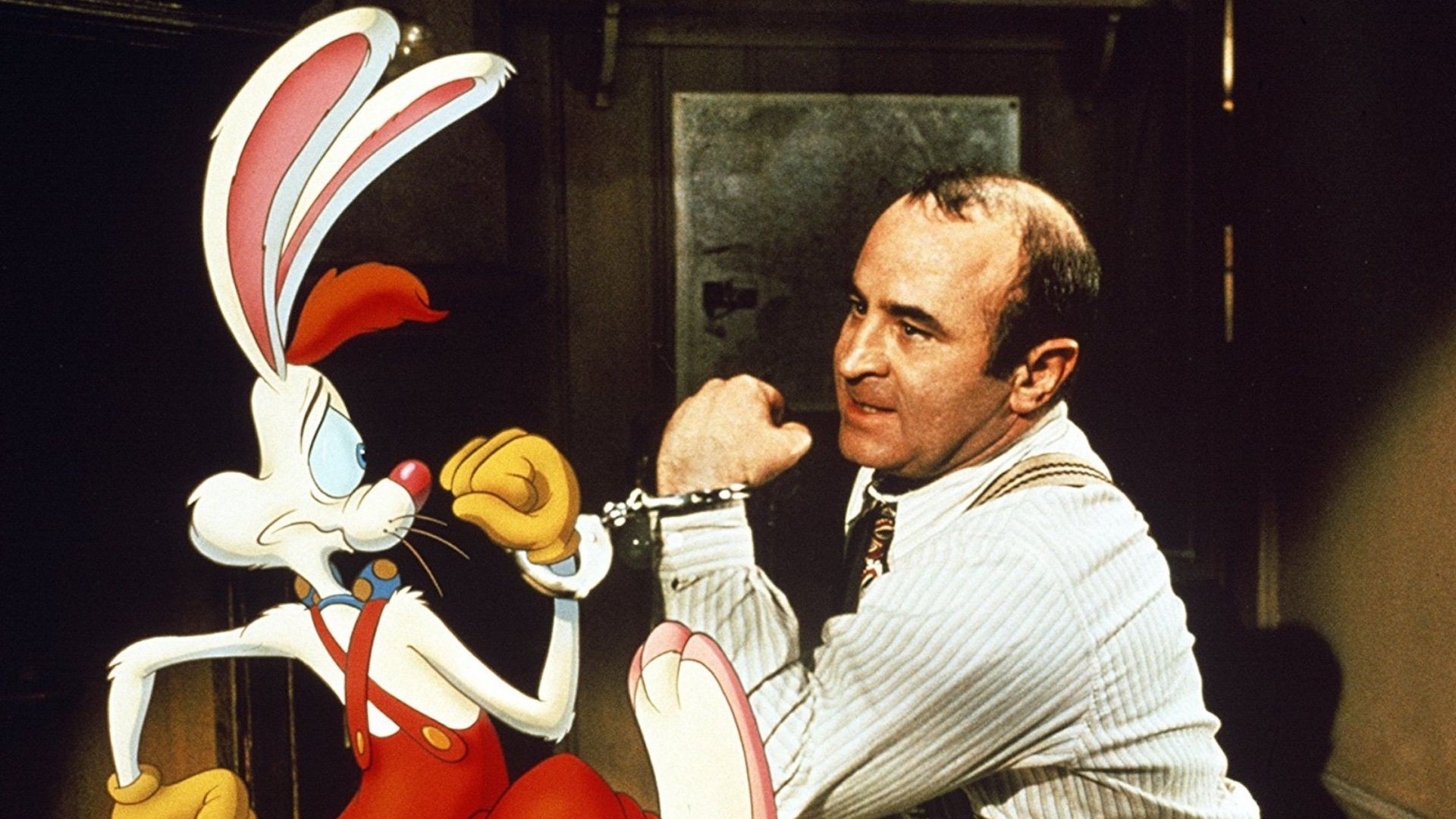
The case, top to bottom
Roman Polanski wrote Chinatown as a trilogy, then fled the country before he could finish it. Jack Nicholson salvaged the second film, The Two Jakes. The third script, titled CLOVERLEAF after the land-development company at its heart, was left orphaned in Hollywood with a fugitive author who could never come back to claim it. Then a funny thing happened: The Two Jakes sat in production hell so long that the third movie in the trilogy beat it into theaters.
The cover story says Roger Rabbit was adapted from Gary K. Wolf's novel Who Censored Roger Rabbit. The book and the film share nothing but toons and four character names; the book is a murdered Roger, a doppelganger sidekick, and a homicidal genie in a teapot. The film's script came from somewhere else, and the plot survives essentially as Polanski envisioned it, just with Toontown swapped in for Chinatown.
Run the three films side by side and it stops being a resemblance and becomes a fingerprint. The same detective is hired to spy on a cheating wife; the job turns into the murder of a man who works in infrastructure; he is roughed up and told to drop it; a cheating femme fatale turns out to be loyal; and in the final twist he had the wrong culprit all along. These are not noir tropes. Chinatown INVENTED those tropes. And the tell that closes the case: the entire plot of Who Framed Roger Rabbit hinges on red trolley cars, freeways, and a land-development conspiracy that no viewer even remembers. That obsession has no business in a Disney toon romp. It is Polanski's handwriting.
Tap any sticky to read the evidence. The play buttons jump the tape recorder straight to the moment on the episode.
New pins since the case was filed: Episode 93 called Gary K. Wolf, the creator of Roger Rabbit, to the stand. He denies this board's central theory outright, corroborates two of its smaller ones, and leaves a blue cow hidden in the margins. Case notes play from the Episode 92 tape; testimony notes play from the Episode 93 tape. The recorder swaps tapes for you.
The evidence
Polanski Wrote a Trilogy, Then Vanished
Chinatown was conceived as three films. Its author fled before two of them existed.
A trilogy with a missing author
Chinatown was written as the first film of a trilogy. Then Polanski fled to France and went into hiding, leaving the remaining two films stranded in Hollywood without their author. The plan did not die with his exile; it just lost its byline.
The Third Script Was Titled CLOVERLEAF
Named for the evil construction company taking over the town. Sound familiar?
Cloverleaf: written, titled, and released FIRST
The third film in the trilogy had a title: Cloverleaf, after the evil construction company trying to take over the town. The Two Jakes stalled in production so long that the third movie beat it into theaters, releasing in 1988.
And the plot of that 1988 release survived essentially exactly as Polanski envisioned it, with one swap: Toontown instead of Chinatown.
The book alibi collapses
Based on Who Censored Roger Rabbit? The movie shares NOTHING with it but toons and four names.
There is no path from this book to that movie
The film's official source is Gary K. Wolf's novel Who Censored Roger Rabbit. Read it and the alibi falls apart: Roger is DEAD by the end of chapter one, his doppelganger helps Eddie solve his own murder, and the killer is a homicidal genie living in a teapot, summoned by singing When You Wish Upon a Star all the way through. The only things the two share are the idea of toons and four character names.
There is no possible path from that book to this movie. The script came from somewhere else. The question is where.
Hollywood Options Books, Then Guts Them
A firsthand story of a producer optioning a manuscript just to shoot a different script.
The industry playbook, witnessed firsthand
Leif's own story from inside the business: a producer optioned an unpublished manuscript while openly planning to rewrite it wholesale, keeping little more than the premise he could pitch. That is the playbook: buy a title for cover, shoot the script you already had.
Exactly what Who Framed Roger Rabbit's credits did with Wolf's novel.
Even the Author Follows the Movie
Gary K. Wolf's later books track the FILM's continuity, not his own first novel.
The author signed on to someone else's story
Gary K. Wolf has fully embraced the film, and here is the kicker: his own later Roger Rabbit books follow the MOVIE's continuity, not his first novel's. The doppelgangers, the genie, the murdered Roger: gone, as if the first book never happened.
When even the author treats the film as the true version, you are looking at two different stories that happen to share a rabbit.
Same film, three times: the setup
Cheating-wife job. Murder. The victim always works in infrastructure.
One setup, three posters
Chinatown: Jake spies on a cheating wife; the job turns into the murder of the chief engineer at Water and Power. The Two Jakes: Jake spies on a cheating wife; the murdered man is real-estate partner Bodine. Who Framed Roger Rabbit: Eddie Valiant spies on Jessica; the murdered man is Marvin Acme, owner of Toontown. Every victim works in infrastructure and land. Every detective carries on out of wounded pride at being used.
Best part: told only the Chinatown setup, Leif guessed the entire plot cold, because it is the plot of all three films.
Toontown IS Chinatown
Replace one word and the opening of Roger Rabbit is Jake's story, untouched.
Run the substitution
Roger Rabbit opens with a detective who hates Toontown and has not gone back since someone he loved died there. Replace the word Toontown with Chinatown and you have Jake Gittes, who watched Evelyn die in Chinatown, refusing to return. The backstory was already written; they would not even have to tell us.
Same film, three times: roughed up, told to drop it
A knife up the nose. A grenade in a floor safe. A pig head drawn over Eddie's face.
The mid-case warning, three ways
Chinatown: a knife up the nose, wielded on screen by Polanski himself, and Jake wears the bandage for the rest of the picture. The Two Jakes: beaten unconscious and forced to drop a grenade into his own floor safe. Who Framed Roger Rabbit: the famous deleted scene where the weasels drag Eddie to Toontown and draw a cartoon pig head over his face, roughing him up and telling him to drop the case.
Same beat, same position in the story, three films running.
"They're Just Noir Tropes"? There WERE No Noir Tropes
A film-studies degree says the formula everyone remembers was invented by Chinatown.
Matching Chinatown means matching CHINATOWN
The obvious objection is that these are just detective-noir conventions. On the record, from the host with the film-studies degree: original noirs were not even mostly about detectives, and the formula everyone attributes to the genre barely existed in it. What solidified those beats was Chinatown, the first neo-noir.
So when Roger Rabbit runs the exact playbook, it is not echoing a genre. It is echoing one author's film, beat for beat.
Same film, three times: the loyal femme fatale
Evelyn. Kitty. Jessica. Each one seems to betray him. Each one is on his side.
The reversal that was Chinatown's signature move
In the classic noirs the femme fatale was bad, and she died for it. Chinatown's great trick was the reversal: Evelyn seems to betray Jake and turns out to be loyal, and they work together to the end. The Two Jakes runs it again with Kitty. And Roger Rabbit runs it beat for beat: Jessica seems to pull a gun on Eddie in the dead of night, but she was shooting Judge Doom, right behind him, and she pans Roger and trunks him to SAVE him.
One signature move, executed three times by the same hand.
Same film, three times: the wrong culprit all along
Not Evelyn but Cross. Not Berman but Catherine. Not Maroon but DOOM, owner of Cloverleaf.
The twist is always the same twist
Chinatown: Jake thinks it is Evelyn; it is Cross, her father, pulling every string. The Two Jakes: Jake thinks Kitty and Berman are robbing Catherine; Kitty IS Catherine, protecting her own. Who Framed Roger Rabbit: Eddie thinks it is Maroon; Maroon is just another puppet, and the strings run to Judge Doom.
And who is Judge Doom? The owner of a land-development company named CLOVERLEAF. The villain of the movie is named after the movie Polanski wrote.
Nobody Remembers What Roger Rabbit Is Actually About
Red trolley cars. Freeway construction. A land grab. In a toon comedy. Why?
The plot no viewer remembers is the fingerprint
Ask anyone what Who Framed Roger Rabbit is about and you get toons, talking bullets, Benny the Cab. But the entire plot hinges on red trolley cars, freeway construction, and a corporate land grab, and nobody who watched the movie even remembers that.
Convoluted infrastructure-and-development intrigue is the hallmark of Chinatown and The Two Jakes. There is no reason for it to be the engine of a Disney and Warner crossover toon comedy. No reason except one: this is Cloverleaf, the third movie in the Chinatown trilogy.
The Orphaned Script Found a Home
Polanski was never coming back. A finished script called Cloverleaf was sitting right there.
Case closed, and a wink on the way out
Put it together: the author fled, The Two Jakes proved the trilogy could continue without him, and a script called Cloverleaf was sitting unclaimed in Hollywood. Every beat, every obsession, every twist of Who Framed Roger Rabbit says it is that script wearing a toon suit.
And for the fun of it: the movie they made from the orphaned script is itself about a seedy Hollywood conspiracy, executives dealing with bad guys in back alleys. Zemeckis's very next trick was a movie about going back in time to take things from the past. Wink received.
Judge Doom Was Baron von Rotten
A toon character actor whose concussion turned him into a real villain.
The villain the movie never unmasks
The toons at the end all wonder who Doom really was, and the movie never answers. The comics do: he was Baron von Rotten, a toon character actor who played villains until a concussion left him believing he WAS one, launching a horrific crime career that included dropping the piano on Teddy Valiant. Early scripts went further: he was going to be the hunter who shot Bambi's mother.
Donald Absolutely Says It
The dueling-pianos scene. The captions say nitwit. It is not nitwit.
The duck said what he said
In the dueling-pianos scene, Donald Duck calls Daffy a word that Disney+ captions as nitwit. Listen for yourself: it is not nitwit. The hosts heard it on a first family viewing, no subtitles, no power of suggestion, and every head in the room turned. The real power of suggestion is a caption file working overtime.
And it fits: the original theatrical cut of Roger Rabbit was racier all over before the home-video trims. You can barely understand a word Donald says. You can understand that one. That is the joke.
Bob Hoskins' Back Looks Like a Front
The only man who could ever replace Jack Nicholson, and he is built backwards.
An absolute stud, assembled in reverse
If anyone could take over a Jack Nicholson role, it is Bob Hoskins, and the shirtless scene proves it: he turns away from the camera and it looks like he is still facing it, because his back looks like a front. A teenage Torvald caught it on TV, did a full toon double take, eyes out of the skull. That is the caliber of leading man this trilogy finale deserved.
The Creator Takes the Stand
Episode 93: Gary K. Wolf, the man who invented Toons, sits for a deposition.
The one man who was actually there
A week after this case was filed, the show got the star witness: Gary K. Wolf, author of Who Censored Roger Rabbit and the man who coined the word Toon. Webster's Dictionary credits him by name: toon, from the Wolf.
Every note pinned in this column is his sworn testimony from the Episode 93 tape. He rules on this board's theories one by one, and the rulings cut both ways.
DENIED: "Absolutely No Truth to That Whatsoever"
The witness rules on this very board. It does not go well for the board.
The creator denies everything
Torvald laid this board's theory out for the man himself. The ruling, verbatim: I would definitively state that there is absolutely no truth to that whatsoever. I was there when they wrote the first screenplay. Nobody talked about the two Jakes; the only two dicks anyone mentioned were the two screenwriters.
The case above stays pinned. The denial hangs here beside its conclusion. The jury is you.
The Defense's Version: Merchandising, Not Polanski
Wolf agrees the movie is not his book. His explanation needs no lost script.
Two explanations now hang from one fact
The witness concedes the case's key fact: the movie is not the book. In his own words, he never thought the book was filmable, and he knew on day one the story, the villain, and the relationships would all change.
His explanation: Disney wanted Roger, Jessica, and Baby Herman for character merchandising, and you cannot sell T-shirts of a dead rabbit, so the murdered Roger and the teapot genie had to go. So the board now holds two competing stories for where the movie came from: a stolen Cloverleaf script, or a sanitizing merchandising machine. Follow the yarn and pick.
The Witness Was in the Story Conferences
Spielberg and Zemeckis called him in. He watched the movie get written.
Weigh the denial accordingly
Spielberg and Zemeckis had read his book when it came out and brought Wolf into the story conferences: 35 of the most creative people I have ever met, throwing out ideas on how to make my book funnier. Why couldn't I have had you people back in 1979? I would have won the Pulitzer Prize.
He watched the screenplay happen from inside the room. That is either the strongest alibi on this board, or exactly what Cloverleaf would want you to hear.
Confirmed: The Racier Cut Was Real, and He Brokered It
Six-frame gags, Betty Boop's dress, and Michael Eisner's home phone number.
The man who filled the margins
This board's claim that the theatrical cut was racier is now sworn testimony. Wolf explains the animators' six-frame tradition, personally walked the Betty Boop homage up to Spielberg for approval, and confirms the elevator wall reads for a good time call Snow White, over Michael Eisner's real home phone number.
When the story leaked before the VHS release, Disney recalled the prints and destroyed the Betty Boop frames. Zemeckis keeps those six frames framed in his living room. The others? Disney never found the others.
ENDORSED: Doom Shot Bambi's Mother
The same witness, in the same minute: one theory denied, two blessed.
The creator co-signs the small ones
Asked about the theory that Judge Doom was the hunter who shot Bambi's mother: I would endorse that theory, sure. He also blesses the Pistol Packin' Possum poster theory about Doom's earlier career in RK Maroon's office.
Pin the contrast: the witness who denies the big theory happily co-signs the small ones. Whatever else that proves, it proves he answers honestly when the answer is yes.
The Toon Glove, Confirmed (in a Hundred Takes)
Doom gloves his glove to touch the dip. Now we know why, from the set.
A toon cannot touch the dip
The hosts' favorite detail, confirmed from the set: Judge Doom puts a glove on over his glove before dipping the shoe, because his everyday glove is a TOON glove and the dip would eat it. And Christopher Lloyd, who is Reverend Jim as his normal personality, needed about a hundred takes to snap that glove on.
Related ruling from the same session: Wolf has faithfully promised the Justice for the Red Shoe fan club that the shoe returns in the sequel. His legal analysis: the shoe kicked a policeman in the crotch. Not blameless.
Spielberg's Blue Cow
Six frames into the Toontown tunnel: the stupidest picture in the class, forever.
Never, ever are cows blue
Second grade, Earlville, Illinois: Gary colored the cow blue, because his mother said lonely people get blue and it must work for cows. The teacher held the picture over his head and told the class to look at this stupid, stupid picture. His parents ruled otherwise: next time you want to color the cow blue, you color the cow blue.
Fifty years later, Spielberg asked what character Wolf wanted hidden in the movie, then said he would take care of it himself. Freeze the Toontown tunnel sequence and look left for six frames: a yellow farmhouse, a red barn, a brown fence, a green meadow, and a blue cow, alone in the middle of the meadow. Your teacher would be so mad. She hated blue cows.
Episode transcript
=== Episode 92 - THE CHINATOWN TRILOGY: Who Framed Roger Rabbit is the lost third film ===
Have you ever seen Chinatown, the famous noir detective movie starring Jack Nicholson by the infamous Roman Polanski? Yes, I have seen Chinatown. You have. Did you know, and most people don't know this, did you know that it's actually a trilogy? My favorite is the one with Bob Hoskins in it instead of Jack Nicholson. No. Bob Hoskins never replaced Jack Nicholson. Although if anyone could, it's Bob Hoskins. I mean, I was going to say, clearly, if you're going to pick anybody to ever replace Jack Nicholson, Bob Hoskins is your man. Hello and welcome to The Popcorn Isn't Real. I'm Leif Eric and I'm here with my co-host Torvald. This is the podcast where we talk about fan theories and we've got a treat for you today. we're talking about some of the greatest movies ever made yeah Roger Rabbit Chinatown the two Jakes oh great movie so what am I getting at well there is a pretty cool fan theory that Roman
Polanski the famed and infamed um infamous uh is that is that a word uh the the both famous and infamous he wrote chinatown as a trilogy so chinatown came out to you know wide praise huge accolades everyone loved chinatown for some reason for some reason it was doing great but then he couldn't make the others in the trilogy for reasons why not various reasons he basically had to like flee to france and uh go into hiding for a while stay there forever you know but uh people still love him i guess for some reason well some people do yeah there was a time in the 90s and 2000s where it was like let's let's let him back let's let's forgive and you know but he didn't end up coming back fortunately for him jack nicholson was actually able to pick up the second movie the two jakes which is the sequel to chinatown which a lot of people don't even know about it didn't do well no one liked it honestly i feel like it should have done just as well as chinatown
because they were very similar to me but they're the same i don't understand why one is is regarded to be one of the probably like some call it the greatest american film ever made and the two jakes is just completely forgotten i don't know like no one even knows about it they're the same movie they're the same i agree i agree i don't know dude there are some differences there's less incest in the two jakes i guess well so like i said not that many people know about the two jakes even less people know about the third movie in the trilogy the one that you know was apparently forgotten and then never released except that it actually was released and the two jakes was held up in production for so long that the third movie in the trilogy beat it to the punch and was released first that's right everybody's favorite detective noir slash looney tune filled romp who framed roger rabbit is actually the third movie in the chinatown trilogy in the roman
polanski chinatown detective noir trilogy now how can i say this so conclusively so definitively well it turns out what no i can that third film was titled get this cloverleaf as in the evil construction company in the film that was trying to take over the town and also the evil construction company that roger and you know detective valiant foil the plot of the movie was apparently exactly the same pretty much as polanski envisioned it just with toontown instead of chinatown chinatown was gonna make a comeback in the third movie after it was it was finally after being absent for the first two movies the first movie had nothing to do with chinatown dude i was gonna ask why is it called chinatown and why is that line so oft repeated i thought like that forget I get it, Jake. It's Chinatown. I thought that it would have way more like matter meaning. Yeah. I mean, I get that it has meaning as in like, you know, oh, it's all hopeless. The meaning is, in my opinion, pretty clear. It's like, oh, sad.
Racist. Oh, no, no. It's just the way their way of saying like, you know, it's it's Chinatown. You know, this happened before when your partner got murdered. It's happening now. Bad stuff and you can't do anything about it. But it doesn't deserve people like repeating that line infinitely forever. And like Inside Out, they repeat it. It's Cloud Town. Yeah. I don't know. Forget it, Jake.
The biggest evidence comes from the fact that Who Framed Roger Rabbit was ostensibly based on a book, a novel by Gary K. Wolf. Yeah. Who Censored Roger Rabbit. That's what I've heard about. Yeah. In fact, I think our dad even told us about that. Right. Yeah. The movie, Who Framed Roger Rabbit?, is nothing like the book it was based on. They have literally nothing in common except the idea of toons, which, whoa, crazy idea, right? Yeah, toons. And the characters. The character of Roger Rabbit exists. The character of Jessica Rabbit exists. The character of Eddie Valiant exists. The character of Baby Herman exists. That's it. That's it. That's all. The stories are so vastly different that there is no possible way that this movie, Who Framed Roger Rabbit, came from that book. It did not. This movie was clearly lifted from some other idea that someone already had. Someone else had a script.
And then they liked the ideas of Who Framed Roger Rabbit. And they were hooked up with a producer who had optioned the rights. I want to give Gary K. Wolf credit because I do think. Yeah, he's embraced the movie. He has very much embraced the movie. So I've read all of Gary K. Wolf's books about Toontown. He came up with, I think, some very interesting and very cool ideas in Who Censored Roger Rabbit. I love the idea of Toons living with humans. I like that he really dives into it, like he embraces it. Let's talk about Who Censored Roger Rabbit. So that's the first clue that you might have that the movie has nothing to do with the book. The movie is called Who Framed Roger Rabbit. The book is called Who Censored Roger Rabbit. I feel like Who Framed Roger Rabbit was the better title. I think the book could have even been titled Who Murdered Roger Rabbit would have been a better title. The book, unlike the movie, is about Roger Rabbit dying.
The dude's dead and they need to solve the murder. So, you know, there's the first clue that you may have that this has nothing to do with the movie. Roger Rabbit is D-E-A-D. He is dead in the book. So, yeah, the plot is completely different. In the book, Eddie Valiant, same name. It's kind of similar character, but he is investigating a contract disagreement between Roger Rabbit and the studio boss, followed by a double homicide. Roger Rabbit and the studio boss, the studio he works for. There's other differences. In the books, the tunes, they speak in written speech bubbles. They can also vocalize. They can make noise. So are they tunes or comic book characters? Yeah, so they're tunes. They do make comic books and they make those comic books by setting up a photo shoot and literally just having the tune say the words and then taking a picture of it. Then they've got a comic book panel, right?
Wow. That's fun. That's so much easier. But they also make movies. So, I don't know. I mean, it makes sense. They would make movies. But, yeah, for that reason, tunes are able to talk. They can make, you know, vocal noises. And there are also tunes who repress their speech bubbles, even though that is the natural way for tunes to talk in this book. Like Jessica Rabbit, for example. A lot of the more human tunes try to repress their speech bubbles. Jessica Rabbit's still in the book. She is pretty much the same character. The only lines of dialogue from the book that are used in the film were one line by Baby Herman, where he says, I've got a 50-year-old lust and a three-year-old dinky. Baby Herman's, like, a lot more lusty in the books, but pretty much the same character. And then Jessica Rabbit, also the same. And in the other line that is reused is hers, when she says, and this is a great line, actually.
I like this line. She says, I'm not bad, Mr. Valiant. I'm just drawn that way. This is a good line. She couldn't control the awful animators and artists that animated her as this, like, grotesque snake woman with massive shoulders. most of the plot of the book is actually even though it's about investigating a murder it's actually about hunting down an old antique teapot which like where is that where'd that come from that has nothing to do with anything you've ever heard about roger rabbit right also in the book tunes have the abilities to produce what they call doppelgangers any tune can create a doppelganger of themself at will a doppelganger is just an identical version of themself that they produce out of thin air um and that doppelganger can then go and do whatever they want it to do like it's a fully you know autonomous creature it can just do anything and it can last even for days
and days and then it just disappears one day it's gone so that's interesting uh they can only do that in in mr wolf's first book there are no doppelgangers ever again after that they forgot know how to do that after the first book um all of his other books align more with the movie than his own book which i think is really funny but anyway so in who censored roger rabbit um eddie valiant is investigating roger rabbit's death he's trying to figure out who killed him and he's doing so with his sidekick roger rabbit uh-huh it's actually roger rabbit's doppelganger i mentioned that all toons can create doppelgangers roger rabbit just so happened to create one right before he died and that doppelganger is now helping eddie eddie valiant to solve his own murder all the crazy stuff they find out all the you know crazy kooky twists and turns that they go through turns out everything going on besides the murders is revolving around some convoluted plot by
Rocco the uh film like uh the guy who owns the film studio his son uh as well as a photographer named Carol and a porn producer who is also a transvestite also in in the in the book Jessica is like really bad like she she well I mean she's been in porn she's not just drawn that way she's just a really bad person she's constantly cheating on Roger Rabbit and she married him but is she like left him to go back to her old boyfriend and now she's kind of stringing him along and she's always saying like horrible things about roger she just hates his guts um it's unclear why she married him at all uh until the very end either way the whole plot yeah it's about this uh studio executive son uh and porn producer and uh photographer lady they're trying to steal the photographer lady's photographs back from the film executive's son's own gallery right like he owns like an art gallery they're trying to steal her stuff out of his own gallery
and then sell them multiple times by using this insane new groundbreaking technique that the porno guy has created to make a perfect copy of a film negative which he's the only one who can do this out of everyone in the entire world. What does it have to do with the murders? Absolutely nothing. I feel like there are ways to perfectly copy film. I feel like that too. Otherwise, the whole industry wouldn't have functioned for most of this history. Well, right, and it's just so weird that they dropped this out of the blue that, oh, and by the way, this random character in this book has created, he's the only one on earth and has created this entirely random technique and he's using it to commit crimes. And we're like, what? First of all, I didn't even know that was a problem. And second of all, if it is a problem, what are the odds that he was the guy who managed to solve it? And if he did manage to solve it, why not just like profit off of that instead of using
it to commit crimes? I just don't understand. Anyway, that plot sounds nothing like Who Framed Roger Rabbit. And it is nothing like Who Framed Roger Rabbit. But wait, let me throw you a curveball. Like I said, that plot has nothing to do with the actual murders that took place in the book. The actual plot. And this is completely insane. The actual plot is that a literal genie was doing everything. Yes, you find out at the very end of the book, like in the last chapter, you find out that there was a genie that made Rocco, the film executive, and his brother, the two film executives, he made them into humans. They used to be toons, but he turned them into humans. Why? I don't know. It doesn't matter, but they used to be toons and he turned them into humans. Then Roger somehow accidentally ended up taking the genie from them. And then he accidentally wished for Jessica to fall in love with him and marry him.
And he accidentally wished to be successful, all the while not knowing that he had a genie. It also turns out that this genie is a murderer. He does not want to grant wishes. He wants to kill you. And luckily, well, right, except most genies kill you by granting your wish in a horrible way. This guy just takes out a gun and shoots you. He doesn't grant your wishes. It's so insane. And lucky for Roger, it turns out that every time he made a wish, the teapot containing the genie just so happened to be in another room. So he didn't know he was making the wishes and the genie could not kill him. So it just had to grant his wishes, whereas it would have killed him. So the genie can't move? No, except. So two things about this. Number one, why didn't the genie call out to him and say, hello, master, come over here so I may grant thine wish. The genie was so embarrassed. He didn't even think about calling out to Roger.
Oh, how embarrassing. If only he had thought of that. How come the genie couldn't come to Roger? The genie can't move, except that he does move. This genie just so happened to learn how to make his teapot hop around and move himself exactly right then at the spur of the moment after he murdered Roger Rabbit so that he could hop that teapot out the door and down the street, making sure that Eddie Valiant wouldn't find it. Which he didn't know he was hiding from Eddie Valiant. It just served to give Eddie something to investigate. And even if Eddie had found a teapot, who cares? Well, except that, like I said, everyone in this book is looking for that teapot, right? Like I said, the whole book revolves around that teapot. Sure, but you wouldn't think the teapot was the murderer. No, I know. It's completely insane. But yeah, it turns out that Roger Rabbit finally made a wish in the same room as the teapot.
Genie came out, shot him immediately. Roger died. At the same time, Roger had made a doppelganger to go and murder his boss. The doppelganger, Roger, did go and murder his boss. Roger is a disgusting, evil murderer in this book. He's a horrible person. He is an actual murderer. And finally, in the end, so Eddie manages to solve this whole thing. He kills the genie. Eddie, he summons and kills the genie. He has a battle with it. And then he manages to square this away as a, like a, I don't know, homicide-suicide thing where Roger's boss had killed Roger and then killed himself, right? Like he squares it away so that Roger is now completely innocent and forevermore shall be remembered as a good bunny. And then he reveals to the doppelganger, oh, by the way, I also solved the murder and I know that you and Roger are murderers. And then the doppelganger bunny, Roger, who has been working with Eddie Valiant this entire book and seems to be like his best friend and super nice to him and super loving.
He just turns into a total scumbag. And he's like, yeah, you asshole. I knew you would have solved there. I should have known you would solve this. I hate you so much. I hate everybody. I'm out of here. And then he dies. And I'm like, oh, dang. OK. All right, Roger. You're a horrible bunny. There you go. That's the Who Censored Roger Rabbit for you. nothing like the movie. And I mean, it could not be further from the movie. Like it is so off the rails insane. Oh, it's a weird book. This guy, this producer came to me and was like, I have this manuscript optioned. So the book's not even published yet. And I was like, the reason you option a book is like, if it's published, like doing well, right. But anyway, the book's not even published yet. He's like pre-publication. I've already optioned it. He's like, I want you to read it maybe we can rewrite it or something now there is a really weird thing in this book
about how these people get food but don't worry we can change that and i read the book and how the weird thing about how they get food is the entire plot that's the whole plot of the book the point is this book is green yes this book is post-apocalyptic and this family lives in a bunker and in that bunker they have everything they could ever need for hundreds of years except there's no meat they had cows that they could butcher but something happened and the cows all died they got sick now they have no meat they didn't think to make jerky or something i don't know so and humans can't survive without protein and i guess they didn't have like tofu or beans yeah i was gonna say beans and tofu dude i'll do it i there's they're easy so this is so stupid i just tried i just i can't even wrap my head around what stupid writer thought that this is a good plot anyway so the the dad the father of this if this family is the bad guy he has
like three kids that he likes those are his main kids he keeps impregnating the mom and they have these slave kids that they raise on a lower level that the other kids don't even know about that they're raising for food oh no that's our mom the mom would need protein to make the babies like you can't make babies if you have no protein more protein if they're the only source of protein it makes zero sense i i uh it really bothered i don't know it would make more sense if he was like going out and kidnapping more moms to rape and then make babies and then eating babies but at that point just eat the moms right don't make babies no i don't get it it's so stupid and i'm just like first of all there are plentiful sources of protein i'm sure you could find that aren't babies but whatever um and well they weren't even eating them as babies they were raising them to like like at least kid age before eating them yeah well the mom didn't like it but
she like couldn't stand up to him she's like okay and at first they were they were drinking her milk as protein because she can make milk and i was like okay still be her protein that they're right she still needs protein yeah like i don't know does he he apparently just thinks that women have the magical ability to create yeah yeah the author did yeah he he was yeah a guy wrote it he doesn't understand i had never encountered a woman like oh my gosh they're alien creatures they're we thought he's like i've never seen a woman eat they just make babies and they make milk right yeah well i mean it is like like one of the reasons people raised pigs for so long is because they can eat literal trash and turn it and turn it into nutrients yeah yeah so like that's what he thought women were he's clearly sexist so the plot of the book is the kids finding out that they're eating their siblings and then having to like fight against their father
the weird thing about how they get their food him saying it's kind of weird but we so apparently the thing that really just got him like i have to option this before it's even published was like dad has kids in a bunker like and he's abusive before i answer to you whether or not i would have optioned this my only question is can the dad be played by john goodman and if yes then i am in i feel like that movie might have already been made but it was good oh man yeah no it essentially like eating the babies and he'd be like you can have what's left yeah so it essentially was just 10 cloverfield lane i guess is what he wanted and he yeah but with eating babies interesting just hire a writer and say write me 10 cloverfield lane like it's not that original of a concept like you don't need to option a manuscript whose whole plot is something that you don't want just throwing this out there it sounds to me like he knew or was family with
this writer and no i needed to throw him a bone and he's like hey give me a script i'll turn it into something right so then he got that script and he's like oh well this is disturbing hey uh other writer rewrite this for me and there you go oh that's my my my interpretation of that situation a couple other interesting tidbits about who censored roger rabbit this genie's whole like existence in in their world is kind of odd like first of all how did it get owned by the studio execs and then how did it get lost and end up in roger's hands i mean that could have been simple enough it could have just been like roger taking it off of a film set which is actually how he got the teapot he did just take it home off of a film set but why did it end up at that film set if it was the property of these two studio executives who were using it to grant their own wishes and become humans uh it turns out it was stolen from them by a champion hero genie
slayer who wanted to slay this genie because he knew that it was an evil threat to the world so he stole this genie and he researched how to destroy it and he knew how to destroy it and he found out that you could only destroy it by drowning it after a fair combat so he bested this genie in combat and then he you know packaged up the teapot and sunk it deep into the ocean but he didn't realize that the genie can't drown if he's in his teapot so this poor champion failed at his task that champion his identity is never revealed i don't know who he was or what he was doing there he's never seen in the book he existed to remove the genie from the hands of its owners put it in the ocean where it could then be dredged up randomly as part of a shipwreck which it wasn't even in as far as i know but it was found as part of the shipwreck it was bought by a prop master and then used in a movie that was being made by the former owners of this
teapot where they didn't know it though even though they desperately wanted that teapot they didn't know that it was actually within their possession and it got taken home by roger rabbit at that point who also didn't know that it was a genie no one knew it was a genie except for those two guys who didn't know that they owned it yet anyway and the other cool thing about this genie is he will only be summoned from his pot if you say the magic words and roger didn't know the magic words but kept accidentally saying them because the magic words to summon this genie are the final words in the disney song when you wish upon a star if you sing that entire song all the way through the final words in that song are the genie summoning words this copyrighted disney song um roger didn't know that but he just so happens to sing that song way more often than the average person does so he just happened to summon this genie a lot oh man like right he's saying that
like again what an odd coincidence to insert into your book that doesn't need to be there you could have the magic words just be i wish room to his teapot at least what four times yeah yeah he always keeps that teapot nearby but in another room and then happened to make a random wish yes he just so happened to sing the entirety of when you wish upon a star followed by i wish jessica rabbit was my wife and i wish i was a successful movie star just after singing the entirety of when you wish upon a star i like to like if i wrote this roger knew what he was doing me too i agree but if i wrote this i would have had him just like the magic words are i wish right because he might have muttered i wish i was married to jessica rabbit you're the one making it up dude just change it they kind of imply at one point that at least most of the tunes in america were native americans discovered by the pilgrims or imported from china oh dude
Do you remember when we were like way ahead of our time when we found Hottentots in Mary Poppins? Whoa, yes, we canceled Mary Poppins before it was actually canceled. And then like a year later, there was like a big article about Hottentots. Yeah, there was a big article about it saying this movie is not appropriate. I don't know, it was pretty good. All of Detective Valiant's friends are like racist assholes. Like, first of all, one of his best friends, his claim to fame is having an ancestor who forced the toons to cater the first thanksgiving dinner um right because yeah they were the native americans and he has another best friend whose ancestor imported chinese tunes to build the transcontinental railroad um okay well maybe there is a chinatown connection whoa to the book i guess um but yeah as he's playing poker with these friends at one point roger rabbit walks in and is like oh hey
Eddie Valiant I'm here by the way Roger Rabbit in this in the audiobook version of this book he just has like a Jimmy Stewart accent so he's always like oh hey there Eddie Valiant I'm back I'm home I'm gonna make you a carrot cake and it's a nice voice I think it's probably better it really fits him I actually very much agree I prefer that voice for Roger just a nice a kindly jimmy stewart roger rabbit i can't stand roger he's really hard to listen to i know he's supposed to be annoying but no but they could have just had him be like like i said kind of lovable bumbling like a jimmy stewart like oh he's already valiant oh i'm so sad i can't believe my jessica's cheating on me oh you know like that would be way better than whoa um but yeah uh so roger comes in he's like hey they're ready i'm home i'm gonna make us a carrot cake and then all of his friends are like oh what's a tune doing here the one rule we made
when we decided to play poker together eddie was no women and no tunes and then they all leave and i'm like man oh these guys are bad better off without them those are oh my gosh men oh geez one very strong character trait for eddie is that he always constantly he's constantly narrating right because he's a noir detective and he's constantly saying the most horrible things about himself like thinking just awful awful things and then doing the exact opposite like and i just love it i love it because he's such a good guy exactly he in his mind characterizes himself as the absolute scum of the earth but in reality he's a freaking saint doing bad things exactly i know i love eddie he's basically just like a person well exactly you know this thing is like he he throughout this poker game with his friends he's constantly agreeing with them he's like oh yeah you know they had the right idea about tunes uh i would never let a tune live with
me so anyway i i invited him to live with me you're so weird and he just does it over and over i wouldn't jump up and dig my feet onto his couch that's not the sort of thing i would do we're referencing a funny youtube video by the way yeah well no it's not a youtube video it's an interview with rick james where rick james is describing his interactions with charlie murphy the brother of eddie murphy and he uh very explicitly denied having grinded his feet into charlie murphy's not the sort of thing he would do no he's like why would anyone do that the next sentence out of his mouth was yeah i remember doing that exact thing that i just said i wouldn't do and no one would do what a weird dude so that's kind of the the opposite of it well eddie valiant is he thought about the good thing and did the bad thing pretty much but it it happens so often that it's clearly purposeful and in my opinion is very very good writing um i think that's
just a fun character uh where eddie yeah he's every time anything happens he just thinks the worst possible thing about it declares himself to be a proponent of that and then does the exact opposite every time so cool in the other books the first book never happened oh okay like i said the other books are essentially all much more based around the film um they basically have nothing to do with the first book. I have very definitively proven that the book has nothing to do with the movie. So where did the movie come from? Where did Who Framed Roger Rabbit come from if not from the novel it was based on? Well, it couldn't have been Roman Polanski. It came from Roman Polanski. It came from Cloverleaf. How do we know that it was actually originated from Cloverleaf? To uncover this, let's look at the plots of every single movie in the Chinatown trilogy i'm gonna take you through essentially the major story beats of chinatown the two jakes
and who framed roger rabbit and i'm going to show you that these three films are all the same film they're essentially the same film over and over and every single one of them is very much in character for a certain uh jake the detective the noir detective as created by roman polanski Chinatown starts out with Jake, the detective. He's played by Jack Nicholson. He takes on a job. Wait, I haven't seen Chinatown in a while. So let me guess. He spies on a cheating wife. He delivers the evidence that the wife was cheating to the husband. Then the husband or someone else somehow ends up getting murdered because of that. And he feels upset that he was used as an alibi for something because he was sent to spy on this person and it was actually a plot for a murder. So he feels obligated to then solve this mystery himself because he cannot be used like that and it's a matter of personal pride. Is that the plot of Chinatown?
Yes, yes, that's exactly it. Because that's definitely the plot of the two Jakes and Who Framed Roger Rabbit. It is, and Who Framed Roger Rabbit. Yes. So Jake in Chinatown, Jake, the detective, he's spying on a cheating wife. The job turns into a murder. The guy who's murdered, he works in infrastructure specifically. He's actually the chief engineer at the Department of Water and Power. And then Jake, the detective, you know, decides it's a matter of pride. He has to continue to investigate this because he was, you know, sort of caught up in it. He feels like he was essentially used. Same thing happens in the two Jakes. Jake takes a job spying on a cheating wife. This time it's Kitty and Mr. Bodine, Jake Berman, who is the main guy who hired Jake the detective. He's the two Jakes. He's her husband. The job turns into a murder. In this case, yet again, it's a guy who works in infrastructure and buildings.
It is Bodine, a real estate partner to Jake Berman, the other kind of main character of this movie. He decides that he's going to continue this because he feels like he was used. He feels like they sort of, you know, wrapped him up into it unfairly. And he, as a matter of pride, he needs to solve this one. Now let's look at who framed Roger Rabbit. In this case, Eddie Valiant takes a job spying on a cheating wife. He's spying on Jessica, who's cheating with Acme. Jessica's married to Roger Rabbit. The job turns into a murder. The guy who was murdered, hey, he works in infrastructure and building. It is Mr. Acme, the owner of both Toontown and the Acme Corporation. He's been resisting land development contracts where they want him to sell Toontown and Valiant basically as a matter of pride decides, hey, I, you know, they use me. They wrap me up in this. I'm going to solve this just to spite them.
I need to figure out what's going on because I can't let this happen to me. Same exact setup. Same exact plot. From there, let's look back at Chinatown. At one point in the book, Jake gets roughed up while investigating the case and told to drop it. They shove a knife up his nose and then, you know, rip his nose apart. And he wears a stupid giant bandage for the rest of the movie. The guy who slices his nose open is Roman Polanski. Oh, that's cool. In the two Jakes, hey, Jake gets roughed up while investigating the case and told to drop it. In this case, they beat him up and then force him to drop a grenade into his floor safe, which is weird. That was odd. I was just so confused because, like, the guy who beats him up in the two Jakes works for the other Jake. Yeah, I know. Jake is helping. And Jake is also working for that Jake. I was so confused about who was on whose side in the two Jakes.
Anyway. They beat the crap out of him and knocked him out and then just left him laying there dying while they stared at him instead of calling the hospital. Torvald, you have to understand, maybe this has never happened to you, but when a person gets like beat up and knocked unconscious and they're just laying there, that's really entertaining. Like I could watch that for hours. Like I'm just like, is he going to wake up now? How about now? And then in Who Framed Roger Rabbit, Eddie Valiant was supposed to get roughed up while investigating the case and told to drop it. There is a famous deleted scene where the weasel gang grabs Eddie Valiant, they rough him up, they actually take him to Toontown and then draw a big pig head over his head and then throw him out. And he's now got a big cartoon pig head and they rough him up and tell him to drop it. Now, that may be, you know, a hallmark of Detective Noir kind of movies and novels and everything.
But in this case, it's very, very similar for all of these three movies. Well, that's what I was going to say, is that you could just argue that perhaps these are all just tropes of the noir genre. However, as someone who got a degree in film studies, I've watched a lot of original noir films. And let me tell you, there are no tropes of that genre. Like, it started out as like the French just naming a kind of film that was coming out of America mostly. It almost means like black or dark, right? Yeah, they're not all about detectives, first of all. Most of them aren't about detectives. Now, there is the element of like the femme fatale. There's some sort of woman who shows up and gets involved in something bad. That is generally always there. Now there's the tropes of like, oh, yeah, the detective gets like slipped a mickey and like beaten up. And you're just describing dead men don't wear plaid.
Exactly. No, but see, what I'm getting at is that original noirs really didn't follow most of these tropes. What solidified them was Chinatown because Chinatown was the first neo-noir. Roman Polanski brought back a genre that had existed but hadn't really been made in a little while. And it was huge because, I mean, it plays with people's nostalgia and also they're like exciting and it's a mystery. That's exactly why I think Chinatown was such a huge success, because it was doing things that people hadn't really seen or at least hadn't seen in a long time. And then to us, you know, watching it kind of feels like old hat because we're like, well, I've seen all this. Right. You mentioned the inclusion of a femme fatale character. Well, in all of these movies, we see that as well. In Chinatown, we find a cheating femme fatale who seems to betray Jake. It's Evelyn, who seems like she lied about her sister, who's actually her daughter, who's actually her sister.
Depends on how many times you slap her. It changes every time. Dude, like, Jake, cool off, man. He was going to town on her face. Jake just starts smacking her. Dude, quick fact about that scene. Apparently, Jack Nicholson was, you know, doing everything right and pulling his punches. And the actor who played Evelyn, she said, hey, we're not getting a good performance out of me. You need to actually slap me. So Jack Nicholson was like, oh, he took his slapping glove on and just wailed on her. I'm not going to hurt you. I'm just going to slap your brains out. Well, I mean, then that got the performance they wanted in. That's the take they put in the movie, apparently. I mean, she does look very surprised when he slaps her. She looks very slapped. It's a great scene. he's just going to town on her but yeah it seems like she has betrayed him and then it turns out that this cheating femme fatale is actually loyal to Jake
and they work together for the rest of the movie Jake is essentially helping her to flee with her daughter sister Catherine same exact thing happens in the two Jakes a cheating femme fatale seems to actually betray Jake Kitty the cheating wife from this movie he finds out she was actually Catherine the daughter from the first movie yeah it was her all along and everything that he's been hearing everything she's been saying has been a lie but it turns out she's actually loyal to him and they work together for the rest of the movie culminating in him lying for her in court to keep her and you know her family in the riches which i found to be kind of an unfulfilling uh ending but you know rich people gonna stay rich so yay go katherine i thought in the two jakes that was the best part of the movie was just finding out that kitty is the daughter and i felt like i had more of an emotional reaction
to the two jakes than i ever did in chinatown when he's like telling her like all i ever wanted to do was protect protect you like that was a great monologue i thought that was it was a cool follow through for his character and very very cool that they connected it so deeply with chinatown like i thought they were going to kind of write off chinatown yeah you know do a new story but no it's like really really really a sequel to chinatown and the other best scene from to two jakes was um also a callback to chinatown which again i hadn't even seen recently so it's not like and i don't remember it fondly so but like when that uh cop who hates him starts like insulting him and he hits him back and holds the gun on the floor makes him suck it and he like pees on the floor like that was a really good scene it was all a callback he does not make the guy suck the gun and then turn around whip his dick out and pee on the floor as like a show of like i don't know
claiming the floor the other guy pees himself while sucking the gun because he's scared it's not jack nicholson asserting his manhood makes it suck the gun all because this guy was piss on your floor insulting how um the lady in the first movie died i forget her name what was her name evelyn katherine evelyn katherine is the sister daughter evelyn is the mother sister yeah mother sister however with this uh cheating femme fatale thing the exact same thing happens in who framed roger rabbit uh the cheating femme fatale uh jessica rabbit seems to betray valiant she shows up in the dead of night she whacks roger over the head with a frying pan carts them away in the trunk of her car seems to pull a gun on valiant but it turns out she is actually loyal to valiant and they end up working together for the rest of the movie she was just saving him from doom she was shooting doom who was right behind him she wasn't aiming at him and she was protecting
roger by whacking him on the head and putting him in the trunk which may sound odd but remember they are tunes so you know i guess it makes sense and and this is one of the reasons i think that Chinatown was so successful was because this was a reversal of essentially the only trope that people remember from the old film noirs. The femme fatale was bad. She rarely turned out to be good. And she always died. Always. Usually the main character died too, or at the very least was arrested. But she does die in Chinatown. She very much dies. That's kind of the point of the movie. But she's not bad. Everything she was doing was for good reasons, which was kind of new. In the end of Chinatown, Jake finds out in a twist that he had the wrong culprit all along. It's actually someone else. He thought it was Evelyn. It's actually Cross, her father, who's doing all this dirty work and setting everything up.
In the two Jakes, the same exact thing happens. Jake finds out in a major twist that he had the wrong culprit and it's actually someone else. He thought Kitty and Jake Berman were stealing everything from Catherine, basically signing all of her land ownership over to themselves and some evil con. Turns out she is Catherine. She was just retaining ownership of her stuff by essentially transferring it to herself and her husband. In Who Framed Roger Rabbit, the same exact thing happens. Valiant, Eddie Valiant, finds out in a twist that he had the wrong culprit and it's actually somebody else. He thought it was Mr. Maroon, the owner of the film studio, who was essentially orchestrating all this stuff. It's not. Mr. Maroon was just another puppet having his strings pulled by Judge Doom, the owner of Cloverleaf, the evil, you know, land development. Judge Doom is like a really bad judge. Yeah, he's I know that's obvious, but there's so many conflicts of interest.
He absolutely shouldn't be doing the investigation. That's not what judges do. Yeah, well, he definitely shouldn't be carrying out his own sentencing in the field on the fly. as a judge you can't just like walk around sentencing people to death and killing them unless you are uh judge dredd but i guess he is a toon so it makes sense that yeah it's true he would be doing that kind of thing in the uh comics i believe his actual identity which they sort of hint in the movie that we're gonna find that out when the toons at the end they're all like oh gosh i wonder who he really was and then they just leave it at that we never find out who he really was um it turns out he was baron von rotten a toon who he took up the role of playing the villain and the antagonist in all kinds of movies in who framed roger rabbit in the earlier scripts they were going to say that he had been the villain who in bambi shot bambi's mother he's so evil
even though he did that off screen even on screen i know but uh no he became very well known for playing all kinds of villains but then he suffered a horrible concussion and he woke up with his brains rattled believing that he was an actual villain despite being like a super super nice guy who was just an actor and then he began his horrific crime career well yeah i don't know anyway he did all kinds of horrible stuff he became a robbery he killed teddy valiant by dropping a piano on his head he became judge doom i don't know anyway just thought that was kind of funny so we talked a bit about cloverleaf i just want to say that uh in my opinion um of all of the insanely weird things about who framed roger rabbit the weirdest thing is that the entire movie centers around like red trolley cars in a highway building company like what because because nobody who watched the movie ever even remembers that no it's so like the plot hinges on
that but you don't know that like if you're just watching the movie you remember the tunes yeah you remember like the talking bullets for that the taxi cab so why why is that so central to the plot i'll tell you why it's because this is cloverleaf this is the third movie in the chinatown trilogy um that's the only way to explain it that's the only way it makes sense why else would this have so much like weird infrastructure and development related intrigue going on that is a hallmark of chinatown that is a hallmark of the two jakes all this crazy convoluted infrastructure development building related stuff like i don't know why you would include that in like a disney warner brothers crossover tune detective movie there's no reason other than this being cloverleaf this is the third movie in the chinatown trilogy All right. So Who Framed Roger Rabbit? I think it's a great movie. I really like Who Framed Roger Rabbit.
I think it's fun. It's cool. It has great actors, particularly like Bob Hoskins, because that dude is just an absolute stud. His back, when he takes off his shirt, his back looks like a front. It's so funny. I had the TV on once. I went back when I was like a teenager. I had the TV on and Who Framed Roger Rabbit was on TV and I happened to glance over and then I looked away and then I did an absolute double take. I like became a tune and my eyes popped out of my head and my jaw dropped because I was like, is that man put together backwards? It just so happened to be the scene where Bob Hoskins comes out of that room. Turns out he was just showering the pig head off, but they cut that scene. But he comes out without his shirt on And then he turns away from the camera, but it looks like he's facing the camera because his back looks like a front, but his head's on the other way. And I was like, whoa, what's going on?
I thought it might be interesting to look at some of the events of Who Framed Roger Rabbit and imagine what they would have been if this were Jake. Yeah, let's do it. I noticed that the movie starts with him being annoyed that he has to work with Toons and he hasn't gone to Toontown in a while. I think if you just replace the word Toontown with Chinatown, you got it. He hates Chinatown. That's where Evelyn died. We saw in the two Jakes that he's very sore about that still. It wouldn't have been his brother who died. The backstory was already there. They wouldn't even have to tell us. We know in Chinatown, Evelyn was shot in Chinatown. So he doesn't want to go back and work in Chinatown. I love one of the first scenes in this movie where Donald and Daffy are doing their dueling pianos. We have to talk about this. This is an important theory. I just have to say, Donald Duck, and this is a very well-known theory about this movie,
and I'm just here to confirm it from my side. Donald Duck definitely calls Daffy Duck a doggone stubborn N-word. Yes. Which is hilarious, in my opinion, because Daffy is a black duck and Donald is a white duck. It's a good joke. It makes sense. It's a great joke. Like, I get why Disney doesn't want to admit that Donald said that word, even though he did. Disney Plus, they say, Disney Plus says nitwit in the captions. Yeah. He definitely says a different N word than nitwit. I want to talk about that. Seriously, listen to it. Disney has like actually responded to things like this and a lot of the other dumb rumors that there are. This is one that's true, though. Like the other ones are dumb, like the Aladdin one. But they've said that it's like the power of suggestion. Like people are just hearing what they want to hear. I'm like, no, the power of suggestion is you putting the word nitwit in your subtitles.
You're trying to gaslight us, trying to convince us that he says nitwit. He doesn't say nitwit. The first time we watched it as a family, we didn't have any subtitles on. We were watching it for the first time. No power of suggestion. We didn't know what to expect. And we all looked at each other when he said that. We're like, did he just say that? Sorry, did he just call Daffy the end? Like, we all heard it. That's what he said. You can't understand much of what Donald says. You can understand that. You don't understand that one. And that's the joke. It's a great joke. I mean, I don't condone using that word, but like, in this situation, it made a lot of sense and it was hilarious. I mean, I think maybe he should have called him a quacker. Like, Daffy. Wow, that would have been great. The Daffy Duck should have called Donald a quacker. But that wouldn't make sense because they're both ducks.
So he can't say quacker. I guess he can say quacker because he is a duck, right? That allows him. He's got a quacker pass. Well, the white ducks you call quackers. That's offensive to them. Oh, okay. Okay. The black ducks you call nitwits. I understand. Yeah, yeah. Okay. So, but I just have to say that joke, the use of that word as a joke is very, very much in keeping with who framed Roger Rabbit. in its original form a lot of people don't know this but the original theatrical release of who framed roger rabbit contained a lot more racy things that disney then edited out for the you know concurrent releases on vhs dvd blu-ray from my perspective confirmed that donald duck is a potty mouth he shouldn't be saying well he's racist i thought it was kind of funny first of all that poor poor betty boop nobody likes her because of her color or her lack thereof which i thought was a funny little you know a funny take on i like that um the part the joke where valiant is looking
at jessica rabbit and is just like whoa she's married to roger rabbit and betty's like yeah lucky girl like everyone just agrees all the tunes are like dang roger rabbit what a stud the ultimate husband that's a good joke i like this weird stuttering slobbering from a tune perspective though oh my gosh that is hot two jakes and chinatown i wrote that jake whoa jake jake loved that stupid chinese sex joke that the banker told him so much that he had to run straight home and tell it to all his friends and he wouldn't even stop even when they told him to everyone's like stop jake stop he's like no you must hear this joke you gotta set it up that so jake is at the barber ready to like kill some guy yeah like he's pissed he's gonna beat this guy up the barber distracts him saying hey jake jake jake uh let me tell you a joke and then it cuts and jake has just run from the shop he's like i gotta tell everybody guys guys listen this joke is so funny you gotta hear this china
man sex joke and they're saying jake shut up jake stop it and he's like no no no you guys gotta hear this apparently his barber knew him very well he knew what jake likes he likes china china racist china sex jokes oh i didn't even get the punch line the first time i i heard it like it took me a while of thinking about it like it's like i mean if you want to hear the joke the joke is that apparently chinamen they they have sex in a different way where they'll like have sex a little and then leave and then come back and do it a little more and leave and one time this woman was having sex with her husband who was not Chinese and he was doing that man yeah and then eventually she got so fed up with him she said why do you keep leaving you're screwing me like a China man right that's the punchline I mean the joke is that she she knows how Chinese people have the joke is that she has had sex with a Chinese person I was like yeah oh okay yeah it's not even
i mean i don't know it's not a great joke but boy jake loved it it's both racist and sexist like yeah i don't know i also thought that at one point uh jake rips a page out of a library book but he does it in the library um so yeah he coughs and uses a ruler to rip it out straight i'm like you didn't need to do any of that he all he all you have to do to rip out a page perfectly straight and completely silently is you fold it and wet the page at the fold And then you fold it the other way and wet it again. And then it will just peel right apart. It's super easy and silent. And he didn't know that. He's a detective. But it was a pretty big page. Like, he couldn't have licked that whole thing. Whoa. You don't underestimate Jack Nicholson's licking, tonguing powers. No, he could have gotten a cup of water, right? Like, it doesn't need to be spit. When the tonguing is done, we'll take this page and go.
Whoa. Dude, there's even a song about it. I mean, seriously. When the tricky man comes and brings us sugar and tea and rum. Well, no, he brings us like cheating and photos and our wives. Cheating and adultery and murder. And just one thing I noticed in all of these movies, Roger Rabbit, Chinatown, Two Jakes, it's odd that most of these detective films have very little of the detective doing investigation. most of the time it's just random stuff happens to him he gets knocked unconscious he gets kidnapped he gets stolen from he gets beaten up he gets a phone call and then every single one of those events is just some random person like telling him the next thing he needs to know related to the thing he needs to know yeah it's true it's like do some real detective work don't just wait for all this stuff to come to you yeah i mean oddly enough that's kind of how a lot of detective stories happen um i guess it's kind of how a lot of stories happen in general is like the main
character gets acted upon and then you know things are it's so weird because that's like the first thing they teach you is that you need an active protagonist don't just have stuff happen to them they should be driving the story like it's just weird that it's so common when everyone knows not to do that but anyway apparently you should do it it works having said all of that i have to ask you now what do you think of this theory do you think that who framed roger rabbit is actually the lost and mythical final installment in the chinatown trilogy by roman polanski i totally believe it i think definitely i think that they were telling us so like like roman polanski's gone he's not coming back he can't do anything dude's a criminal on the run you have this script that he like probably wrote you could just steal it let's plagiarize something else it's ours now no and they gave us a hint in that they made this one who framed roger rabbit about hollywood conspiracy
it's about a hollywood like like well conspiracy i already said it's about something bad going on like all this seedy back alley stuff and and and you know the executives the people in charge are doing weird stuff and and dealing with bad guys i mean like they're they're giving us a hint they're like yeah we stole roman's script and what's he gonna give us a hint they're giving him the finger yeah exactly yeah it's ours we're gonna put i mean that is very spielberg right that's like totally what spielberg would do and zemeckis and both of them just like steel and stuff wait zemeckis is like i'm gonna go back to the future because i went back to the past and got this script from Polanski and I'm gonna film it in the future Zemeckis did back to the future if you liked this make sure you give it a give it a like give it a subscribe tell all your friends about it we have a Patreon if you enjoy
what we do you can subscribe to our Patreon you'll get access to exclusive outtakes they're basically entire episodes you get crazy conversations about Ken Penders who is the comic artist who created basically knuckles the echidna's entire backstory in Sonic and then like commandeered it and took it for himself and upended Sega's entire comic industry. In this episode one of the outtakes might include me talking about the lost archives of interviews that Roman Polanski did before, shortly before the crime that occurred. And if you believe that then you should also remember the popcorn isn't real in a world of shadows and dreams nothing is quite what it seems we're the fools in a midnight reel the popcorn isn't real
Chasing clues through the silver screen Wishing for a tale that's unseen Hold my hand through this hazy spiel The popcorn isn't real Behind the curtain, there's nothing to feel The popcorn isn't real Caught in a moment that will never heal The popcorn isn't real The craft of fiction within fiction's mind Searching for secrets we'll never find Every clue, just a future we steal The popcorn isn't real We whisper theories, but they all fade A fleeting ghost in a midnight parade Holding on to that surreal appeal The popcorn isn't real Behind the curtain, there's nothing to feel The popcorn isn't real Caught in a moment that will never heal The popcorn isn't real
I'll see you next time.
=== Episode 93 - WHO FRAMED ROGER RABBIT: Roger's creator Gary K. Wolf takes the stand! ===
I'm just going to start us off. We are the Popcorn Isn't Real fan theories podcast. We love doing deep dives into media, into books, into films, into, you know, and anything that you can think of. And today we are just, we have the absolute pleasure, the honor of being joined by the legendary Gary K. Wolf. I'm just so happy to have you here. From what I have seen of you and having read your works, I can say that I genuinely love your sense of humor. And I think that you are just a fantastic person. So I'm so, so excited to talk to you. I love being referred to as a legend. It's like King Arthur, you know, I don't have a sword. I was actually going to ask you that there's a rumor that you appear in the cover art of every single Roger Rabbit book. Is that right? more or less true uh i am on the cover of the first one which is who censored roger rabbit which you uh you see there behind me and the way that one came to be uh the publisher st martin's press
wanted an author's photo so you know i'm not just gonna take an author's photo i mean that's just not my style i was working in the advertising agency at the time so i got my art director to set this up. And I needed a rabbit. So I went to a company called Kamar, who made plush toys in LA, and asked them if they would do me a kind of life-size rabbit based on my specifications. And they said, yeah, they'd be happy to do that. In the book, Roger, of course, is a brown rabbit, not a white rabbit, like he wound up being in the movie. But they made this rabbit for me, and my art director staged the picture. We hired our photo studio, and I wore a trench coat. I wore that hat. We put a trench coat on the rabbit. We put his ears in the playboy position, if you'll notice. He's in the playboy position. And the shoot took about four hours. It went on forever. And the hardest part of it was I am smoking a cigarette and I do not smoke.
So I did not actually inhale it, but I had to keep the lighted cigarette here and the smoke kept going up my nose and making me sneeze. I mean, today, you know, CGI, but in those days, hey, real cigarette, real smoke. the second novel who plugged roger rabbit where we standardized on the four-piece thunder bob hoskins posed for the cover of that one okay yeah he is he is posed on the cover that's cool and you will see roger with uh he is actually being shot in the butt although i a and there is a jessica on bob's shoulder and everybody thinks that that's jessica but that is not jessica And that is Jessica's twin sister, Joellen, who is an identical twin to Jessica, except for one small detail. She's only six inches high. On that one, I am on the back cover. And I am on the back cover sitting in Benny the Cab with Roger. We are at a drive-in. There's a drive-in speaker next to us, and we're both eating popcorn.
And the third one, who whacked Roger Rabbit, I'm back on the cover again. Okay, that is you. You're holding a big blunderbuss, right? The big blunderbuss, yeah. I am the big blunderbuss. That one was illustrated by Jacques Muller, who was one of the animators on the movie. Very, very talented guy. Nice. And he designed the characters on the cover. when i took the picture for that one between taking the picture and jock doing the cover jock um redesigned the cover so that he had to manipulate my hands so my hands were originally like this and and and he had to move them so they were holding the blunderbuss but still the same he also i didn't have suspenders at the time i do now so he uh i used the yoga straps for suspenders and he kind of made them into suspenders he did a he did a wonderful job the fourth if you want to call it roger rabbit novel i prefer to call him to Jessica rabbit novel oh no that yeah
the road to toontown yeah if you want to call it if you want to call it uh toontown novels the fourth in the series is Jessica Rabbit's serious business and that's right Jessica Rabbit's origin story i don't know if you've read it you should yeah i've read it it's great genius everybody should read it. I agree. I thought Jessica, Jessica deserved her own book. And she deserved her own story. So I gave her a backstory. I wrote a book about how Jessica started out as a rather uncultured shop girl named Jessica Krumski, and how she went from that to becoming, you know, the Jessica Rabbit that we all know and love. This book talks about where tunes come from, how Toontown came to be, and how Jessica met Roger. So Jessica always wears tuxedos in the book. And so for the cover, I wanted Jessica to be posed in a, you know, really sleek feminine tuxedo holding a gun and then over the transom I got this this picture from a guy named Andy Prisney
who was an artist who lives in Italy and he said I drew this picture and I wondered if you would be interested in putting it on your website and it was a picture of Jessica Rabbit in in a kind of red dress and it was very stylized and she was sitting on a box of like dynamite tnt and there were two little rabbit ears poking up behind and there was a bomb in front of her i don't know why he did that but i looked at it and it was perfect for the cover of the book it was absolutely perfect except for one thing great picture he had her smoking a cigarette ah and uh jessica doesn't smoke went back to him and i said hey andy you know this is great i'd love to use this on the cover of my book and and you know how much do want for the rights to this and he said oh no it's yours it's yours you can have it free i said no that's not the way it's not the way this works you know as much as i'd like to take advantage of you
i am not yet a hollywood tycoon and i can't do that in good conscience so uh you know so i paid him what i was going to pay the other guy for the cover and i said look one change uh jessica doesn't smoke and and he he had he had her smoking a cigarette and the the um smoke was going up and making a really nice circle over her head i said can you take that cigarette out of her out of her hands and do something else 10 minutes later um even with time difference between here and italy 10 minutes later he sent me another with her holding a champagne glass and the bubbles going up and over yeah this guy's good he's good yeah that became the cover i don't consider myself to be a particularly funny guy i write my novels to amuse myself i write stuff that i would like to read that's the best reason to write a novel in order to write toontown stuff i actually have to in my head i have to go into toontown and live there and i consider myself to be a serious writer
writing about serious subjects. I mean, Toontown, to me, is a novel about class struggles and stereotypes and prejudice. This is heavy stuff, you know? That's, to me, that's what I'm writing about. And yet, people read my books and say, wow, this is the funniest thing I've ever read in my life. You're really a funny guy. Let's go back to the very beginning, okay? I was in the second or third grade, a school in a farm town called Earlville, Illinois, population 1,400. The teacher gave us an assignment. She said, look, I want you to take this picture home tonight and color it. And the whole point of this exercise is to color inside the lines. Stay inside the lines. Don't go outside the lines. Stay inside the lines. So I took the picture home that night. I mean, I was terrific at staying inside the lines. And I looked at that picture and it was a typical kind of farm scene. So I colored the farmhouse yellow because that's the color farmhouses were around Earlville. I colored the barn red, colored the fence brown, grass green. I get to the cow and I'm looking at the cow all by itself out there in the middle of that meadow.
and my mother had always told me that when people were all by themselves that they sometimes got sad and lonely and they got blue you know works for people must work for cows so I colored the cow blue blue cow turn the picture in the next day right the day after that the teacher hands them all back except for mine and she says Gary she says come up here to the front of the class i went up and she had my head my picture in her hand i said i stayed inside the lies better than anybody and she said all right i'll turn around face the class so i did so she held that picture up over my head and she said class look at this stupid stupid picture oh no she said everybody knows that cows are brown cows are black cows are white sometimes cows are brown black and white all three just never ever ever our cows blew she said gary don't ever do anything that stupid again she called my goodness my mother had to go to school for a conference with the teacher and the
teacher told her she thought there was something wrong with me psychological help so so that night you know my mother my mother and my father called me into the living room but i mean this was a serious serious thing my mother's father called me in the living room and they say you know gary my mom says why did you color that cow blue i said ma you know it wasn't me it was you you know you're the one who told me people say i'm lonely they get blue you know works for people it works for cows too i colored the cow blue so my mom says all right you go outside and play for a while your dad and i have to talk about this so after about 20 minutes my mom called me back in and she She says, as Gary says, again, I talked about this. We decided the next time you want to color the cow blue, you go ahead and color the cow blue.
Okay. You know, the first validation I ever had of my creativity, although I didn't know it then. And so she called my teacher and said, hey, let him do what he wants. You know, let him do what he wants. He's creative. Couple that with another thing that my mother told me. If you don't want to wind up living here for the rest of your life and running your dad's pool hall, the one thing you can do to make that happen is to read. Okay. So, I mean, I read. I read everything I had my hands on. Well, I was a kid. What did I read? I read comic books. My other choice of reading material was something we had around the house, which my dad read. And those were true crime magazines. Fast forward years, I became a writer. I wanted to do something. That was based on the loves of my youth, which were comic books, cartoons, newspaper comic strips and noir fiction. All right. So I had to find a concept that could relate those things.
Yeah. So I was I was watching Saturday morning cartoons on a Saturday morning purely for research. I told my wife just. Yeah, of course. I became fascinated by the commercials because there were cartoon characters. There was Trix Rabbit, Cap'n Crunch, Snap, Crackle, and Pop, Tony the Tiger, cartoon characters talking to real kids. And nobody seemed to think that was odd. What a great idea for a book. And so when you're talking to a toon, which I invented, I actually invented that name. In the Webster's Dictionary, it says toon from the wolf. Uh, when you're talking to a tune and a tune puts up a word balloon, then you read it. And if the tune turns around and puts his back to you, then you either have to turn around and get to the front of it or you got to learn how to read in reverse so that you can see if somebody kills somebody with a tuned gun, it puts up what they call a bang balloon and goes bang.
And they're very brittle bang balloons. You know, they generally just fall on the ground and shatter, like a Delft plate. But if they don't shatter, or if they do shatter, you can get all the pieces and put them back together. When you get the gun that you think committed the murder and fire it, it will produce a bang balloon. You can match the two bang balloons. You can do forensics. That's the gun. When somebody plays a piano, you know, the notes go trailing off, and people will collect the strings of notes and then cut them into 8x12 sheets. And that's where sheet music comes from. You got sheet music, yeah. You know, I came up with my characters, described them, wrote the book, gave it to my agent. He sent it to Doubleday as the fourth book of my four book deal. I had a four book contract and this was the fourth book in that contract. And first time in my writing career, I got a reject.
They rejected it. Oh, no. Yeah. And I went to my editor and I said, sure. Why did you reject this? This is clearly the best thing I've ever written. She said, oh, I agree. it was, you know, it's funny. I didn't mean for it to be funny, but it was funny. It's funny, you know, totally unique, but it's so unlike anything you've written before. So unlike anything anybody's written before that I had to send it to the marketing department and they were the ones who rejected it. So I called the head of marketing. I said, Chuck, why did you reject my book? And he said, oh, he said, we all loved it over here. He said, but it doesn't fall into any category. It's not a regular fiction novel it's not a regular mystery it's not a children's book it's not really fantasy it's genre defining come on there's no genre for this he says there's no category for this on the bookstore shelf i can't sell this book so i went to my agent you know if i can't
sell this book i don't want to be a writer anymore because this is this is what i want to write no no no you're a brilliant book we'll find a home for it so he started sending it out to other publishers, other editors at the same publisher. Along the way, it got 110 rejects. It was rejected 110 times by the same publisher, sometimes by the same publisher twice, a couple of times by the same publisher three times, and always for the same reason. There's no category for this. We can't sell this book. So finally, it crossed the desk of a woman named Rebecca Martin, who was an editor at St. Martin's Press, no relation between Rebecca and St. And she had just published a big bestseller for them. And so the president of the company said, Rebecca, I said, I'm going to give you a vanity project. You can publish whatever book you want for your next book, whatever book you want. So just that time, my book came across her desk and she read it and she loved it. Like
all editors did. It was always the marketing department. She took the book to the president the company and laid it on his desk. I said, this is the book I want to publish. And he said, okay, I'm going to take this manuscript home, read it tonight, get back to you tomorrow. So he took it home, got back to her in the morning, called her in the office, said, Rebecca, I told you you could publish any book you want, but you can't publish this because I can't sell it. There's no category for this on the bookstore shelves. And Rebecca stepped up to the plate and said, you told me I could publish any book I wanted you publish this book or I quit oh dang she went to bat for you wow yeah really yeah really they published the book being a very very small quantities 5,000 copies which is I mean next to nothing it's such a strong concept and particularly the the characters are really really good I love Eddie he is so noir he's almost like basically a tune himself
but he's too serious to realize it right like he's so off the deep end yeah i keep coming back to the fact that he's a very one-dimensional guy you know tunes are basically one-dimensional and exactly and so is eddie i mean eddie is very one-dimensional he has he has a moral foundation i based him on just about every noir detective ever written sam spade philip marlowe uh mike hammer every single noir detective but that's not saying a whole lot because they're all pretty much the same i mean they all have right they have their creed and they live by it eddie he does this thing that i love where he will declare he will say or narrate just like the most horrible things like he'll say i hate tunes i'm never gonna help a tune i i'm never gonna do this and then he immediately turns around and does it he always just does the exact opposite of what he just said over and over and over like my favorite one was in in the very first book um when eddie's playing
poker with his racist friends right and they're all just a bunch of jerks and you know rabbit roger rabbit comes in and they're all like ew a tune is here we're gonna leave and eddie in the in his narration he's agreeing with them he's saying like yeah i hate tunes i'll never let a tune stay with me and then what does he do he kicks all his racist friends out and he keeps the tune there and he puts Roger Rabbit up for the rest of his life essentially you know I mean it's Roger Rabbit's doppelganger actually yeah there's gonna be spoilers by the way anyway anyone who hasn't read the book that's pretty much the way I wanted him to be and that's pretty much he's so cool the essence of the noir private eye there's a theory that Eddie actually is a tune or maybe like a half tune or something he does have a tune brother we find out an artificially toon brother right and then uh his sister is married to a toon as i say i read i write these
things to amuse myself and i write them to tell a story and once they're out there people start reading them and they read things into them that i'm not sure that i was consciously putting in them. I think probably subconsciously everything in the book has some alternate meaning. I don't know. But people have come up with weird theories about stuff in my books. And when I think about it, I say, you know, that's right. They're right about that. And you're right that Eddie could have at some point been attuned could be um he's got all the characteristics all right we'll take that sounds good to me you know the the first book was magnificent i love the first book oh me too great classic novel and then the movie came out and of course in order to make the movie disney had to change the story and i was i was well aware that that story was gonna have to change because i didn't think the book was filmable at all and i i was just when they filmed
it and not only filmed it but made it a classic but i knew the story was going to have to change i knew that the that the villain was going to have to change that a lot of the relationships were going to have to change and i'm okay with that you know the book's a book the movie's a movie so the the movie comes out and i mean it's it's it's a smash hit success when we won four academy awards with that the movie is so far so far it's still going it's grossed over one and a half billion dollars so uh how many people have seen it you know three quarters of a billion people maybe and how many people have read my books well like i told you my mom my aunts and their and and you so yeah you know to the to the average person the reader roger rabbit and the roger rabbit universe isn't the book universe it's the movie universe yeah yeah but uh i did not want to disney find my books i didn't want to want to dumb it down well i don't think it was dumbed down but
it was sanitized yeah and it made more family family friendly i didn't want to do that i wanted to maintain the hard-boiled private eye edgy feeling of the book so for who plugged roger rabbit uh it was kind of a kind of a creative problem for me how do i marry book the book to the movie and produce something that is going to be recognizable to everybody without selling out and i think i did a pretty good job of it um the cartoons characters in the second book are uh cartoon characters rather than comic strip characters they still talk with word balloons which i i love the concept except for jessica who does not she refuses she suppresses her it's beneath her but i still have fun with the with the concepts of cartoons living in a in a real world and it's still an adult book with adult situations um i changed the color of the of the rabbit because when i was working with dick williams to design the characters for the movie
remember, I'm a writer and I can't draw for squat. I visualized him in my mind, but I hadn't visualized him to the nth degree the way Dick Williams did for the movie. And Dick suggested that Roger would pop better off screen if he was a white rabbit rather than a brown rabbit. And I'm not about to argue with a guy who won the Academy Award for the Pink Panther. So second book, I made him a white rabbit. You know, Jessica was still Jessica, The relationship was more loving than it was in the first book. I'm working on a new Roger Rabbit novel right now. Seriously? Yeah. And introducing a whole new kind of tune, which I can't talk about because I'm superstitious. Oh, exciting. Never before seen. And it has a really crucial central role in the book that will be really great if and when there's ever a second movie. Man, I can't wait. There's going to be some spoilers. So if you haven't read the book, go read the book.
Go read Who Censored Roger Rabbit. I really liked how that book ended. In the end, Roger Rabbit actually kind of was the bad guy, right? He had actually murdered the greasy brother, and he'd been playing Eddie. Talk about the spoilers, yeah. I know, I know. The unusual concept I came up with in the first book that they totally ignored for the movie, It was a concept of a doppelganger, and a doppelganger was an entity that a tune could mentally create. You can create an image of yourself. You can kind of duplicate yourself, and that's because tunes are not as indestructible as they'd like to believe they are. If they get smashed with a piano, a tune can, in fact, get smashed by a piano and squashed and die. So they create these doppelgangers who are like stunt doubles, and the doppelganger will go out, The doppelganger will get crushed by a piano and no big loss, you just make another one.
And they have a finite life, depending on how much energy the original tune put into creating the doppel. The doppel can last anywhere from a couple of hours to a couple of days. Roger creates a doppel of himself. And that is the Roger Rabbit that is the character in the book. I realized immediately when Disney said they were going to make this into a movie, I realized immediately that that was going to change because one of the reasons why they wanted this book was because, I don't know if you've noticed or not, but you see a lot of people walking around on the streets with T-shirts, hats, lunchboxes with Disney characters on it, right? Like Disney sells a ton of merchandise with their characters on it. I've noticed. And that was one of the reasons why they wanted this book, because their characters were getting a little stale. Mickey Mouse was now the corporate spokesmouse and, you know, runs around in a tuxedo and he wears tennis shoes, but he's still, he can't really have fun with him.
You know, he can have fun with Donald Duck, but nobody can understand what he says. So, you know, he's kind of out of the equation. So they wanted Roger. They wanted Baby Herman. They wanted Jessica for character merchandising. They wanted to make dolls and T-shirts and hats. And I knew, in my heart of hearts, I knew that they were not going to make T-shirts with a dead rabbit.
Roger not very Disney be the villain he was not gonna get killed so uh you know I accepted that and as a writer you have to be realistic you have to know that uh things are going to change and you just pray that they're going to respect your creativity uh respect the integrity of your work produce something that's going to make you proud which they did to the nth degree oh yeah never I would sit in with all the planning meetings because Steve Spielberg and Bob Zemeckis, the director, respected my creativity. They had read the book when it first came out, and they always thought it would be a good movie if somebody treated it right. And so they called me in for a lot of their story conferences. I got to go to the set. I got to watch them film the movie. There were times when I was sitting in a room with 35 of the most creative people I've ever met in my life, and they're all throwing out ideas on how to make my book funnier, right?
I'm thinking to myself, why couldn't I have had you people back in 1979 when I was writing this thing at four in the morning at my kitchen table? I would have won the Pulitzer Prize, for God's sake. When the movie first released, there are rumors that the initial theatrical version of the movie contained a lot of, well, they had inserted a lot of inappropriate humor into it. Yes and no. Yes and no. I would say more yes than no. In the days of film, film went through the projector at 24 frames a second, which means 24 images every second to give the illusion of motion. So animators, to match up with that, have to do 24 drawings or cells, as they call them, to match up with that. In the early, early, early days of animation, back in the Gertie the Dinosaur days, the Oog and Boog days of cavemen, animators realized that they could screw around with six of those frames and put in little visual gags and nobody would ever know because it went through too fast for the human eye.
The only people who ever saw those were the projectionists who would go through cartoons frame by frame. And if it was a really hot image, they would actually cut it out and splice it. They'd keep it. The way it got started in Roger Rabbit, in every Betty Boop cartoon, when Betty Boop says, boop, boop, boop, the front of her dress falls down. All right. She reaches down and puts it back up for six frames. Every Betty Boop cartoon. So the animators came to me and they said, hey, you know, we'd like to do an homage to Max Fleischer, who was the artist for Betty Boop. Can we, when Betty says to Eddie Valiant, I still got it, ain't I Eddie Boop-Hoopy-Doo? Can we have the front of her dress wall down? Well, you know, that's way above my pay grade. I said, you got to go to Steve for that. And they said, well, could you ask him? He likes you. All right. So I went to Spielberg and I said, Steve, you know, the animators, the animators, you
know, it's a tough, tough job. I mean, do you ask him? Four more days, you know, they'd like to have something to kind of brighten their spirits. I told him the Betty Boop story about Max Fleischer. I said, can they put, can they put Betty Boop in the movie and have her dress full now at six frames and nobody will ever see it. And he thought about it. He says, yeah, they can do it. I said, okay. So I go back and yeah, Betty Boop's in. Do the Betty Boop. So then they came to me and said, hey, can we do more?
So I went back to Steve and said, hey, you know, they'd like to do more. And he said, okay, they can do more. But nothing X-rated. Right, right. Nothing worse than a PG-13. Yeah. All right. Okay. So I went back and so they just went crazy. I mean, the movie's filled with them. When Eddie Valiant is in the elevator and, you know, there's no floor underneath the elevator. he looks down and for a minute he's suspended in midair and then he's he starts falling if you look at the back of the elevator you will see written on the wall for a good time called snow white and that is michael eisner who was the president of disney at the time is his home phone number oh dang oh man i didn't even know that one that's a good one rob marshall who was the the line director a line producer went on one of the late night talk shows and told the Betty Boop story and this was just before the video cassettes were coming out i told the Betty Boop
story and disney freaked oh god we've got a topless woman in a pg-13 movie we've got it so they called them all back and destroyed them and then took that oh man so six frames out so you cannot see it now. Although Bob Z has those six frames framed in his living room so that if you want to see it, you've got to go to Bob Z's. But they didn't know about any of the others. I just have to mention this. My favorite line from any of the books, all the Roger Rabbit books, it's an Eddie line. It's when he says, he has a ton of these amazing lines, by the way. But at one point, I forget which book it is, but he says, She was dressed in a vagrant's outfit, by which I mean it had no visible means of support. It's such a good line. I cracked up when I read that. I thought about it and I was like, that's hilarious. That's so funny. You know, I have no idea where I come up with that stuff. I was going to ask.
There's actually a really widespread fan theory that you may or may not know anything about this. but there's a fan theory about why the movie deviates so far from the books and basically and it you'll you'll never expect it you'll never see it coming basically there's a famous uh couple of detective noir movies um of course there's chinatown which you've probably heard of starring jack nicholson you know everyone knows it it's got that line forget it jake it's it's chinatown right yeah everyone knows it but then there's also the lesser known more poorly received sequel called the two jakes which was actually directed by jack nicholson there's a pretty widespread and widely accepted fan theory that these two movies were supposed to be a trilogy and that part three was written and ready to go but never got made due to problems with the two jakes except that it did get made and it was actually reworked into who framed roger rabbit and that's why it deviates
so much from your books. I was wondering, have you ever heard that? And do you think there's any truth to that? Because I've seen that theory often. I would definitively state that there is absolutely no truth to that whatsoever. I was there when they wrote the first screenplay. Nobody talked about the two dicks. I mean, except sometimes you would say that those were the two screenwriters you know the other theory that i i heard a lot of theories about judge doom yeah yeah and judge doom was the guy who shot bambi's mother uh i've heard yeah is that true uh yeah i would uh i would endorse that theory sure i mean i agree i think he would do it came up with it but works for me and the other is when you're in uh rk maroon's office you see a poster for a cartoon called Pistol Packin' Possum and the theory behind that one is that that is actually Judge Doom that he was actually the Possum
there is a fan club called Justice for the Red Shoe I have promised these people promised them that in the sequel movie I will bring back the Red Shoe because that scene was so terrifying to so it is and and and so full of pathos i mean people felt so sorry for that and then i have i have faithfully promised that in the sequel i will bring back the red shoe but what people don't don't realize or you know don't take into account is that the red shoe kind of had coming he were the reggie was the one who kicked the policeman in the crotch and so he's not blameless right it's his fault judge doom was sentencing him you know you kick a policeman in the crotch you're gonna get the dip you get the dip that's what it was tune law i mean there's a very cool um detail in that scene actually which everyone go watch it again pay attention to judge doom right there because you'll notice judge doom he wears gloves right
he wears gloves just as part of his everyday outfit when he's going to dip the shoe he puts on a glove over his glove and then dips the shoe and you might be thinking why the heck is he doing that it's because he's a toon he can't touch the dip with his glove because it's a toon glove i love that that is chris lloyd all right so chris oh christopher lloyd he's just what a legend but but he's you know he's reverend jim if you ever saw a taxi chris lloyd is reverend jim i mean that's just normal personality and when we were filming that scene he could not get that glove on he he would put it he had to put it up and then snap it down and he would put us and and these two fingers would be up try it again boom that finger would be boom this finger would be up i'm in time again he tried snapping the glove and he just couldn't get it there must have been A hundred takes of that scene, and oh, God, put the frigging glove on.
And finally, he got the glove on right. But yeah, that's why he put the glove on, because he could not touch that with his normally gloved hands, because he was a toon. I want to talk about, essentially, what effect Roger Rabbit had on the industry as a whole. Before Roger Rabbit, the idea of toons in a live-action movie was really simple. was like Mary Poppins, right? Like a quick dream sequence with, you know, where every scene with the tunes is completely stationary, right? Like the camera doesn't move. Everyone is completely choreographed, right? Like everything's planned out. But then Roger Rabbit blew that concept out of the water with not just like the execution, but the entire idea of humans and tunes. They're not just interacting, they're living, right? They live together in the same world. Humans are using toon objects toons are using human objects um it completely changed everything and from there we got
space jam we got uh monkey bone rocky and bullwinkle the lego movie does this uh tom and jerry movie and then most recently we've got the chip and dale movie um all of those absolutely 100 take you know massive amounts of of inspiration from who framed roger rabbit no question as i watched Chip and Dale and you know you can weigh in on this as much or as little as you want but as I watched the Chip and Dale movie I don't know have you seen the Chip and Dale movie by the way okay just making sure it's got Roger Rabbit in it he makes a cameo I had recently read Who Whacked Roger Rabbit and I couldn't help but notice a few similarities between the Chip and Dale movie and Who Whacked Roger Rabbit like for example in both movies they go to like a bath House as part of the investigation. In Who Whacked Roger Rabbit, they go to the Roman baths, and then in Chippendale, they go to the Russian baths. And then both movies feature an evil
police chief who, in the end, was actually working with the criminals the whole time. In Who Whacked Roger Rabbit, we've got Chief Hanker, who was on Willie Preciado's payroll, and he was hampering their investigation and ignoring their requests. Whereas in Chippendale, We've got Sergeant Putty, who is actually working with Sweet Pete, with the evil Peter Pan the whole time. And then also there's the idea of like they explore new biomes like in Who Wacked Roger Rabbit? They go to Monochrome Mesa and the Barbarian Backwater, which I really loved. I thought it was cool to see more of Toontown. They kind of do the same thing in Chippendale. They go to Main Street, USA, and they go to the Uncanny Valley where they specifically meet a barbarian. Also, both movies have this idea of doctors that do plastic surgery on tunes by like basically using, you know, dip and stuff to like take pieces off the tune and glue new pieces on in Who Whacked Roger Rabbit?
It's doctrinaire, whereas in Chip and Dale, it's the CGI upgrade surgery and the bootlegging surgery. I was wondering, what did you think of that? Were you were you OK with that? Did you think, hey, they stole my book? I'm going to be 100% honest with you. I never thought about it, but I'm going to tell you the first call I make after we get off of here is to my lawyer. Do it, yeah. That went right by me. I never even thought of that.
If Disney's going to steal from somebody, I'm glad they're stealing from the best. If you can't tell, I really, really enjoyed these books. I absolutely love them. So I was it was such a pleasure reading them. And everybody, honestly, everybody should go. If you enjoyed the movie, Roger Rabbit, go and read these books because you're going to enjoy the heck out of them, too. They're all just a lot of fun. Can I give my website a plug? www.garywolf.com. And you can buy my books. You can read all about me. The books are available as books, hardcover, paperback. And now they're also available except for serious business. They're available as audio books too, which saves me a lot of time because I used to just have people call me on the phone and I would read them the book. but this way really makes better use of my time they can just buy the audio so www.garywolf.com I want to leave you I got to go but I will
leave you with one one last story okay when we were making the movie Steve wanted to make sure that all of the key players had his or her favorite character in the movie with Bob Z it was the Roadrunner and Wile E. Coyote with Bob Hoskins. It was Heckle and Jeckle with Dick Williams. It was Droopy. And so Steve came to me and said, hey, Gary, you know, what character should I get for you? I said, well, you know, Steve, I've got Roger, I've got Jessica, I've got Baby Herman. I think I'm covered. He says, well, now I want to do something special for you. So I'll just take care of it. So if you watch the movie, remember what I told you about gags in the margins. You know, six frame things that only animators can see. If you watch the movie, when Eddie Valiant is going through the tunnel into Toontown, and he's in this dark tunnel, and all of a sudden, curtains part, and there's birds, there's singing, and trees,
and flowers, and all that kind of stuff. If you freeze frame it there, six frames, and look to the left, you're going to see a yellow farmhouse, a red barn, A brown wooden fence, a green meadow, and a blue cow all alone in the middle of the meadow. You got your blue cow in the movie. That's amazing. Oh, your teacher would be so mad if she saw that. She hated blue cows. I can't tell that story when I go back to her own. I can't tell anyone. No, I can't tell anyone. That's your deep, dark secret. That is amazing. What a cool story to end this on. Gary, thank you so much for coming on our podcast. I had a lot of fun doing this. Thank you. Remember, everybody, the popcorn isn't real.
In a world of shadows and dreams, nothing is quite what it seems. We're the fools in a midnight reel. The popcorn isn't real.
Chasing clues through the silver screen Wishing for a tale that's unseen Hold my hand through this hazy spiel The popcorn isn't real Behind the curtain, there's nothing to feel The popcorn isn't real Caught in a moment that will never heal The popcorn isn't real We craft a fiction within fiction's mind Searching for secrets we'll never find Every clue, just a future we steal The popcorn isn't real We whisper theories, but they all fade A fleeting ghost in a midnight parade Holding on to that surreal appeal The popcorn isn't real Behind the curtain, there's nothing to feel The popcorn isn't real Caught in a moment that will never heal The popcorn isn't real We'll be right back. you